Flickering Shadows: Truth in 16mm - Edited by Huw Price
While watching this marvellous conversation – and trying to banish thoughts of Jonathan Miller and Alan Bennett discussing Hegel’s Moral Doubts and the unfetched slab – I was interested to see Strawson and Evans grappling with a problem that, fifty years later, is still being addressed by philosophers though using quite different terms. Matthew Simpson continues Huw Price's Flickering Shadows series.
Read More
The flickering format makes this discussion seem like ancient history, but the content is so contemporary you want to join the conversation. Let me explain where I would step into the room. Susan Wilson introduces the discussion by saying what we want from a theory of truth is to say—“how true statements resemble each other, and how they differ”—which sounds innocent enough. But it does have a certain presupposition that remains widespread today: that ‘truth’ is a predicate that names a quality shared by all true statements; our task is to investigate it. Amie L. Thomasson continues Huw Price's Flickering Shadows series.
Read More
Christopher Peacocke begins his contribution to this series by acknowledging the ‘Proustian nostalgia’ that film is apt to evoke ‘in the dwindling group of those who were members of the Oxford philosophical community in the early 1970s.’ I am too young for such nostalgia. Nikhil Krishnan continues Huw Price's Flickering Shadows series.
Read More
It is hard to read the transcript of Strawson and Evans’ discussion as anything other than a staged rehearsal of a set of issues about truth about which they shared a common awareness and to which they intended to jointly introduce their audience. But this doesn’t make the prescience of much of their conversation any less remarkable – on the contrary, looking back from 2020 it is especially humbling how many important pieces of what have felt like earned progress over the intervening decades were considered by them to be sufficiently common ground to be worth deliberately rehearsing in this way. Mark Schroeder continues Huw Price's Flickering Shadows series.
Read More
The 1973 film of the conversation between Peter Strawson and Gareth Evans on truth is apt to cause a Proustian nostalgia in the dwindling group of those who were members of the Oxford philosophical community in the early 1970s. Nostalgia aside, its philosophical interest remains. Before I turn to philosophy, I note the importance of preserving video records of current philosophical discussions that of are of comparable interest. Many of them are on YouTube, but we cannot not leave it in the hands of for-profit organizations to preserve the historical record. Christopher Peacocke continues Huw Price's Flickering Shadows series.
Read More
Both parties to this gem of a conversation agree that the range of statements that we think of as capable of being true or false outstrips the range of statements for which the world contains corresponding facts—facts on whose obtaining the truth value of the statements depends. Which statements fall in this category of factless truths is open to discussion, but Strawson and Evans agree that the category is not empty, and that it includes at least mathematical and ethical statements. José Zalabardo continues Huw Price's Flickering Shadows series.
Read More
It’s tempting to hail the 1973 filmed discussion between P.F. Strawson and Gareth Evans as a real-life Platonic dialogue. We seem privy to an encounter between a probing young Socrates and a magisterial yet magnanimous Parmenides or Protagoras, on the grand Parmenidean-Protagorean subject of Truth. One can imagine Strawson, off camera, complimenting Evans as the most promising philosophical mind of his generation (Protagoras361e). Lionel Shapiro continues Huw Price's Flickering Shadows series.
Read More
The problem of truth – narrowly construed – is to give a fully general account of the conditions under which an assertion or belief counts as true. Both Strawson and Evans agree that this in itself isn’t particularly hard; we can say, with Ramsey, that an assertion or belief is true just in case it is an assertion or belief that things are thus-and-so, and things are thus-and-so. But Strawson and Evans also agree that unless we understand what assertions and beliefs themselves are – a tricky issue – we can’t fully understand what Ramsey’s one-sentence account is telling us. Joshua Gert continues Huw Price's Flickering Shadows series.
Read More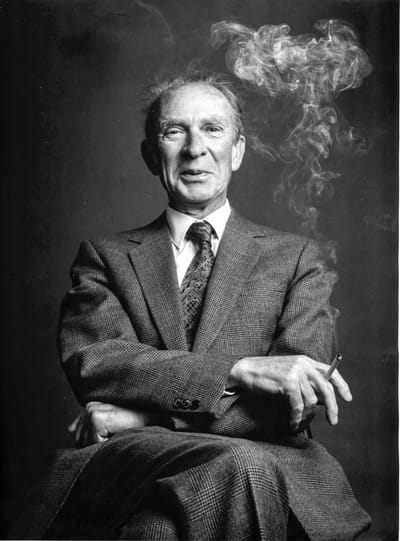
Revisiting the film I was struck once more by Strawson’s wonderfully delicate, feline, handling of the issues surrounding truth. As Cheryl Misak has emphasized, he sounds remarkably like Frank Ramsey, whose famous dismissal of the idea that there is a separate problem of truth is but a prelude to his hurling himself at problems of meaning and assertion. Simon Blackburn continues Huw Price's Flickering Shadows series.
Read More
Peter Strawson and Gareth Evans touch on many important and often still unresolved issues in this remarkable conversation. I would like to focus just on one. Is there a distinction between areas of discourse (e.g., physics and history, perhaps) that purport to state facts, and those (e.g., ethics and aesthetics, perhaps) that don't. Paul Horwich continues Huw Price's Flickering Shadows series.
Read More
The sound crackles, the picture fizzles; Susan Wilson introduces the participants. P.F. Strawson, the grizzled veteran of many a philosophical tussle, and Gareth Evans, the young bearded and bespectacled upstart. Strawson revels in the conversation. You can see the delight on his face as he poses a tricky question, yet he also has the humility to know when he needs to backtrack and re-state a point. Douglas Edwards continues Huw Price's Flickering Shadows project.
Read More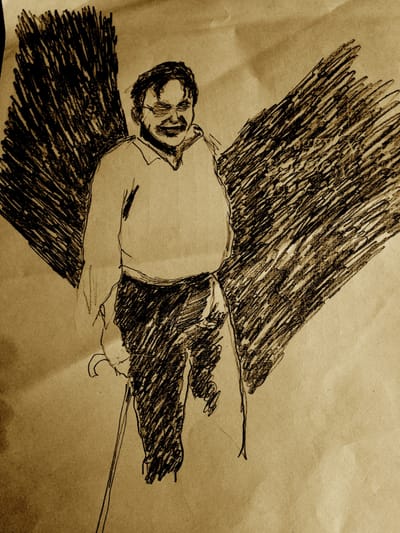
Susan Wilson sets up the Strawson-Evans discussion with an account of what we want when we ask ‘what is truth?’ One thing we want is an explanation of how we can apply the same word—'true’—to many different kinds of statements. As she puts it: “We want to show how all true statements resemble each other and how they differ”. Frank Ramsey had an answer to this question, an answer which Strawson reaches for in this gem of an exchange. Cheryl Misak writes the first of Huw Price's Flickering Shadows: Truth at 16mm series.
Read More