Essays
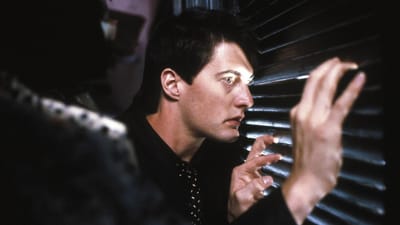
So I've written far too much about contemporary analytic metaphysicians Timothy Williamson and Kit Fine and their respective approaches to modality, attempting to understand their claims via the lens of Lynch's films (and vice versa). I'll assume some of this has been absorbed. So, if we now let this Finean way of thinking about bodies, embodiment, and form range freely across the Lynch films already in play, Mulholland Drive, Lost Highway, and Inland Empire, a unifying pattern emerges that is deeper than narrative fragmentation, dream logic, or psychoanalytic allegory.
Read More
In the previous very long, and winding, essay I established an approach that placed contemporary metaphysicians Timothy Williamson and Kit Fine in relationship with the films of film director David Lynch. I presented the films as metaphysical machines, testing out what kind of modal metaphysics was being staged. It offers an alternative approach to receiving Lynch to the psychoanalytic, Deleuzian, affect theory and narratology approaches familiar in the critical literature. It offers an application of analytic philosophy to a field dominated by so-called continental approaches with a view to popularising the analytic approach. It also placed it (briefly) into a post-Kantian (at times post Aristotelian) context by gesturing to Frederick Beiser's work on German Idealism and Post Kantianism to show that even if analytic philosophy does not need historical awareness in a deep sense, it can be useful to know it!
Read More
The following is an attempt to track some of the salient elements of David Lynch’s films largely through the different but related lenses developed by contemporary philosophers Timothy Williamson and Kit Fine. I do so because I think they both offer models to understanding the films more fruitfully than competing interpretive models. Or maybe it runs the other way: I’m using David Lynch to model the modes of modality of Williamson and Fine. I guess I’m doing both. Kind of. And I end up with different conclusions depending on how far into the thing you get. One minute a film is definitely Williamsonian, the next absolutely Finean. The plot of this is as confusing as Lynch at his best, but unlike Lynch the confusion here is caused as by my own confusion rather than brilliant design. So bite me!
Read More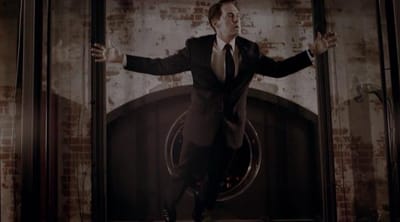
The third series of Twin Peaks begins as a metaphysical catastrophe whereby the structures which normally make identity, time, causation, and knowledge intelligible are still operating, but no longer line up with one another. The first episode presents a world whose joints no longer match the categories by which anyone inside it is trying to understand it.
Read More
Most people have had moments, often brief and difficult to articulate, when reality feels slightly unmoored. A conversation suddenly acquires an edge you cannot explain. Someone you know well feels present but unreachable, as if the person you are speaking to is no longer quite the person you recognise. A familiar place loses its sense of safety or intimacy without any obvious change in its appearance. You are not confused about where you are or who is there. You are unsettled because the situation no longer feels like the kind of situation it used to be. The ground has not vanished, but it has thinned.
Read More
Before thinking about films or philosophy, pause and consider whether you have ever had one of the following moments, not as a metaphor but as a felt experience.You are speaking to someone you know well and halfway through the conversation you realise that the interaction has slipped into a different register. The words are familiar, the tone is almost right, but something has shifted. You are no longer sure what kind of exchange this is. Is it affectionate, threatening, playful, manipulative. Nothing explicit has changed, yet the ground has fallen away beneath the situation. You adjust, not because you have learned a new fact, but because the situation itself no longer feels like the kind of thing you thought it was.
Read More
One way into the ideas this essay addresses is not through cinema at all, but through a familiar, unsettling experience. Many people can recall a relationship from years earlier that now resists understanding. At the time it was lived, it seemed coherent, even inevitable. There was a sense of forward motion, of shared possibility, of a future that, if not fully articulated, at least felt open. Yet years later, when one tries to think about that relationship from the standpoint of the present, something does not fit. Facts are remembered, messages reread, photographs revisited, conversations replayed in the mind, and still the story will not settle. Certain moments appear impossibly intense. Others feel unreal or strangely weightless. One might even encounter a detail, a memory, a third party’s comment, that feels like a shock, not because it is new, but because it arrives too late, as though it belongs to a different version of oneself or a different configuration of life altogether.
Read More
Imagine Kant as a sort of heroic but slightly baffled craftsman in a seventeenth century workshop, except the workshop is actually his own mind, and the tools are concepts, and the wood shavings on the floor are discarded Enlightenment certainties. Beiser’s account is like watching him frown and mutter politely to himself while dismantling the entire philosophical tradition that came before him, and then very carefully putting it back together so it still works but now looks nothing like the instructions on the box. Everyone before Kant thought ideas were like little internal pictures. You look at them, they look back at you, and that is experience. How charming and magical that sounds.
Read More
When you sit with Kant’s late notes and let them breathe a little, something interesting happens. The whole thing starts to feel like someone standing in a large room, turning the lights on bit by bit, showing you how even the plainest objects need a structure of light and air and atmosphere to appear at all. This is how his transition project comes across once you ease up on the jargon. It feels like Kant is trying to show that the world of experience is not just thrown in front of us. It is held together by an underlying system of pressures and resistances, a kind of general hum or vibration that stops everything from collapsing into fragments. If you lose that hum, everything falls apart and there is nothing to look at and nothing to think about, not even yourself.
Read More
You get to think that we know our own thoughts and perceptions better than the world outside our heads. Our inner life is supposed to be transparent to us in a way that the world and other people's inner worlds aren't. Kant abolishes that asymmetry. In placing both self-knowledge and knowledge of outer objects under the same a priori forms and categories, he denies that we enjoy any privileged cognitive access to an inner realm of substances or states that could serve as an unquestionable basis for inferences to the world. Our inner life, no less than the spatial world, is given only as appearance, that is, only under the forms of time and the syntheses that make temporal order possible. There is therefore no standpoint from which we could first survey our inner states as fully transparent and then ask whether what we take to be outer things really exists; for the very distinction between inner and outer already presupposes the categorial unity of experience. So what I think is going on inside my thoughts is like what I think is going outside. Woah!
Read More
Beiser's summary of the purport of Kant’s analysis of the object of representation in the first edition version of the transcendental deduction comes to this. The object is not something already there, confronting the mind, which the mind then passively pictures or mirrors; it is rather the rule according to which a manifold is combined, the unity of a synthesis that makes the manifold count as one and the same something. Objects are rules. To say that a representation has an object is therefore to say that it stands under a rule of synthesis that fixes what further representations must be like if they are to count as representations of the same thing. There is no question of comparing a finished mental item with an independently given thing in order to see whether the two are similar, nor of the representation having determinate content in advance of its role in such a rule governed synthesis. This is why Kant is complicated because who would ever have thought of saying chairs and people are products of rules! Wow.
Read More
Kant found himself having to face accusations that he was inadvertently becoming like Berkeley. For Berkeley, the patterning of experience is ultimately the outcome of habits, associations and the constancy of God’s volitions. Generalities emerge from repetition. There is no strict necessity that tomorrow resemble today. What holds the world together is not an inner lawfulness of experience as such, but the fidelity of a divine will whose reasons are opaque to us. For Kant, by contrast, the order of experience is grounded in the very conditions under which anything can be experienced at all. The rules are not discovered by noticing frequent conjunctions, they are presupposed in any act of noticing. This means that the contrast between reality and illusion can be drawn without appealing to a contingent history of associations, and without smuggling in theological guarantees. It follows from the very form of experience, not from any further metaphysical posit. He called these synthetic a priori principles and everyone wonders how they are even possible.
Read More