Essays
In Beiser’s story of neo Kantianism, Paul Natorp stands at an important turning point. He is not as dramatic a figure as Hermann Cohen, nor as colourful as Kuno Fischer, but Beiser treats him as someone who quietly carries the movement from its early, exploratory phase into a stable, institutional form. Natorp helps turn neo Kantianism into something a university can teach, support and reproduce, and he does so by extending its concerns into pedagogy, education and the communal life of science.
Read More
In Beiser’s map of neo Kantianism, Kuno Fischer is the figure standing right in the middle of the crossroads. He is not quite a neo Kantian in the later, school sense, yet without him, Beiser insists, the later movement would not have taken the shape it did. Fischer is the man who makes Kant exciting again for a wide public, who teaches a generation of students to see the Critique as a living drama, and who, in the process, blurs some of Kant’s strict limits in ways that later neo Kantians have to correct.
Read More
In Beiser’s story of neo Kantianism, Hermann Cohen is the point where the movement takes on a recognisable public shape. The early figures, Fries, Herbart and Beneke, look a little like pioneers who open a path and then get half forgotten in the rush of later developments. Cohen stands at the next bend in the track, where a loose trend is turned into a school, the Marburg school, with a programme, students and successors.
Read More
Johann Friedrich Herbart looks, in a standard history of philosophy, like a side character. He is tagged as a minor realist, remembered as an early psychologist and as someone who wrote a lot about education. If he appears in the story of Kant at all, it is usually as an opponent rather than as a follower. Beiser’s reconstruction turns this picture around. Herbart sits alongside Fries and Beneke as one of the original neo Kantians, part of the early movement to rescue philosophy from speculative system building and to root it again in experience and critical method. Beiser is saying - get this guy out of the shadows and give him a spotlight. So here he is.
Read More
Friedrich Eduard Beneke sits at the edge of Beiser’s story like a slightly awkward cousin. He is part of the same “lost tradition” as Fries and Herbart, the empiricist, psychological line that Beiser traces back to the 1790s, yet he pushes some of their shared ideas so far that he almost drops out of the neo-Kantian family altogether.
Read More
We've all heard about Kant, Idealists and Romantics and think they're the wild men of philosophy and so we like to think about them because we like the frisson and hope we'll get some. But we don't know the neo-Kantians because Hegel and his fans always talk about how there's really just Kant and then Hegel and then what we have now with nothing else. But Hegelians are lying about this because they know that's not true. I guess we think this is ok because we assume they're drunk on all that frisson. But neo-Kantians did exist and were important and they should come out of the Hegelian shadows. This is what Frederick C Beiser thinks. He brings them out and says we should listen to these guys and not just the wild men and all their frissoning.
Read More
Having read Beiser on Fichte, I now turn to his account of the Romantics. He moves from Fichte to a new generation who thought his philosophy was powerful but still not enough. They wanted something bigger than a theory that began from the individual “I”. They wanted a picture of the whole universe, and of how our minds fit inside it. Whew. That's ambitious. That bigger picture is “absolute idealism”.
Read More
This is a summary of what I think top philosopher Frederick C Beiser says about Fichte in a book on German Idealism.
Read More
Frederick C Beiser is a top philosopher. His book on Hegel is a lot easier to understand than Hegel himself. I've tried reading Hegel but there's a lot of density in him. His books are famous for being written in very dense and unclear prose and Beiser jokes that reading Hegel can feel like chewing gravel - tiring and not very pleasant. So I've read Beiser on Hegel instead and written down what I made of it because Beiser makes all that density go away.
Read More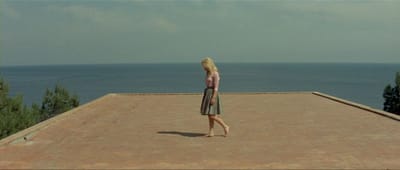
White walls hold their breath. A bed is made into a field. A man and a woman count each other’s features as if counting were a way to keep time from moving. The lens comes close and refuses to own what it touches. Skin, hair, shoulder, knee, toes, mouth, eyes, voice. The counting is inventory and lullaby at once. It is also already the evidence for a later hearing. Desire rehearses tenderness and tenderness rehearses power. Light insists upon colour and then withdraws so that colour can continue alone. The music remembers a sorrow not yet earned. The opening is a promise that the camera will be permitted to touch everything and will rescue nothing.
Read More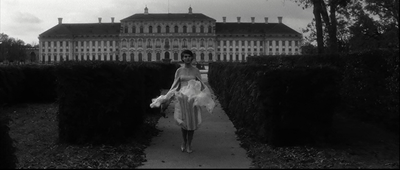
A hotel arranges its corridors as if memory were an architect with an obsession for right angles. Rooms repeat with such courtesy that the body begins to suspect it has been here before even when it has just arrived. Ceilings carry stucco that refuses to age. Mirrors wait in their frames like obedient witnesses who have rehearsed their silence. Carpets hush steps into compliance. A garden holds rigid parterres as if the earth had signed a contract against weather. People move through this order with the measured caution of figures invited to a ceremony without knowing its purpose. The camera glides and the glide becomes the only form of kindness tolerated in this place. When it stops, time thickens. When it turns, certainty must adopt another posture. The hotel is the precise instrument by which a story is denied even as it insists upon happening.
Read More
A house presents itself before the people who believe they own it. Pillars speak to the floor and the floor carries their speech into the rooms without hurry. Paper doors breathe with the weather and draw narrow rectangles of light upon tatami that remember every footstep and forget nothing. A garden of sand has been arranged to persuade the eye that the sea can be made calm by attention. Stone sits with a patience that embarrasses talk. The film enters as if to apologise to these things for the time it will spend among human wishes.
Read More