Saints of the Atlas 10
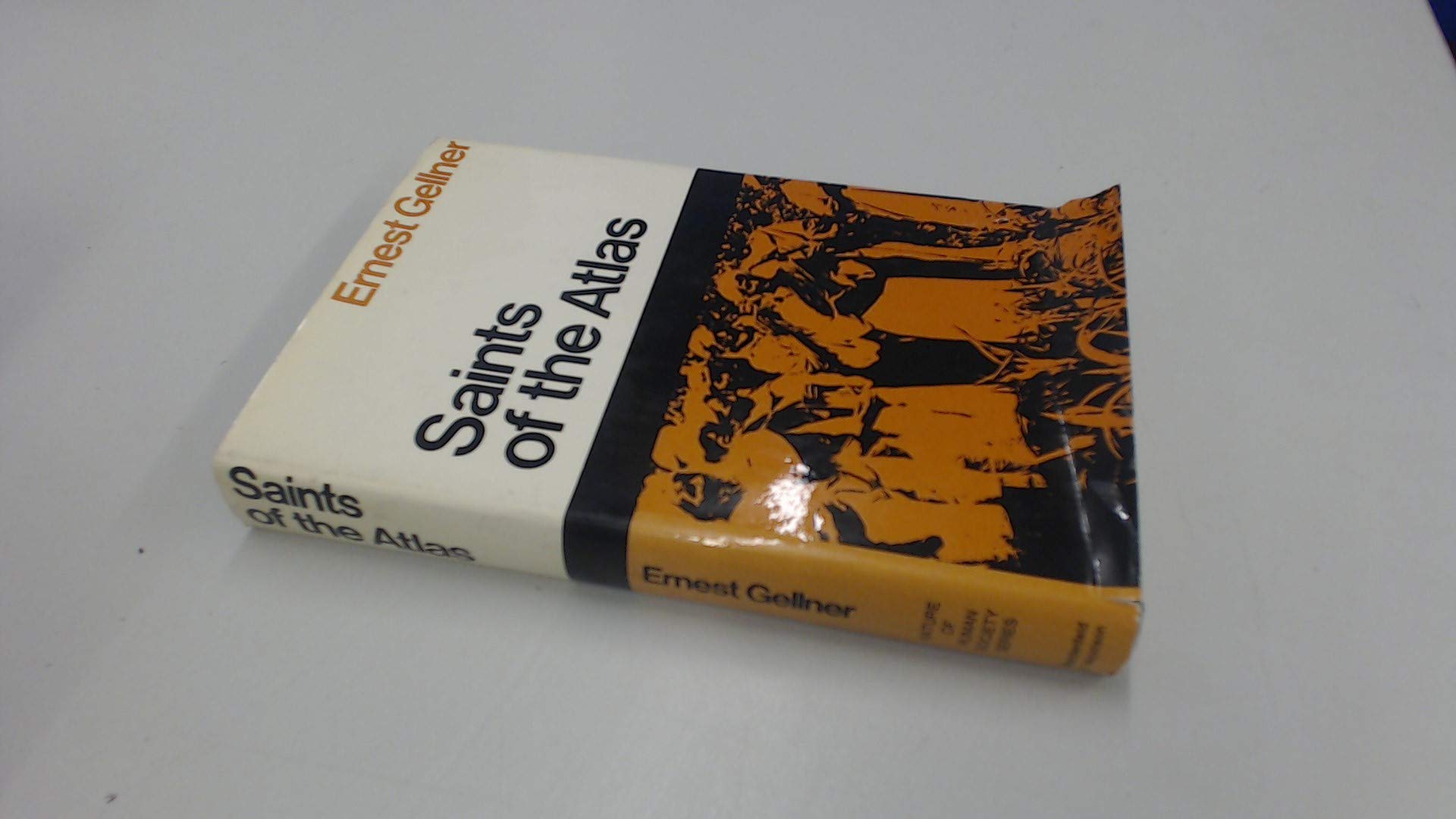
Up to this point, genealogy has appeared everywhere. It has explained the distinction between igurramen, holy lineages, and lay tribes. It has supported the claim that the Ahansal saints descend from Sidi Said Ahansal. It has connected Sidi Said Ahansal to the Prophet through a sherifian line. It has organised the difference between the main lodge and other Ahansal centres. It has underwritten marriage, rank, rivalry, holy settlement, and the uneven distribution of baraka. Now Gellner asks a more concentrated question: what kind of thing is the genealogy itself?
To answer this Gellner first asks what epistemic and social status the genealogy has, then examines its remote sacred ancestors, then turns to the intermediate generations connecting mythic origin to living social groups, then analyses the relation between descent and rank, then abstracts the structure into a schema, then reads the genealogy historically, then asks whether it is segmentary, and finally opens it into history rather than letting it remain a closed diagram.
Genealogy is often treated as a record of biological descent. It is supposed to tell us who begat whom. Gellner’s point is that in the High Atlas saintly world, genealogy is a title deed, a charter, a rank order, a sacred proof, a political argument, and a social map. Its “status” is therefore mixed. It is not merely empirical information, not merely myth, not merely ideology, and not merely a diagram of kinship. It is a socially active object.
A genealogy can be true in one sense and socially constructed in another. It may preserve real descent memories, but it is also selected, arranged, emphasised, abbreviated, elaborated, and interpreted according to present interests. It does not merely describe the Ahansal world. It helps constitute it. To be placed on the genealogy is to have a recognised relation to the source of saintly baraka. To be placed near the main line is to possess higher prestige. To be placed on a side branch is to be related, but perhaps less central. To be omitted, ambiguously attached, or weakly connected is to suffer status insecurity.
Status therefore has several layers. There is the status of the document or oral tradition itself: is it reliable, sacred, contested, official, local, remembered, written, recited? There is the status it gives to persons: high, low, central, marginal, saintly, quasi saintly, ambiguous. There is also its status as evidence: what does it prove, and to whom? Gellner is alert to the fact that a genealogy can function as proof not because it satisfies modern archival standards, but because the relevant community recognises it as authoritative.
This brings us to a broader anthropological term, “charter”. A charter is a story, genealogy, myth, or document that legitimates a social arrangement. Malinowski famously used this idea when describing how myth can authorise institutions. The Ahansal genealogy functions as a charter of sanctity. It explains why certain people are saints, why certain settlements are holy, why some families are higher than others, why some lines can mediate, why some branches are marginal, and why the whole Ahansal constellation possesses a privileged relation to sacred power.
But Gellner’s treatment is not merely Malinowskian. A Malinowskian charter can sound too functional, as if myth simply props up whatever institution exists. Gellner is more interested in the internal strain within the charter. The genealogy must do contradictory work. It must show unity, because all Ahansal saints claim descent from a common sacred origin. It must show differentiation, because not all Ahansal centres or families have equal standing. It must show continuity, because saintly baraka must pass through generations. It must allow change, because new centres, ambiguous lines, reactivations, and emigrant saints must somehow be fitted into the structure. The genealogy is therefore a device for managing both identity and inequality.
Gellner turns to the upper, remote part of the genealogy. This is where the Ahansal line is connected to wider Islamic sacred history, especially through claims of descent from the Prophet. The relevant term is shurfa, singular sherif, meaning descendants of the Prophet Muhammad, usually through Hasan or Husayn. In Morocco, sherifian descent has enormous prestige. The monarchy itself historically draws legitimacy from such descent, and local holy lineages often claim it as well. For the Ahansal saints, distant ancestry is not just deep family memory. It connects the local High Atlas lodge to the universal symbolic capital of Islam.
Symbolic capital means prestige that is recognised as legitimate and can be converted into deference, authority, and practical influence. Prophetic descent is one of the greatest forms of symbolic capital available in Moroccan Islamic society. It says that this local saintly line is not merely a Berber lineage with local miracles. It is linked to the sacred centre of Islam. That connection gives the Ahansal saints a prestige that exceeds the valley. It places them within a wider religious hierarchy. But distant ancestors also create a problem. The more remote the ancestor, the harder ordinary verification becomes. This is not a defect from the point of view of the social system. In fact, distance can increase sacred prestige. The distant ancestor lies in a zone where history, legend, piety, and political need merge. A purely modern historian might ask whether every link is verifiable. Gellner asks rather what does the claim do? It universalises local sanctity. It makes the saints more than local mediators. It gives their baraka an Islamic genealogy.
At the same time, Gellner’s analytical distinction from Chapter Three returns here. Ihansalen, descendants of Sidi Said Ahansal, are not identical as a category with shurfa, descendants of the Prophet, even if the Ahansal line claims to be both. The local descent from Sidi Said Ahansal gives the saints their specific High Atlas identity. The remote descent from the Prophet gives them a more universal religious prestige. The genealogy joins these two registers. It says, in effect: this local saintly settlement is rooted in the universal sacred history of Islam.
Gellner then looks at the generations between remote sacred origin and the living or remembered local branches. This intermediate zone is often the most delicate part of a genealogy. The distant ancestors provide sacred grandeur. The living descendants provide social reality. But the middle belt must connect them. It must make the transition from prophetic or early saintly ancestry to the local line of Sidi Said Ahansal and his descendants plausible, continuous, and socially usable.
This middle belt is where genealogy becomes engineering. Too few links, and the line looks suspiciously thin. Too many obscure links, and it becomes unwieldy. The middle belt must provide enough continuity to legitimate the present without drowning local social structure in irrelevant names. It is the bridge between mythic depth and practical classification. In theoretical terms, it is the mediation between transcendence and locality.
The Ahansal saints require two kinds of time. They need sacred time, the deep time of Islam, prophetic descent, and founding holiness. They also need local historical time, the time of settlement, land deed, branching families, centres, rivalries, and current status. The middle belt ties these times together. It says that today’s saintly houses are not merely recent political actors, but descendants within an unbroken chain. The chain matters because baraka must not look accidental. It must look transmitted.
Gellner then makes explicit the relation between descent and rank. A lineage is a descent group, usually organised through a recognised ancestor. In a segmentary lineage system, lineages branch into sub lineages, which can oppose or unite according to level. Stratification means ranked inequality. Gellner’s question is how a lineage can become a system of stratification. In principle, descent from a common ancestor might suggest equality among descendants. In practice, it generates hierarchy. Some branches are senior, others junior. Some are closer to the main line, others collateral. Some control the principal shrine, others peripheral centres. Some are dynastic, others rival, small, ambiguous, or laicised.
Earlier we've seen that the internal structure of the main lodge showed top families, dynasts, rivals, small families, slave populations, and associated villages. Gellner now gives the genealogical logic behind such ranking. A family’s position is not merely economic or personal. It is also genealogically classified. Rank can be read off, argued from, or contested through descent diagrams. Genealogy becomes the grammar of inequality. But Gellner’s point is not that genealogy mechanically creates stratification. Rather, social stratification uses genealogy as its idiom. A powerful family may emphasise senior descent. A rival may emphasise another branch. A marginal group may search for or reactivate a connection. A dominant centre may interpret the genealogy to maintain its precedence. The genealogy is not passive. It is a field of argument.
This is why the genealogy is both conservative and flexible. It conserves hierarchy by making rank appear inherited and sacred. But it also allows new claims because branches can be reinterpreted. A dormant line can become relevant. A peripheral centre can insist on its connection. An emigrant saint can claim descent from a prestigious ancestor. Ambiguity can be resolved or exploited by genealogical interpretation. Genealogy is politics in descent form.
A schema is a simplified structural representation. Gellner is not satisfied with a mass of names. He wants to show the form of the genealogy. Who descends from whom? Which branches generate main centres? Where does the main lodge fit? Where do other Ahansal centres attach? How do high and low, central and peripheral, old and new, holy and lay, fit into one descent structure?
This is where the structural functionalist side of Gellner is clearest. A schema reveals positions and relations. It turns messy genealogical material into a model. The model allows us to see how saintly descent organises social life. It shows that genealogy is not simply vertical, ancestor to descendant, but also lateral, branch to branch. It displays the social topology of holiness.
In societies where genealogy is a practical language of rank, alliance, and sacred legitimacy, schematic form matters because local actors themselves often think through descent. Gellner’s diagrams and schemas are not imposed from nowhere. They formalise local classificatory practices. The question is not whether the schema is “real” in a crude sense, but how far it captures the ways people actually organise claims.
Genealogies often present themselves as timeless, as if they simply preserve descent. But Gellner shows that they also encode change. Branching points may correspond to settlement dispersal. Gaps may correspond to forgotten or suppressed lines. Emphasis on one branch may reflect the rise of a centre. Marginal branches may reflect laicisation, ambiguity, or political decline. New attachments may reflect reactivation or identification. The genealogy is a structure of descent and a record, or semi record, of social change. Genealogy is not history in the modern archival sense, but it is not outside history either. It is a selective historical instrument. It records some changes while obscuring others. It turns social transformations into descent relations. It makes political shifts appear as family branching. It translates settlement history into ancestry.
For example, the proliferation of other Ahansal centres discussed by Gellner can be read genealogically. Amzrai’s lay option, Tighanimin’s ambiguity, Tidrit’s reactivation, the private enterprise of atomic emigrants, Troilest’s identification, Sidi Ali u Hussein’s frontier relation, Temga’s puritan rivalry, Bernat’s adaptation to a new style frontier, all these are historical social processes. The genealogy provides one way of locating them within the Ahansal sacred universe. It can absorb variation by turning it into branching.
This is politically powerful. Social change is less threatening if it can be genealogically domesticated. A new centre is not simply new, it is a branch. A marginal group is not simply anomalous, it is a collateral line. A reactivated claim is not innovation, it is return. Genealogy turns change into continuity. That is one of its core political functions.
Gellner's central model is the segmentary lineage theory, associated especially with Evans Pritchard’s work on the Nuer and with Fortes’s work on African descent systems. It argues that societies without centralised states may organise politics through nested descent groups. Segments oppose and combine according to context. Brothers oppose brothers, but brothers unite against cousins; cousins unite against more distant kin, and so on. This is the famous principle of balanced or complementary opposition.
Gellner’s question is whether the Ahansal genealogy itself forms a segmentary system. His answer is complicated. In one sense, yes, because the genealogy branches. It contains nested lines and sub lines. Different Ahansal centres can be placed in relation to one another through descent. In another sense, it is not segmentary in the same way as lay tribal genealogy. Lay segmentary systems organise armed opposition among formally equivalent groups. The Ahansal genealogy organises ranked sacred descent among unequally prestigious branches. Its logic is not simply balance. It is stratified sacred segmentation.
Lay tribes use genealogy to generate solidarity and opposition. Saintly lineages use genealogy to generate hierarchy, legitimacy, and mediation. Both are descent systems, but they do different political work. A lay segment may say: we stand with our agnates against another segment. A saintly branch may say: we are closer to the source of baraka, therefore our mediation, shrine, or status has greater force. The same formal tool, descent, produces different social effects.
So Gellner does not merely apply segmentary theory to saints as if they were ordinary tribes. He shows that saintly genealogy both resembles and departs from lay segmentation. It is segmentary in form but hierarchical in value. It branches like a tribe, but its branches are not equal. It produces relations among centres, but not necessarily armed opposition. It can generate rivalry, but rivalry over sacred rank rather than pasture alone.
The term asabiyya helps clarify the contrast. In Ibn Khaldun’s theory, asabiyya means group solidarity, often associated with kinship, tribal cohesion, and the capacity for collective action. Lay segments have asabiyya. They can fight, defend, avenge, and mobilise. Saints have baraka, sacred blessing. The relation between baraka and asabiyya is central to Gellner’s wider analysis. Gellner shows that genealogy belongs to both worlds, but it serves baraka differently from asabiyya.
Gellner further suggests that a genealogy, while apparently a closed descent tree, can become an opening into historical process. A branchline is a line of descent off the main trunk. But it is also a line of inquiry. By following branches, one can recover settlement history, political change, status shifts, saintly diaspora, rivalry, decline, reactivation, and adaptation. The genealogy is therefore not merely an ideological screen. It is a partial archive.
It's partial because genealogy remembers selectively. It favours male descent. It privileges recognised lines. It obscures women’s roles, slave populations, clients, marriages, adoptions, political manipulations, and failed claims. It may naturalise hierarchy. It may turn conquest, alliance, or opportunistic settlement into sacred descent. But precisely because it is selective, it reveals what the society cares to preserve. The silences are as important as the names.
Feminist anthropology would ask how women disappear inside male descent diagrams while being indispensable to reproduction, alliance, and household continuity. Historical anthropology would ask which archival records confirm or complicate the genealogy. Interpretive anthropology would ask how local actors feel, narrate, dispute, and inhabit genealogical claims. Bourdieu would ask how genealogies function as strategies, how kinship is not simply structure but representation and will. Talal Asad would ask how Islamic traditions of descent, sainthood, law, and authority are being disciplined by specific historical forms of power.
Gellner’s achievement is that he gives genealogy theoretical density. He shows that it is not an antiquarian interest. It is the skeleton of saintly politics. He turns genealogy into a theory of social form. He shows that Ahansal genealogy does at least six things at once. It links local saints to the Prophet and therefore to universal Islamic prestige. It links living families to Sidi Said Ahansal and therefore to local founding sanctity. It ranks branches by proximity, seniority, recognition, and settlement history. It absorbs dispersal by turning new centres into branches. It legitimates inequality by making status appear inherited and sacred. It preserves traces of historical change by encoding them as descent.
The political implications are large. In a state system, rank may be certified through office, law, bureaucracy, title, archive, and appointment. In the Ahansal system, rank is certified through genealogy, shrine, baraka, recognition, and local memory. The genealogy is therefore a non state archive of authority. It tells people who has the right to mediate, who has precedence, who belongs at the centre, who is collateral, who is ambiguous, and who may claim a connection to sacred power. This also explains why genealogy can become contested. If the genealogy determines access to sacred capital, then its interpretation matters. A branch may seek to elevate itself. A dominant line may seek to marginalise rivals. A peripheral centre may stress a connection that the main lodge treats as secondary. A laicised group may allow its saintly identity to fade, while a reactivated group may emphasise it. Genealogy is a battlefield precisely because it presents itself as ancestry rather than politics.
So descent is not merely a biological relation. It is a social ontology. It tells us what kinds of persons and groups exist. It says: this is a saintly line, this is a branch, this is a central house, this is a collateral house, this is a doubtful line, this is a remembered ancestor, this is a legitimate descendant. In that sense, genealogy makes social objects. Gellner has been explaining how a stateless tribal society can maintain order through a combination of lay segmentation and saintly mediation. He shows how the saintly side of that system is internally reproduced. Saints do not simply appear as holy individuals. They are generated by a genealogical structure that links them to founding sanctity, distributes rank among them, and allows sacred authority to move across space and time.
Genealogy contains the universal and the local, the Prophet and the High Atlas, Sidi Said Ahansal and dispersed centres, dynasts and rivals, continuity and change, segmentation and stratification, sacred prestige and political utility. It is both map and weapon, both memory and claim, both ancestry and institution. Gellner’s great insight is that to understand the saints, one must understand not only what they believe or what functions they perform, but how they are genealogically made.
(Final part to come)
Previous parts here.