Saints of the Atlas
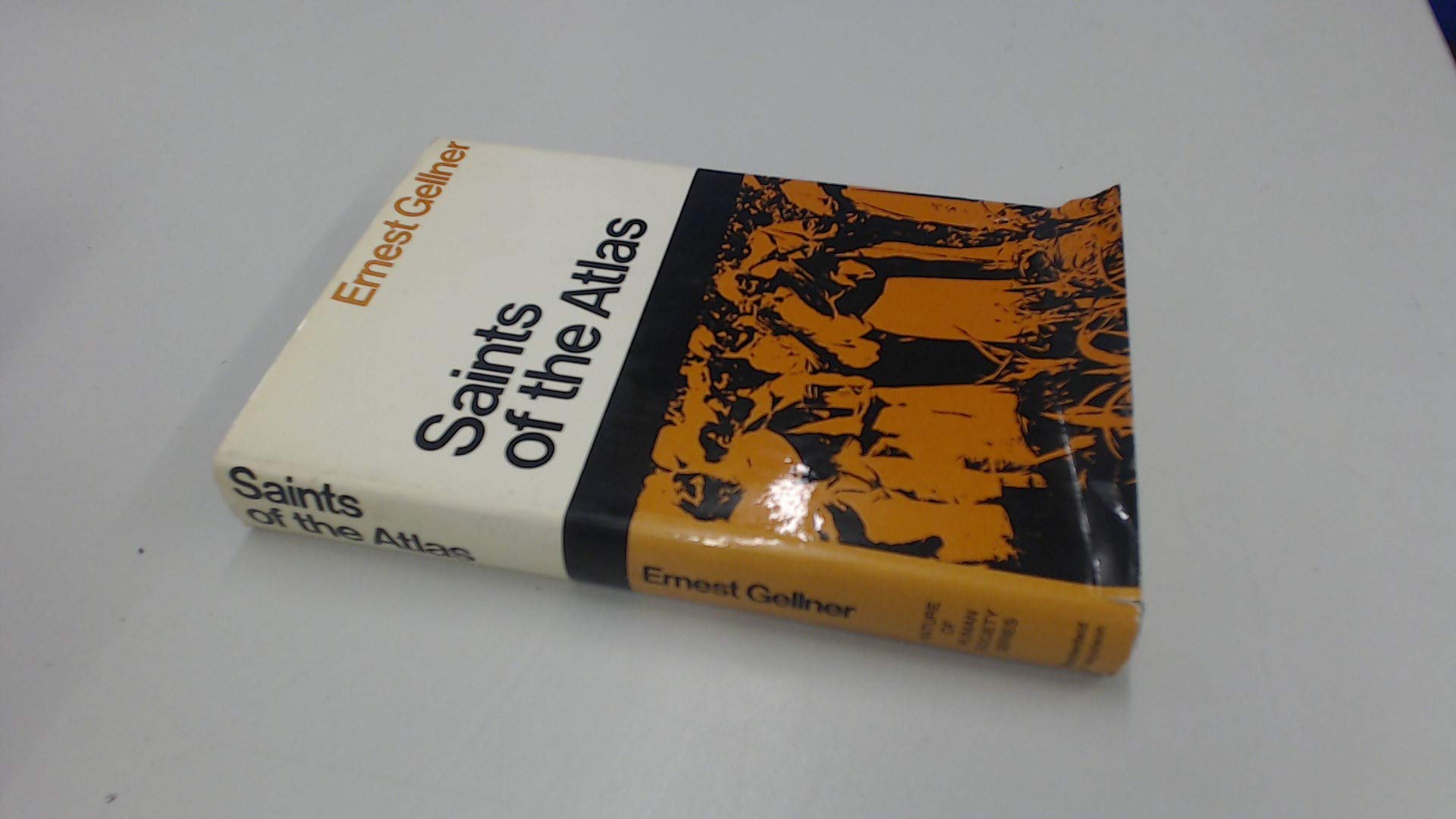
I've started a detailed reading of Gellner's book about the Muslim nomadic tribesmen of the high Atlas as part of my endeavour to insert myself into and counter the toxic discourse about Islam. Gellner saw Muslim societies as a genuinely viable species of modernity, analysing it alongside the other three options, Nationalism, Marxism and Capitalism. I think he'd have been appalled at the way Nationalism has risen its nasty head again, fascinated (and appalled) by Marxism's mutation in China and equally fascinated (and appalled) by capitalism's mutations too. I don't think he'd have been surprised by anything that's happening however. It's odd, given the massive violence of capitalist , Marxist and nationalist modernity that Islamic modernity is the one picked out by many people as being the one beyond the pale. I wonder whether it's because it's the one form of modernity that is essentially religious and thus a counter example to the secular modernity that the other options embody.
(It's not that there aren't religions in the other versions but religion there is just an option, largely privatised or used as a cover for nationalism or capitalism. Modi's India uses Hinduism as a vehicle for toxic Nationalism and isn't a religious state. You get 'Bible belts' and 'fundamentalism' in forms of modernity that formally recognise themselves as non religious: there are no fundamentalists or Koran belts in Muslim modernity because the religion is the blueprint for the whole of society. )
My ongoing reading of Saints of the Atlas is here
An extract from Part 1: "The setting is the Berber population of the central High Atlas of Morocco, especially the groups often referred to as the Shluh. These are not a homogeneous people but a mosaic of tribes and sub tribes, organised through what Gellner repeatedly calls a segmentary lineage system. This term refers to a specific form of social organisation in which descent groups are nested within one another in a genealogical hierarchy. A lineage splits into sub lineages, which split again, producing a branching structure that is at once genealogical and political. These segments are not fixed administrative units. They are activated situationally. In one dispute, a small lineage may act as a unit. In another, several lineages may fuse into a larger segment against a common opponent. This capacity for fusion and fission is one of the central mechanisms of order in the absence of a central authority. "
Part 4 extract: 'Durkheim argued that the sacred is not just private belief but a collective classification that organises social life. The shrine is sacred because people collectively treat it as set apart, dangerous, powerful, and not to be violated. But Gellner’s use of the sacred is more conflictual than Durkheim’s. The sacred here does not simply express collective unity. It manages collective division. The oath is needed because people do not trust one another. Sacred unity is mobilised to contain social mistrust.'
Part 5 Extract: 'Gellner also has a wider theory of stateless politics. Gellner is not describing absence. He is describing alternative political institutions. Elections, chiefs, oaths, shrines, arbitration, clientage, sanctuary, Kadi judgement, Shra’a, and saintly mediation together form a non state regime of order. There is no monopoly of legitimate violence, but there are mechanisms of legitimacy. There is no court hierarchy, but there are appeal routes among saintly centres. There is no police, but there is fear of sacred punishment and retaliation. There is no bureaucracy, but there are lodges, genealogies, and recognised offices.'
Part 6 Extract: ' The individual saints themselves, especially Sidi Said Ahansal, therefore have to be understood both as persons in legend and as founding principles of social order. The legendary date of Sidi Said Ahansal’s arrival in the region is AH 800, or 1397 to 1398 CE, when he founded his zawiya. Sidi Lahcen u Othman is also an important founding figure and his great grandson, who in 1598 signed a land deed transferring lands to him, lands later inhabited by the saints of the main lodge, adjoining saintly villages, and the Ait Atta of Talmest.'
Part 7 Extract: 'Gellner's analysis contains a dynamic model explained functionally: expansion, diaspora, flow, recognition, settlement types. The saintly system changes because descent multiplies, people move, frontiers shift, political pressures alter, and new opportunities arise. The model is structural, but not immobile.The political theory is subtle. It suggests that non state order is not simply maintained by tradition. It requires constant reproduction. Saints must be recognised again and again. Settlements must sustain their reputations. Genealogies must be remembered. Miracles must be narrated. Oaths must be feared. Mediation must succeed often enough. Hospitality must be maintained. Clients must return. Land must support the shrine. Descent must be sorted. Rivals must be managed. The stateless order is not primitive simplicity. It is a labour intensive system of social reproduction.'
Part 8 Extract: 'Gellner now asks: what kind of society exists inside the holy centre itself? If the lodge is the institutional body of baraka, sacred blessing, how is that body internally organised? Who ranks above whom? Which families matter? How does saintly descent become hierarchy? How do internal rivalries develop among people who all, in some sense, share sacred ancestry? What happens to a system of inherited charisma when the descendants multiply and settle into different households, factions, offices, reputations, and degrees of wealth?'
Part 9 Extract: ' Up to this point the main lodge has dominated the account. We have seen its location, its transhumant politics, its secular arm, its origin legend, its land deed, its internal hierarchy, its dynasts, rivals, small families, slave population, and associated villages. Gellner now takes the argument outward. He asks what happens to Ahansal sanctity once it is dispersed, reproduced elsewhere, partially laicised, reactivated, ambiguously claimed, commercially entrepreneurial, frontier adapted, or challenged by puritan rivals.'
Part 10 Extract: 'Up to this point, genealogy has appeared everywhere. It has explained the distinction between igurramen, holy lineages, and lay tribes. It has supported the claim that the Ahansal saints descend from Sidi Said Ahansal. It has connected Sidi Said Ahansal to the Prophet through a sherifian line. It has organised the difference between the main lodge and other Ahansal centres. It has underwritten marriage, rank, rivalry, holy settlement, and the uneven distribution of baraka. Now Gellner asks a more concentrated question: what kind of thing is the genealogy itself?'
Part 11 Extract: '“Other Forms of the Sacred”, is a short chapter, but it is conceptually dense because it breaks the possible illusion that the Ahansal saints exhaust the sacred landscape of the High Atlas. Up to this point, Gellner has given us a highly structured account of one saintly formation: the descendants of Sidi Said Ahansal, their main lodge, their secondary centres, their genealogy, their mediation, their relation to lay tribes, their use of baraka, their political location among transhumant frontiers, and their internal stratification. Now he widens the field. He asks what else counts as sacred in this society, and what happens when sanctity appears in forms that are not reducible to the Ahansal genealogy. He is classifying alternative sacred forms in order to clarify what is distinctive about the Ahansal saints themselves. After tracing the inner logic of Ahansal descent, Gellner now shows that sacred authority also exists outside, above, beside, and beneath that descent system.