The Johnny Pulp Experiment: Why The Music's Real But That's Not Where The Problem Lies
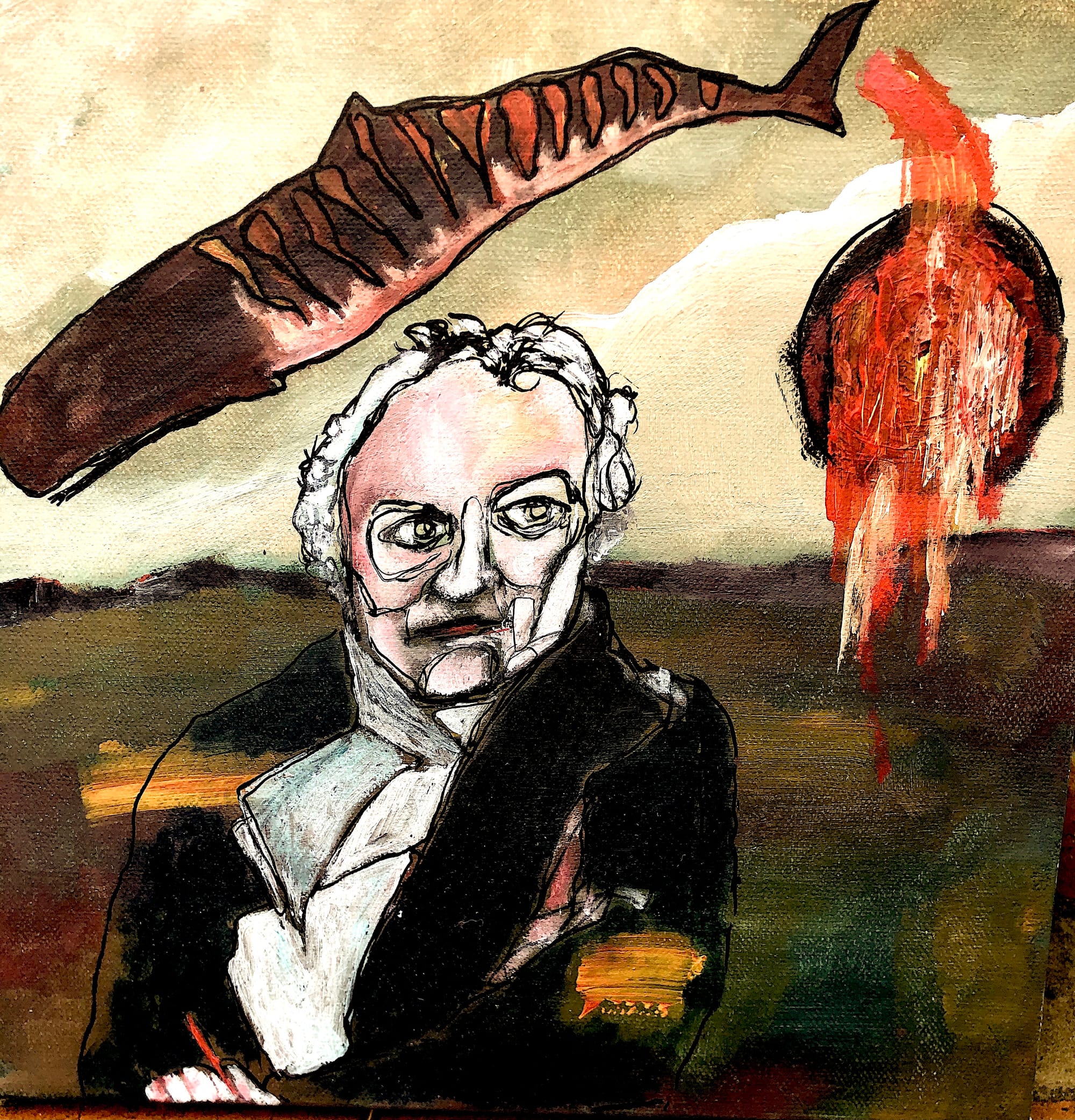
I've just finished a two year experiment using an AI system to generate music. What I want to do here is just set out some reasons for thinking that no matter what its quality was it was real music. I use insights from the philosopher David Chalmers to try and establish the plausibility of this. That's part one. Then I try and suggest that the problem with AI generated music isn't metaphysical but aesthetic. I suggest it stifles creative innovation. That's part two.
Part One: Chalmers and the Structuralist Defence
David Chalmers' defence of structuralism is one of the most ambitious philosophical projects of recent years. It is ambitious because it attempts to answer several apparently independent questions by means of a single underlying idea. It seeks to explain the nature of computation, the character of cognition, the status of virtual reality, the nature of space and, ultimately, the force of philosophical scepticism. At first sight these topics appear to belong to entirely different areas of philosophy. Computation belongs to philosophy of mind and computer science, space belongs to metaphysics and the philosophy of physics, virtual reality appears to be a technological concern, and scepticism has occupied epistemologists since antiquity. Chalmers' claim is that these subjects all turn on a common issue. If we understand what sorts of structures make something what it is, then many traditional philosophical puzzles begin to look rather different.
The central notion is structuralism. This is a word that has been used in many different ways throughout twentieth-century philosophy, mathematics and linguistics, so it is important to specify carefully what is meant here. Broadly speaking, structuralism is the view that what fundamentally matters are not isolated objects considered entirely in themselves, but the patterns of relations into which those objects enter. Structure, rather than intrinsic substance, performs the explanatory work.
Imagine somebody is handed a map of the London Underground from which every station name has been removed. The colours have disappeared, the labels have vanished and even the words "station" and "line" have been erased. Nevertheless, much information remains. One can still see which points are connected, where branches occur, which routes are circular, and which locations occupy central positions within the network. Much of what makes the Underground the Underground survives even after almost all descriptive vocabulary has disappeared. What remains is its relational organisation.
Structuralists suggest that something analogous may hold much more generally. They ask whether our descriptions of reality ultimately depend upon patterns of relations of this kind. Perhaps many truths about the world are really truths about how things are organised rather than about mysterious intrinsic properties hidden beneath those organisations. Immediately, however, one must distinguish several quite different versions of structuralism. Philosophers often speak as though structuralism were a single doctrine, but it is really a family of related positions.
One distinction is between local and global structuralism. Local structuralism concerns a particular domain. A philosopher might argue that mathematics is fundamentally structural, or that computation is structural, or that space itself is structural. The claim is restricted to one subject matter. Outside that subject, different kinds of explanation may still be required. Global structuralism is much stronger. It proposes that reality as a whole is structural. Either everything that exists is fundamentally constituted by structure, or, at the very least, every truth about reality is grounded in structural truths. It is this more ambitious project that eventually interests Chalmers, although his strategy is deliberately cautious. Rather than beginning with a sweeping metaphysical proclamation, he first investigates particular domains where structural explanation already appears successful.
This immediately raises another question. What exactly counts as a structural truth?Initially one might think the answer is straightforward. A structural truth is simply one stated using logical vocabulary together with mathematics. Such truths concern relations, patterns, connections and formal organisation rather than the specific nature of the objects occupying those positions. Historically, this idea receives perhaps its clearest expression in the work of the philosopher Rudolf Carnap during the 1920s. Carnap's great project, developed in The Logical Structure of the World, attempted to show that all truths could ultimately be reconstructed from a sufficiently rich logical system. He imagined that there might exist what later philosophers called a "world sentence": an enormously complicated logical description from which every truth about reality could, in principle, be recovered. The important point here is not the practicality of writing such a sentence. Clearly no human being could ever produce one. But we could imagine a superbeing, like Laplace's demon, producing one.
Carnap's proposal concerns what makes truths possible. If every truth could ultimately be derived from purely structural logical relations, then logical structure would possess remarkable explanatory power. This introduces another technical notion that Chalmers later develops extensively: scrutability. A proposition is scrutable from some base if, given complete knowledge of that base together with sufficient reasoning, one could in principle determine whether the proposition is true. Scrutability is therefore an epistemological notion. It concerns what can be known from what, rather than what metaphysically constitutes what.
Suppose one knows every physical fact about a chess game. One knows the positions of every piece at every moment and the legal rules governing movement. From those facts one can determine whether White wins. White's victory is therefore scrutable from the physical arrangement of the board. Whether that victory is metaphysically identical to those physical facts is quite another question. Scrutability concerns the possibility of rational determination rather than metaphysical identity.
Carnap hoped that all truths would be scrutable from an appropriately rich logical base.Yet almost immediately a serious difficulty emerged. The mathematician Max Newman pointed out the problem now known simply as Newman's Objection.The difficulty can be appreciated by returning to the railway-map analogy. Suppose one strips away every descriptive term until nothing remains except anonymous nodes connected by anonymous relations. One has removed not merely the station names but every indication that these are stations at all. The same with the lines. There are simply abstract points related in abstract ways. The trouble is that such a purely logical structure could describe almost anything. Any sufficiently complicated collection of objects - a brick wall for example - could be rearranged so as to satisfy exactly the same relational pattern. The structure no longer distinguishes one kind of reality from another. It becomes almost vacuous because too many different worlds fit the same formal description.
Imagine drawing a graph consisting of circles connected by lines. Without any interpretation, the graph might equally represent railway stations, friendships, computer networks, molecules, family trees or electrical circuits. Pure structure alone leaves the intended subject matter radically underdetermined. Newman's objection therefore reveals an important limitation. Logical structure by itself is too weak to capture the richness of reality.
Carnap himself increasingly recognised this problem. Pure logical vocabulary could not bear the explanatory burden he had hoped it would carry. Something more was needed. Subsequent structuralists therefore began asking what additional concepts should be admitted into the structural base. Different philosophers offered different answers. Some suggested that mereological notions, that is, concepts concerning parts and wholes, should be included. Others argued that spatial and temporal relations were indispensable. Still others appealed to fundamentality or naturalness, ideas later developed in sophisticated ways by David Lewis. Each proposal enlarges the structural vocabulary beyond formal logic while attempting to preserve structural explanation.
Chalmers' own proposal belongs within this tradition. He argues that the missing ingredient is causal structure. Instead of describing reality merely through abstract logical relations, we should describe it through patterns of causal interaction. The significant question is no longer simply which entities stand in formal relations to one another. Instead, we ask which entities systematically affect which others, under what laws, and according to which counterfactual dependencies. A counterfactual asks what would have happened had circumstances been different. If striking one billiard ball causes another to move, then had the first ball not been struck, the second would not have moved in the same way. The actual event and the hypothetical alternative stand in a systematic dependence. Modern accounts of causation frequently analyse causal relationships through these networks of counterfactual dependence.
Chalmers therefore proposes enriching structural description with precisely these causal patterns. Reality is not merely an abstract graph. It is a graph whose connections represent lawful causal organisation. Instead of saying merely that two anonymous entities stand in some unspecified relation, we say that one reliably influences the other according to stable causal principles. The resulting structure begins to resemble the explanatory frameworks already familiar within the natural sciences.
This shift also explains why Chalmers is attracted to causal structuralism rather than purely logical structuralism. Scientific explanation routinely proceeds by identifying mechanisms rather than hidden essences. Physicists explain planetary motion through lawful interactions, biologists explain organisms through networks of functional organisation, and neuroscientists explain cognition through patterns of causal activity among neural systems. Across these disciplines, explanation increasingly concerns organised causal systems rather than mysterious intrinsic substances. Causal structuralism attempts to generalise precisely this style of explanation. It does not deny that objects possess intrinsic properties. Rather, it argues that much of what interests us philosophically is captured by the causal roles those properties play within an organised network. The emphasis therefore shifts from asking "What is this thing in itself?" to asking "What role does this thing perform within the larger causal organisation of reality?"
Once causal organisation rather than hidden intrinsic nature becomes the primary explanatory resource, it becomes possible to reconsider longstanding philosophical questions. Computation, cognition, space and even virtual reality begin to appear as systems defined by the causal roles they instantiate rather than by the material from which they are built.
Chalmers' discussion of computation provides perhaps the clearest case in contemporary philosophy where structural explanation already appears indispensable. The question can be put very simply. What makes a physical object into a computer? More precisely, what makes some arrangement of matter implement a particular computation? To answer we might point to a laptop, a smartphone or a server and say that these are computers because they execute algorithms. But that answer merely postpones the problem. We still have to explain what it means for a physical object to execute an algorithm. Algorithms are abstract entities. They are not themselves pieces of metal or silicon. Euclid's algorithm for finding the greatest common divisor existed long before electronic computers, and the same algorithm can be realised on electronic circuits, on mechanical devices, on pencil and paper or even by people following instructions. The algorithm itself seems to float free of any particular physical implementation.
If algorithms are abstract, then what relation holds between the abstract computation and the concrete physical system? One tempting answer is that the physical system simply instantiates the abstract structure. Yet unless we say much more than this, the proposal threatens to collapse into triviality. How do we distinguish genuine implementation from merely being capable of being described in computational language? This concern was pressed forcefully by both John Searle and Hilary Putnam, although they developed the criticism in rather different ways. Their shared worry is that computation risks becoming vacuous. Given sufficient ingenuity, one can map almost any sufficiently complicated physical system onto some computational description. If arbitrary mappings are permitted, then every physical system performs every computation. A falling rock, a river flowing downhill and a galaxy evolving under gravity would all count as implementing limitless numbers of algorithms simultaneously. If that were correct, computational explanation would lose all explanatory force. Computation would no longer distinguish cognitive systems from non-cognitive ones because everything would already qualify as a computer.
This challenge mirrors Newman's objection. Just as purely logical relations seemed too weak to distinguish one world from another, purely formal computational descriptions threaten to apply indiscriminately to every physical process whatsoever. Once again, structure threatens to become empty through excessive generality. Chalmers believes this conclusion is mistaken, but only because he thinks the critics have adopted too weak a conception of implementation. The problem lies not with computation itself but with the criteria used to determine when a physical system genuinely realises a computation. His solution is to strengthen those criteria by introducing causal organisation. A physical system does not implement an algorithm merely because someone can draw a mathematical correspondence between its states and those of a computational model. Rather, its internal states must stand in the appropriate causal relationships. The transitions between computational states must be mirrored by lawful transitions within the physical system itself. The system must possess the right counterfactual organisation. Had different inputs occurred, corresponding changes would have propagated through the system in precisely the ways specified by the computation.
Imagine an ordinary mechanical clock whose gears interact in a carefully organised fashion. Remove one gear and the later movements of many others change. The entire mechanism is organised through stable causal dependencies.Now imagine simply a series of photographs of a clock taken once every minute. Laid out on a table, the photographs display exactly the same sequence of positions as the genuine clock. Yet they do not constitute another clock. Nothing inside one photograph produces the next. The apparent succession exists only because an observer has arranged them in order. Both systems instantiate the same visible sequence. Only one instantiates the appropriate causal organisation.
For Chalmers, genuine computation resembles the first rather than the second. What matters is not merely that a sequence of states exists but that those states are linked through the right network of causal dependencies.This transforms computation from a merely interpretative notion into an objective feature of physical organisation. Whether a system computes is no longer determined simply by our choice of description. It depends upon whether the relevant causal architecture genuinely exists within the system itself.
Chalmers calls his position causal structuralism. The computational properties of a system are identified neither with its material composition nor with arbitrary formal descriptions imposed from outside. They are identified with its abstract causal structure. Different physical materials can realise exactly the same computation provided they instantiate the same network of causal organisation. A word-processing program behaves identically whether it runs upon silicon transistors, optical processors or some future quantum hardware, provided the relevant computational organisation is preserved. Engineers routinely distinguish hardware from software precisely because computational organisation appears capable of surviving radical changes in physical implementation. This suggests that what is explanatory about computation is not the substance from which the machine is built but the pattern of causal interactions realised by that substance.
Chalmers therefore offers causal structuralism about computation as a paradigm case of structural explanation succeeding. The physical system matters because it realises an organised causal network. The algorithm matters because it specifies that abstract causal organisation. Neither alone is sufficient. Their relationship is one of implementation through shared structure.
For many decades cognitive science has increasingly described mental activity in computational terms. Perception, memory, reasoning, language and decision-making are frequently understood as information-processing operations carried out by complex physical systems. Whether every aspect of cognition really is computational remains controversial, but computational explanation has proved extraordinarily fruitful across psychology, neuroscience and artificial intelligence. Why has it proved so fruitful? According to Chalmers, the answer lies precisely in causal structure. Computational descriptions abstract away from the biochemical details of the brain while preserving those aspects of organisation that matter for explanation. Cognitive scientists rarely need to describe the exact molecular composition of every neuron. Instead, they investigate how information flows through interconnected systems, how signals are transformed, how feedback loops stabilise behaviour and how different subsystems interact to produce intelligent action.The explanatory work is being performed by organisation.
Computational vocabulary provides an elegant means of specifying that organisation. In modern cognitive science this point becomes especially clear when one compares different models of cognition. Classical symbolic systems manipulate explicit representations according to formal rules. Connectionist networks distribute information across large populations of simple units. Bayesian models describe probabilistic inference. Dynamical systems approaches emphasise continuous evolution through state spaces. These models differ dramatically in mathematical detail, yet they all attempt to characterise organised causal patterns rather than the intrinsic chemical nature of neurons.
This diversity of successful computational models therefore supports Chalmers' broader structuralist intuition. What unifies them is not commitment to one particular mechanism but commitment to explaining cognition through organised causal architecture. This leads naturally to a more general philosophical thesis. A cognitive state is not defined primarily by the material out of which it is constructed. Rather, it is defined by the causal role that it performs within the larger cognitive economy.
Consider the ordinary belief that it is raining outside. What makes this particular mental state the belief that it is raining? One answer would attempt to identify some specific neural configuration unique to that belief. Another would identify some mysterious intrinsic mental substance. Chalmers instead suggests looking at the role the state plays. It is typically caused by seeing rain through the window, hearing raindrops striking the roof or receiving trustworthy testimony. It combines with desires to produce actions such as opening an umbrella or postponing a picnic. It interacts systematically with countless other beliefs and expectations. The identity of the belief therefore lies in its location within an organised causal network. To possess the belief is, in large part, to occupy that role.
This idea is functionalism. Functionalism proposes that mental states are individuated by what they do rather than by what they are made from. Just as a key is identified by the role it plays within a lock rather than by the particular metal from which it is manufactured, so beliefs, desires and perceptions may be identified by the functions they perform within organised systems of cognition. Causal structuralism provides functionalism with a deeper metaphysical foundation. Functional roles are themselves understood as positions within larger networks of causal organisation. The functional description therefore becomes a structural description.
At this point Chalmers brings together three closely related theses.The first is causal structuralism about cognition. Cognitive properties are grounded in appropriate causal organisation. The second is causal structuralism about computation. Computations are themselves specifications of abstract causal structures capable of being realised by different physical systems.The third is computationalism about cognition. Because computation specifies abstract causal structures, and cognition is grounded in those same causal structures, computational organisation can ground cognitive organisation. This is not a deductive proof. Rather, the three theses reinforce one another. They form an integrated explanatory framework in which computation becomes an especially powerful language for describing the causal structures upon which cognition depends.
For a time it appears that structuralism has explained how computation avoids triviality, clarified why computational explanation succeeds in cognitive science and provided an elegant account of mental organisation. One might reasonably suspect that the same strategy could eventually explain the whole of the mind.Yet according to Chalmers (and Descartes et al) there is one aspect of mentality that stubbornly resists structural explanation, and its resistance forces a profound revision of the ambitions of structuralism itself.
Everything so far has encouraged the thought that causal structuralism might provide a comprehensive theory of mind. If beliefs, memories, perceptions and reasoning can all be understood as positions within organised causal systems, then perhaps every aspect of mentality admits of the same treatment. Indeed, this hope has animated much work in cognitive science over the last half-century. As our models of neural computation have become increasingly sophisticated, it has seemed plausible that the remaining mysteries of consciousness would eventually dissolve into questions about sufficiently complex information processing.
Chalmers famously argues that this expectation is mistaken.To understand why, we must distinguish two quite different questions that are often run together. One question asks how a cognitive system performs its various functions. How does it recognise faces? How does it remember a telephone number? How does it solve a mathematical problem? How does it produce speech? These are questions about mechanisms, information flow and causal organisation. They ask what role various states play within the operation of the whole system.
The second question is altogether different. Why is any of this accompanied by experience? Why is there something it is like to see red, to hear a violin, to taste coffee or to feel pain? Why is information processing accompanied by consciousness at all? This second question is what Chalmers famously called (following Leibniz) the "hard problem" of consciousness. The terminology can sometimes be misleading because it suggests merely a particularly difficult scientific problem. His point is much stronger. The difficulty is conceptual rather than merely practical. Even a complete account of the causal organisation underlying cognition appears to leave something unexplained.
To appreciate the distinction, imagine a future neuroscientist who possesses a complete description of your brain. They know every neuron, every synapse, every chemical interaction and every computational process. They can predict every behavioural response you will ever produce. They know precisely why you answer questions as you do, why you recognise your friends, why you avoid danger and why you remember your childhood. Suppose all of that has been explained.There still seems to remain another question. Why should all those causal processes be accompanied by the experience of seeing colours, hearing sounds or feeling emotions? Why should there be an inner life at all rather than merely the successful execution of extraordinarily complicated computations?
Whether one ultimately agrees with Chalmers or not, this question marks the point at which his structuralism diverges from many versions of functionalism. Functionalism traditionally identifies mental states with the functions they perform. If two systems perform exactly the same functional role, then, according to a straightforward functionalist picture, they instantiate the same mental state. Chalmers accepts much of this framework for cognition generally, but he argues that consciousness refuses to fit comfortably within it. Experience seems to possess an aspect that escapes purely functional description.
Take pain. A functional account tells us that pain is typically caused by bodily injury, produces avoidance behaviour, generates certain verbal reports and interacts with beliefs and desires in characteristic ways. All of these causal relationships are undoubtedly important. They explain why pain occupies the role it does within our psychological economy.Yet they do not appear to explain what pain feels like. The unpleasantness itself seems absent from the causal description. No matter how detailed the functional analysis becomes, it appears always possible to ask why that functional organisation should be accompanied by precisely this subjective feeling rather than no feeling at all. Philosophers often refer to these subjective features of experience as phenomenal properties or qualia. The terminology simply refers to the "what it is like" aspect of consciousness. There is something it is like to taste wine, to be embarrassed, to see crimson or to hear thunder. These qualitative aspects constitute the phenomenal character of experience.
Chalmers argues that phenomenal truths are not themselves structural truths in the causal sense developed so far. This does not mean that consciousness floats free of the physical world. On the contrary, Chalmers fully accepts that there are systematic lawful relationships between conscious experience and physical organisation. Whenever your brain enters certain computational states, corresponding conscious experiences reliably occur. There is every reason to think that these relationships are extraordinarily regular. The issue concerns explanation rather than correlation. Computational organisation may determine consciousness as a matter of natural law, yet consciousness is not reducible to computational organisation.
Consider the relationship between temperature and the average kinetic energy of molecules. Here the reduction seems successful because once we understand molecular motion we understand why temperature behaves as it does. The higher the average kinetic energy, the higher the temperature. The explanatory gap appears to close. Chalmers argues that nothing analogous occurs with consciousness. Knowing every computational fact still appears compatible with asking why those computations should give rise to subjective experience. Consequently, causal structuralism cannot be a complete metaphysics. It succeeds remarkably well in explaining computation and cognition, but it reaches a limit when it encounters consciousness.
This is one of the most striking features of Chalmers' philosophical methodology. Rather than forcing consciousness into his structural framework, he instead modifies the framework itself. The failure of one explanatory strategy does not lead him to abandon structuralism altogether. Instead, he asks what must be added if structuralism is to recover its broader ambitions. His answer is that the structural base must be enlarged.
Earlier we saw that Carnap's purely logical structuralism failed because logic alone was too weak. Chalmers responded by enriching the structural vocabulary with causal concepts. Now a second enlargement becomes necessary. Alongside logical and causal truths we must include phenomenal truths themselves. The resulting picture contains three fundamental components. First come logical and mathematical truths. These specify formal organisation.Second come causal or nomic truths. These describe lawful patterns of interaction, causal dependence and the structure studied by the natural sciences. Third come phenomenal truths. These record the existence and character of conscious experience itself.
The resulting ontology is considerably richer than traditional structuralism. Reality is no longer represented merely as an immense causal network. Instead, one might imagine a vast causal graph whose nodes are accompanied, where appropriate, by conscious experiences. The causal organisation explains the dynamic relations among physical systems, while phenomenal truths record what those organised systems are like from the inside.
So Chalmers no longer claims that every truth is a causal structural truth. Instead, he proposes that every truth is epistemically scrutable from an expanded base consisting of logical, causal, phenomenal and eventually indexical truths. Notice once again that the claim is epistemological. He is not saying that tables literally consist of causal relations plus experiences. He is making the weaker but still highly ambitious claim that complete knowledge of this expanded structural base would place us in a position to determine every ordinary truth about reality.
This distinction between epistemology and metaphysics becomes increasingly important as the theory develops. To see why, consider the ordinary property of being red. One theory identifies redness with a specific wavelength of reflected light. Another identifies it with a particular kind of experience. Both proposals encounter familiar objections. Objects can look red under unusual lighting conditions without reflecting the standard wavelengths, while colour-blind observers may experience quite different phenomenology. Chalmers instead proposes analysing colour through a combination of causal and phenomenal roles.Very roughly, an object counts as red if it possesses the properties that normally produce reddish experiences under appropriate conditions. Both causal organisation and phenomenal experience therefore contribute to the analysis. The proposal does not eliminate either component. Instead, it binds them together within a common explanatory framework.
Whether this provides the correct metaphysics of colour remains controversial, but it illustrates Chalmers' broader strategy. Rather than reducing one domain completely to another, he identifies systematic patterns connecting causal organisation with conscious experience. This hybrid structuralism proves remarkably flexible. Once logical, causal and phenomenal truths have been admitted into the fundamental base, many other ordinary concepts begin to look amenable to similar treatment. Yet there remains one domain whose importance exceeds almost all the others. Space. If structuralism can explain what space itself is, then the consequences extend far beyond metaphysics. They reach directly into Chalmers' later defence of virtual reality and his response to scepticism. For it is precisely our conception of space that has traditionally encouraged the intuition that a virtual world must somehow be unreal. Chalmers' next move is therefore to ask whether our ordinary understanding of spatial reality can itself be reconstructed in structural terms.
The transition from consciousness to space might initially appear surprising. One concerns the inner character of experience, while the other concerns the external organisation of the physical world. Yet for Chalmers the move is entirely natural. Space provides perhaps the most important example of a concept that we instinctively regard as primitive. We ordinarily suppose that we know perfectly well what space is before any philosophical analysis begins. It simply appears to us as the three-dimensional arena in which objects exist and events occur. The challenge for structuralism is therefore unusually demanding. If structuralism can explain even our conception of space, then its explanatory reach is extraordinarily wide.
To understand the problem, we must first recognise that our ordinary conception of space is historically rather specific. Most people possess what Chalmers calls an Edenic conception of space. The adjective is carefully chosen. Just as the Garden of Eden represents an original, unfallen world, Edenic space represents the intuitive conception of space that presents itself directly in ordinary experience before scientific theory begins to revise it. This ordinary conception treats space as an independently existing three-dimensional arena. Distances are absolute. Shapes possess determinate geometrical properties. Directions exist objectively. Objects simply occupy locations within this pre-existing framework. Time, meanwhile, forms a separate one-dimensional background against which changes occur. This is essentially the picture inherited from Newtonian physics, even if most people have never studied Newton. It is also remarkably close to the way human beings naturally perceive the world. Children develop a robust sense of stable objects existing in a three-dimensional environment long before they understand modern physics. We instinctively assume that there is a single objective distance between two trees, that a cube possesses a definite shape independently of observers and that parallel railway tracks remain parallel even when perspective makes them appear to converge. These intuitions form part of our ordinary conceptual framework.
The difficulty is that modern physics has steadily undermined almost every component of this intuitive picture. Einstein's theory of relativity denies the existence of absolute simultaneity. Distances depend upon frames of reference. Space and time become aspects of a unified spacetime geometry rather than independent containers. General relativity goes further still by allowing spacetime itself to curve under the influence of mass and energy. Quantum mechanics introduces additional complications concerning localisation and measurement. The neat Euclidean arena suggested by ordinary experience turns out not to describe the physical world with complete accuracy. This creates a striking philosophical tension. If our primitive conception of space were genuinely fundamental, we might expect reality itself to instantiate it. Yet modern science increasingly suggests otherwise. The world appears not to possess precisely the kind of space our immediate experience presents to us.
Chalmers draws an important conclusion. Perhaps our primitive conception of space should not be regarded as metaphysically basic after all.Instead, perhaps what really matters is not some intrinsic spatial substance but the network of roles that space performs.This is the central idea behind spatial functionalism.The terminology deliberately echoes functionalism about the mind. Just as beliefs may be identified by the roles they perform within cognition, perhaps spatial properties are identified by the roles they perform within physical and perceptual organisation.
Take distance. One might suppose that distance is some primitive ingredient of reality that simply exists in its own right. Spatial functionalism instead asks what explanatory work the notion of distance actually performs. Within physics, distance determines how forces propagate. Nearby objects interact differently from distant ones. Light takes longer to travel greater distances. Gravitational and electromagnetic interactions exhibit systematic mathematical relationships with separation. Distance therefore occupies a particular role within the laws governing physical dynamics. Within perception, distance also plays another role. Objects one metre apart normally produce characteristic patterns of visual experience. As we approach them those experiences change in systematic ways. Judgements of reachability, movement and bodily action all depend upon these organised perceptual relationships. Rather than identifying distance with some mysterious intrinsic spatial ingredient, spatial functionalism identifies it with whatever property successfully performs these interconnected roles.
Notice that two rather different kinds of role are already present. The first concerns physics itself. Distances participate in lawful interactions independently of whether anyone observes them. They enter differential equations governing motion, force and energy. They explain why planets orbit stars and why light travels as it does. The second concerns experience. Distances also explain why the world appears spatial to creatures like ourselves. They account for characteristic patterns of perception, bodily movement and practical engagement with our environment. Chalmers therefore distinguishes between non-phenomenal and phenomenal spatial roles. The non-phenomenal roles belong to scientific physics. They concern the causal organisation governing physical systems.The phenomenal roles concern conscious experience. They describe how spatial properties normally give rise to characteristic experiences of depth, shape, size and orientation. This distinction mirrors the enlarged structuralism introduced in the previous section.
Pure causal structuralism would attempt to analyse space solely in terms of the first set of roles. Space would simply be whatever property occupies the appropriate position within the causal organisation described by physics. Chalmers believes this account is incomplete. Our concept of space also contains an experiential component. The way things look, feel and appear spatially forms part of what our ordinary concept means. Consequently, a complete structural analysis of space must incorporate both causal and phenomenal roles simultaneously.
Suppose someone asks what it is for two objects to be one metre apart. The traditional answer appeals to an objective spatial magnitude existing independently of everything else. The structuralist answer proceeds differently. To be one metre apart is to instantiate the property that occupies the one-metre role. Physically, this means entering the lawful network of causal relations characteristic of one-metre separation. Phenomenally, it means normally producing the characteristic experiences associated with perceiving objects one metre apart under suitable conditions. The same strategy applies to shape. What makes something square? The ordinary answer says that it possesses the intrinsic geometrical property of squareness. Spatial functionalism instead identifies squareness through its network of consequences. Squares interact with other physical systems in characteristic ways, but they also produce distinctive perceptual experiences when viewed under normal conditions. The concept of squareness therefore combines causal and phenomenal roles into a single functional profile.
Notice how closely this resembles the earlier treatment of colour. Colour was analysed through the interaction between causal properties and characteristic experiences. Now space receives precisely the same style of analysis. Chalmers is gradually constructing a unified framework within which many apparently primitive concepts are reconstructed as networks of interconnected causal and phenomenal roles.
If space is defined functionally rather than materially, then there is no reason in principle why only one kind of physical substrate could realise it. This point underlies Chalmers' entire philosophy of virtual reality.
Consider money. A pound coin, a bank transfer and a digital payment on a smartphone are physically very different objects. One is metal, another consists of electronic records, another exists as changing entries within banking databases. Yet all count as money because they occupy the same social and economic role. The role matters more than the material. Or consider a game of chess. Chess may be played using carved wooden pieces, plastic pieces, images on a computer screen or even spoken descriptions over a telephone. None of these media is intrinsically "more chess" than another. What matters is that the relevant structural relations among the pieces are preserved. The same thought now extends to space itself. If spatial properties are individuated by the roles they perform rather than by the particular material substrate realising those roles, then radically different physical systems may instantiate genuine spatial organisation.This is what occurs in sufficiently sophisticated virtual reality.
When wearing an advanced virtual reality headset, a user reaches towards apparently distant objects, navigates three-dimensional environments, judges depth, orientation and movement, and interacts with stable spatial structures. Behind the scenes these experiences are generated computationally, but the causal organisation connecting perception, action and environment may nevertheless instantiate the very roles identified by spatial functionalism.
One often hears it said that virtual space is "not really space." Chalmers thinks if structuralism is correct, virtual environments need not merely imitate space. They may literally instantiate space, because they instantiate the causal and phenomenal organisation that constitutes spatiality in the first place. The computer is not creating an illusion of space over and above genuine reality. Rather, it is providing another physical system capable of realising the relevant spatial structure.
We naturally imagine virtual worlds as pale imitations of reality because we identify reality with a particular physical substrate. Structuralism instead encourages us to identify reality with patterns of organisation. Once that shift has been made, the distinction between "real space" and "virtual space" begins to lose much of its philosophical significance. Indeed, Chalmers' claim is even stronger than this. Spatial functionalism does not merely make virtual reality possible. It begins to undermine one of the oldest forms of philosophical scepticism. If a virtual world genuinely instantiates the relevant causal and phenomenal structures, then perhaps living within such a world would not amount to wholesale deception after all. It would instead constitute another perfectly genuine way of inhabiting reality, albeit one realised through a different computational architecture. It is this striking conclusion that leads directly to Chalmers' ambitious attempt to answer the sceptic.
At this stage Chalmers' various lines of argument begin to converge. The discussions of computation, cognition and space have not been independent case studies. Each has established the same philosophical lesson in a different domain. Computation is understood through causal organisation rather than the material from which a computer is built. Cognition, at least apart from consciousness, is understood through organised causal roles rather than through some mysterious mental substance. Space itself turns out to be analysable in terms of the causal and phenomenal roles it plays rather than through appeal to an irreducible spatial essence. Once these individual cases have been assembled, Chalmers is in a position to make a much more ambitious claim. Virtual reality should not be regarded as an inferior imitation of reality. Rather, provided it instantiates the appropriate structures, it constitutes another genuine form of reality. Of course he is not saying that every computer game already constitutes an autonomous universe. Nor is he suggesting that a crude simulation possessing only cartoon graphics somehow becomes indistinguishable from ordinary life. His claim is conditional. It depends upon the virtual environment reproducing the relevant structures with sufficient fidelity. The important issue is therefore not whether something is produced electronically or physically in the ordinary sense. The important issue is whether the relevant causal and phenomenal organisation has been realised.
Suppose we hear a performance of a Beethoven quartet. The music might be produced by a live string quartet, by an excellent recording played through loudspeakers or by a sufficiently sophisticated digital synthesis. The physical mechanisms differ enormously. Vibrating strings, magnetic recordings and digital processors have almost nothing in common materially. Yet if the relevant acoustic structures are reproduced faithfully, listeners may hear the very same music. What matters is not the substance but the organised pattern. Chalmers proposes extending precisely this mode of reasoning to reality itself.
The thought initially feels counter-intuitive because we are accustomed to identifying reality with particular kinds of material objects. We assume that tables are wooden or metal objects, mountains are masses of rock and rivers are flowing water. Virtual objects therefore appear to be merely images of these things rather than genuine examples of them. Structuralism asks us to reverse this order of explanation. Instead of asking what material something is made from, we first ask what role it plays within the organised structure of the world. If that role can be instantiated in different physical media, then reality itself becomes multiply realisable.The expression multiple realisability has become familiar in philosophy of mind, where it refers to the possibility that the same mental state could be realised by different physical systems. Human brains, alien nervous systems and suitably organised artificial intelligences might all instantiate the same cognitive architecture despite possessing radically different physical constitutions.
Chalmers extends the same thought beyond mentality. Entire environments may be multiply realised. A virtual forest generated computationally need not be merely an image of a forest if it successfully instantiates the relevant structural organisation that forests occupy within our interactions, perceptions and scientific explanations. Computers are not simply convenient tools for displaying images. According to causal structuralism, computation is itself capable of specifying arbitrary causal organisation. A sufficiently sophisticated computational system can therefore implement extraordinarily rich causal networks. If reality is itself fundamentally organised causally, then computational systems possess, in principle, exactly the sort of expressive resources needed to instantiate those structures.
The earlier arguments now lock together. First, computation specifies abstract causal structures.Second, cognition is grounded in causal structures.Third, many aspects of physical reality, including space, are themselves analysable in terms of causal and phenomenal structures. It therefore becomes possible for computational systems to realise structures that genuinely constitute cognitive and spatial reality.
One can now formulate Chalmers' position as a second triad parallel to the one developed earlier.The first thesis is causal structuralism about reality. Reality itself is fundamentally characterised by organised causal structure. The second thesis is causal structuralism about computation. Computation provides a general means of specifying arbitrary causal organisation.The third thesis is computationalism about reality. Appropriate computational systems are capable of realising the causal structures upon which many aspects of reality depend.
Notice again that this is not merely a chain of deductions. It is an explanatory framework whose different components reinforce one another. The success of computational explanation supports structuralism, while structuralism explains why computation possesses such remarkable explanatory reach.
But surely there remains an obvious difference between the ordinary world and a simulated world. There does, and Chalmers is careful not to deny it. Indeed, one of the strengths of his position is that he distinguishes very carefully between different senses in which two realities may be equivalent. Throughout the argument a distinction has repeatedly appeared between epistemic and metaphysical questions. This distinction now becomes absolutely central.
Recall the earlier discussion of scrutability. Chalmers' primary claim concerns what follows from complete knowledge of the structural base. If one knew all the relevant logical, causal, phenomenal and indexical truths, then one could determine every ordinary truth about the world. This is an epistemic claim. It concerns knowledge. It does not automatically follow that ordinary objects are metaphysically identical with those structural truths. Suppose two novels are translated into different languages. A fluent bilingual reader may recover exactly the same story from either text. In that epistemic sense the two versions are equivalent. Yet they are obviously not identical books. They possess different vocabularies, different grammars and different physical inscriptions. Similarly, ordinary reality and virtual reality may be epistemically equivalent without being metaphysically identical. This distinction allows Chalmers to avoid an important misunderstanding.
Imagine that we discover tomorrow that we have always lived inside an extraordinarily sophisticated virtual reality. Would it follow that every ordinary belief we have ever held is false? Many philosophers have assumed that it would. Chalmers argues against that. Suppose I have always believed that there is a table in front of me. If I later discover that this table is computationally realised inside a virtual environment, have I therefore been mistaken all along? According to the traditional sceptic, yes. According to Chalmers, not necessarily. The table still occupies the table-role. It supports objects. It possesses spatial extension. It causes characteristic perceptual experiences. It enters into stable causal relations with other objects. In short, it instantiates precisely those structures that made us call it a table in the first place. The discovery concerns the underlying implementation, not the ordinary truth.
An analogy from contemporary computing again helps. When someone saves a document on a laptop, they ordinarily believe that the document exists on their computer. Later they discover that the document is actually distributed across solid-state memory, error-correction routines, operating-system abstractions, file systems and cloud synchronisation services. Nothing about this discovery makes the original belief false. It merely reveals that the implementation is more complicated than originally supposed. Chalmers argues that discovering we inhabit virtual reality would often be analogous. Many of our beliefs would survive because they concern higher-level structures rather than their ultimate physical implementation.
This explains why he repeatedly insists that virtual reality should be regarded as first-class reality rather than as a second-rate substitute.The phrase is deliberately provocative.Ordinarily we oppose reality to simulation. Chalmers instead opposes genuine structural instantiation to mere appearance. A poorly designed virtual environment producing misleading perceptions may indeed generate illusion. But an appropriately structured virtual world need not. The distinction therefore shifts from virtual versus real to structurally adequate versus structurally inadequate. The importance of this shift extends well beyond discussions of technology. It transforms the very character of philosophical scepticism.
Traditional sceptical arguments invite us to imagine that our experiences are systematically misleading. The external world, they suggest, might be entirely different from the one we take ourselves to inhabit. The famous examples are familiar. We may be dreaming. An evil demon may be deceiving us. Our brains may float in nutrient vats while supercomputers generate all our experiences. More recently, popular culture has expressed the same possibility through The Matrix. These scenarios derive much of their force from a shared assumption. They assume that discovering such deception would overturn nearly all of our ordinary beliefs about the world. Chalmers thinks structuralism reveals that assumption to be deeply misleading.
The sceptical tradition against which Chalmers is arguing is one of the oldest in philosophy. From the ancient Pyrrhonists, through Descartes' evil demon, to contemporary thought experiments involving brains in vats and computer simulations, sceptics have repeatedly invited us to imagine that our experiences might systematically misrepresent reality. Their conclusion is familiar. Since our experiences would be exactly the same whether we inhabited the ordinary world or some radically deceptive alternative, we appear unable to know that the external world really is as we believe it to be.
Chalmers does not respond by attempting to prove that we are not in a simulation. That would simply accept the sceptic's framing of the problem. Instead, he challenges the assumption that discovering we inhabit such a simulation would amount to discovering that nearly all our ordinary beliefs are false. Traditionally, philosophers have answered scepticism by denying one of its premises. They argue that perhaps the sceptical scenario is impossible, or perhaps we possess better evidence than the sceptic allows, or perhaps knowledge requires less certainty than the sceptic assumes. Chalmers largely sidesteps these familiar debates. He asks a prior question. Suppose we really were in the Matrix. What exactly would follow? Would it genuinely follow that there are no tables, no trees, no cities and no other people? Or have we simply assumed that conclusion without sufficiently examining the concepts involved?Structuralism now provides the crucial resource.
Earlier we argued that ordinary concepts derive much of their content from the causal and phenomenal roles they occupy. A table is identified through the network of interactions characteristic of tables. Space is identified through the roles it plays in perception and physical dynamics. Computation itself is understood through causal organisation rather than through intrinsic material constitution. If these analyses are correct, then the implementation underlying those structures becomes philosophically less significant than we initially imagined.
Imagine two universities.One consists of Victorian stone buildings scattered around a traditional campus. The other operates almost entirely online, with lectures, seminars and libraries accessed digitally. Their physical realisations differ dramatically. Yet both genuinely count as universities because they instantiate the organisational structures that define universities: teaching, research, assessment, scholarship, institutional continuity and intellectual community. The same reasoning, Chalmers suggests, may apply to reality itself. If the relevant structures are preserved, then many ordinary concepts continue successfully to refer despite radical differences in implementation. This observation allows him to reformulate the sceptical challenge in an illuminating way.
Suppose someone announces:"You have always lived inside a simulation." What information has actually been conveyed? Certainly we have learned something remarkable about the underlying implementation of our world. What we previously regarded as ordinary physical processes turn out to depend upon an unimaginably sophisticated computational substrate.But does this discovery immediately overturn our ordinary beliefs? Not obviously. The buildings in which we live still shelter us. The people with whom we speak still respond intelligently. Objects continue to possess stable spatial relationships. Water still extinguishes fire. Gravity still causes unsupported bodies to fall. Language continues functioning exactly as before. Much of ordinary life survives untouched. The revelation concerns what philosophers sometimes call the realiser rather than the role. A role specifies what something does within a larger organised system.A realiser specifies the particular physical mechanism that performs that role. The same economic role may be realised by coins, paper notes or electronic banking systems. The same biological function may be realised by quite different anatomical structures in different species.The same computational algorithm may be realised by silicon processors, optical hardware or mechanical devices. Likewise, the same worldly structures may, perhaps, be realised either by ordinary physical processes or by computational ones.
Structuralism therefore encourages us to treat implementation as explanatorily secondary. The sceptic has shown that implementation might differ from what we expected. He has not thereby shown that the higher-level reality constructed upon that implementation disappears.
This does not mean that absolutely every belief survives. Chalmers explicitly identifies several important limitations.The first concerns consciousness. Earlier we saw that consciousness cannot simply be identified with causal structure alone. If a virtual world contains conscious inhabitants, then corresponding conscious experiences must genuinely exist. A purely unconscious simulation would not automatically generate minds merely because it reproduced behavioural organisation. This point is especially significant when discussing The Matrix. Within the fictional world of the film, each simulated individual corresponds to a conscious human being whose biological brain exists outside the simulation. The computational environment does not create consciousness from nothing. Rather, it interacts with already conscious organisms. Whether future artificial systems might themselves become conscious is a further question that Chalmers deliberately leaves open. His point is only that consciousness cannot simply be assumed once causal structure has been instantiated. The phenomenal component introduced earlier remains indispensable.
A second limitation concerns the distinction between epistemic and metaphysical equivalence. Structuralism argues that ordinary truths are epistemically recoverable from structural truths. It does not automatically establish metaphysical identity. To appreciate the distinction, consider chemistry. Water is H₂O. Learning this chemical identity did not overturn our ordinary beliefs about rivers, oceans or rain. Instead, it deepened our understanding of what realised those familiar phenomena. Now imagine the reverse situation. Suppose we discovered that what we had always called water was realised computationally within a virtual environment rather than chemically through hydrogen and oxygen molecules. Our ordinary interactions with water might remain entirely unchanged. Nevertheless, its underlying metaphysical constitution would differ. The higher-level concept survives even though the implementing substrate changes. Structuralism therefore permits implementation to vary while preserving much ordinary truth.
A third limitation concerns causal detail itself. No virtual reality reproduces every aspect of ordinary physical organisation. Even an extraordinarily sophisticated simulation possesses lower computational mechanisms that ordinary physical reality lacks. Likewise, ordinary physical reality contains underlying processes absent from a simulation. Consequently, certain highly theoretical scientific claims may differ between the two. Suppose physicists within an ordinary universe conclude that elementary particles constitute the most fundamental layer of reality. If that universe later turns out to be simulated, then the conclusion requires revision. Below the elementary particles lies another level consisting of computational hardware, information processing and whatever physical systems support the simulation itself. Some beliefs therefore change. But notice which beliefs change. They are not the beliefs that dominate everyday life. Rather, they concern the ultimate metaphysical architecture underlying ordinary reality. The discovery resembles the successive revolutions produced by modern science itself. Newton replaced Aristotelian physics. Einstein revised Newton. Quantum mechanics transformed classical conceptions of matter. None of these developments rendered ordinary life illusory. Instead, they successively refined our understanding of the deeper structures realising the familiar world.
Discovering that reality possesses a computational implementation would represent another revolution of this kind. It would be astonishing. It would transform metaphysics.Yet much of ordinary experience would remain exactly what we had always taken it to be. Virtual reality and ordinary reality differ far less than our intuitions initially suggest. Indeed, once structuralism has been accepted, the traditional contrast between "real" and "virtual" begins to look philosophically unstable. We might imagine the Matrix as the paradigm case of universal deception. Chalmers invites us to regard it rather differently. It becomes a genuine world possessing a different underlying implementation. Its inhabitants are not floating within nothingness. They inhabit a computationally realised reality. Much of what they ordinarily believe remains true precisely because the structures upon which those beliefs depend continue to exist.
If sceptical scenarios preserving the relevant causal, phenomenal and structural organisation leave so many of our ordinary beliefs intact, then for Chalmers global scepticism loses much of its traditional force. The sceptic can certainly challenge our theories about the deepest level of reality. Structuralism freely concedes that possibility. But the much stronger claim that nearly everything we ordinarily believe about the external world might be false becomes considerably harder to sustain.
Structuralism does not eliminate scepticism entirely. Instead, it changes its target. The genuine uncertainty concerns the ultimate implementation of reality, not necessarily the ordinary world in which we live, reason and act. Once this distinction is recognised, the sceptic's dramatic conclusion begins to contract into a far more modest philosophical claim.
It is worth noticing just how unusual this conclusion is within the history of philosophy. Most responses to scepticism attempt to establish certainty. Chalmers does something rather different. He argues that the sceptic has misunderstood what our ordinary concepts are about. The issue is not whether we can somehow prove that we are not in a simulation. The issue is whether being in a sufficiently rich simulation would undermine the truth of our ordinary beliefs in the first place. If our concepts refer primarily to organised structures rather than to hidden intrinsic substances, then many sceptical scenarios lose precisely the feature that made them philosophically alarming. This is why Chalmers repeatedly emphasises that his position concerns global scepticism rather than every imaginable sceptical possibility. Global scepticism is the claim that, for all we know, all or nearly all of our beliefs about the external world might be false. Structuralism aims to show that many of the most famous sceptical hypotheses do not actually generate such widespread error.
To see this more clearly, it helps to distinguish several different sceptical scenarios. Consider first the familiar Matrix scenario. The inhabitants interact with stable objects, navigate a coherent three-dimensional environment, communicate with other people and discover lawful regularities that support successful science. From their point of view, the world exhibits precisely the sort of organised causal structure that ordinary life presupposes. Suppose they later discover that this world is implemented computationally. What follows? According to Chalmers, surprisingly little follows concerning the truth of their ordinary beliefs.There really are buildings.There really are roads.There really are conversations.There really are tables.These things happen to be computationally realised, but they nevertheless instantiate the relevant structural roles. Their mistake concerns the ultimate implementation of their universe, not the ordinary objects populating it.
This should remind us of a familiar pattern within the history of science. People once believed that heat was a fluid called caloric. They later discovered that heat consists in molecular motion.Their earlier explanations were mistaken. But they were not mistaken that objects become hot, that fires warm rooms or that boiling water produces steam. Scientific revolutions often revise the underlying ontology while leaving much of ordinary experience untouched. Chalmers suggests that discovering reality to be virtual would represent another revolution of precisely this sort. The implementation changes. The world largely remains.
Now compare this with a very different sceptical hypothesis. Suppose someone experiences completely random hallucinations. Their experiences possess no stable organisation whatsoever. One moment they appear to inhabit medieval France, the next they are floating through empty space, the next they become a butterfly, then immediately a Roman emperor. Nothing persists. No regular causal patterns emerge. There are no stable objects, no enduring identities, no coherent physical laws.This scenario differs fundamentally from the Matrix.The Matrix preserves enormous amounts of causal organisation.The hallucination preserves almost none. Structuralism therefore predicts different epistemic consequences. Where coherent causal structure survives, many ordinary beliefs survive. Where coherent structure collapses entirely, ordinary belief collapses with it. The distinction is extremely revealing because it shows that Chalmers is not defending every sceptical scenario indiscriminately. Rather, the amount of truth surviving depends upon how much genuine structure remains available.
Knowledge depends upon structure.Whenever our experiences display stable, law-governed organisation, they support corresponding truths about reality. Whenever that organisation disappears, so too does the possibility of ordinary knowledge. One might think of this as replacing a substance-based conception of realism with a structure-based conception.Traditionally philosophers often imagined that our beliefs succeed because they somehow attach themselves directly to independently existing objects possessing intrinsic natures. Chalmers instead suggests that successful reference depends upon organised networks of causal and phenomenal relations. It is these structures that anchor our concepts to reality.
The implications extend well beyond virtual reality.They reach into philosophy of language itself. Words such as "table", "tree", "person" and "river" do not function like labels attached directly to mysterious intrinsic essences. Their meanings emerge through complex patterns of causal interaction, perceptual experience and practical engagement with the world. This helps explain why language remains remarkably stable across changing scientific theories.The ancient Greeks, medieval scholars and contemporary physicists all refer successfully to the sun despite possessing radically different theories about its constitution. Scientific revolutions repeatedly transform our understanding of what realises familiar objects without necessarily destroying reference to those objects. Structuralism provides a systematic account of why this continuity is possible. The concepts remain attached to stable structural roles even as our theories concerning their implementation evolve.
This continuity also explains why Chalmers repeatedly invokes the notion of epistemic equivalence rather than metaphysical identity. Two descriptions are epistemically equivalent when complete knowledge of one enables complete knowledge of the other. This is a considerably weaker claim than saying that the two descriptions identify exactly the same entities. Indeed, Chalmers is careful not to erase metaphysical differences altogether. A computational universe and an ordinary physical universe may differ profoundly in their deepest ontology. One may ultimately consist of quantum fields. The other may ultimately consist of information-processing systems operating within another physical reality. Structuralism does not deny these differences. Rather, it argues that many ordinary truths remain recoverable despite them.
Suppose one possessed complete knowledge of the causal organisation, phenomenal character and indexical facts concerning a world. Could one then determine whether there are trees, mountains, conversations and books? Chalmers believes the answer is yes. That is precisely what scrutability means. The argument never required ordinary objects literally to reduce to causal graphs. Instead, ordinary truths become intelligible from an appropriately rich structural base.
At this point another element of Chalmers' framework assumes unexpected importance: indexical truths.Earlier we enlarged the structural base from purely logical truths to logical, causal and phenomenal truths. Yet Chalmers argues that even this enriched foundation remains incomplete. Imagine possessing a God's-eye description of the entire universe. Every physical law is known. Every causal interaction has been catalogued. Every conscious experience has been described. Even so, one question remains unanswered. Where am I? Or equally:When am I? This is not ignorance concerning the structure of the universe. It is ignorance concerning one's location within that structure. Philosophers call expressions such as "I", "here", "now" and "this" indexicals because their reference depends upon the context in which they are used. The sentence "I am hungry" cannot be fully understood independently of who is speaking. Likewise, "It is raining here now" cannot be evaluated without knowing the relevant location and time.
Chalmers argues that indexical information therefore forms part of the minimal epistemic basis from which ordinary knowledge becomes scrutable. Without it, one could know everything about the universe while remaining uncertain which person within that universe one actually is. This point has become increasingly important within contemporary philosophy because of anthropic reasoning, cosmology and simulation arguments. A complete description of reality does not automatically locate the observer inside that description. The addition of indexicals therefore completes Chalmers' structural framework. The resulting epistemic base now contains four interconnected components. Logical truths provide formal organisation. Causal truths provide lawful organisation. Phenomenal truths provide conscious experience. Indexical truths locate the experiencing subject within that organised world. Together they constitute what Chalmers believes is an extraordinarily powerful explanatory foundation.
Whether every ordinary truth really is scrutable from this basis remains controversial. Many philosophers continue to argue that intentionality, normativity, modality or ontology itself resist structural analysis in important ways. Chalmers himself openly acknowledges that these domains remain among the most difficult challenges facing the programme. Indeed, one of the most attractive features of his work is precisely its intellectual restraint. Unlike some grand metaphysical systems, his causal structuralism does not pretend that every problem has already been solved. Consciousness remains exceptional. Intentionality continues to raise difficult questions. Normative concepts may require further resources. Quiddities, the possibility that intrinsic properties possess identities independent of their causal roles, continue to trouble structuralist metaphysics. These define much of the future research agenda for structuralism. Yet they do not diminish the extraordinary scope of what Chalmers believes has already been achieved. Starting from the apparently technical problem of computational implementation, he gradually develops a conception of reality in which causal organisation, phenomenal experience and structural relations perform the explanatory work that earlier philosophers often assigned to hidden intrinsic essences. Whether one ultimately accepts this ambitious vision or not, it offers one of the most unified philosophical frameworks currently available for thinking simultaneously about mind, computation, space, virtual reality and scepticism. It is precisely because these subjects are woven together through a common conception of structure that Chalmers' project has become so influential across such diverse areas of contemporary philosophy.
Part 2. Chalmers Applied to Johnny Pulp and the Lemonheads Project
From a Chalmersian perspective, the most interesting question about Johnny Pulp and the Lemonheads is not whether the albums are "really" music. That question already assumes precisely the conception of reality that Chalmers wants us to reject. His work consistently asks us to stop looking for hidden intrinsic essences that supposedly make something genuinely what it is, and instead to examine the structures that perform the explanatory work. Just as he asks not "What is space made of?" but "What role does space play?", and not "What material constitutes computation?" but "What causal organisation makes something a computation?", he would almost certainly ask a different question about AI-generated music. Rather than asking whether these albums are genuine songs because there are no human singers or instrumentalists, he would ask what makes something count as a song in the first place.
That question is already more difficult than it first appears. Philosophers of music have spent decades arguing about the ontology of musical works without reaching any consensus. Is a song the score? Is it a particular performance? Is it the recording? Is it an abstract object instantiated in many performances? Is it a social practice? Or is it some hybrid entity stretching across composition, performance and reception? Chalmers' structuralism suggests that all of these approaches may begin at the wrong place. Rather than looking for the hidden object that is the song, we should examine the network of relations that allows something to function as a song. The emphasis shifts away from intrinsic constitution and towards causal organisation.
This shift immediately makes music look remarkably hospitable to structuralism. Indeed, music may be one of the clearest examples of structural persistence that we already accept. Consider Beethoven's Fifth Symphony. The symphony survives performance by different orchestras, conducted at different tempi, played in different concert halls, recorded on shellac, vinyl, cassette, compact disc and digital streaming platforms. It survives transcription for piano, brass band or string quartet. A child may whistle its opening motif in the playground, while a jazz ensemble transforms it into something rhythmically and harmonically remote from Beethoven's original. Despite these enormous differences in physical implementation, we continue to say that we are hearing the same musical work. Whatever constitutes the identity of the symphony, it cannot simply be the particular material objects involved in any one performance. The instruments differ, the performers differ, the acoustic environments differ and the recording technologies differ. Yet the work remains recognisably the same. Our ordinary musical practice already assumes that songs and compositions possess a remarkable capacity to survive radical changes in their physical realisation.
This observation mirrors almost exactly Chalmers' discussion of computation. Computation, he argues, cannot be identified with any particular physical medium. An algorithm may be implemented in silicon chips, mechanical gears, biological neurons or future quantum computers. What matters is not the material from which the system is constructed but the causal organisation instantiated within it. The computation survives changes in implementation because its identity lies in the structured pattern of relations rather than in the underlying substance. Music appears to exhibit precisely the same kind of persistence. If a Beethoven symphony remains the same work despite countless changes in performance, then musical identity already looks far more structural than substantial. My project extends this.
Traditionally, the causal chain underlying recorded music appears relatively stable. A composer writes a song, musicians perform it, engineers record it, producers shape the recording and listeners eventually hear the finished work. Human performers occupy what seems an indispensable position within this causal sequence. Their bodies, voices and instrumental skills appear essential to the existence of the musical work as a recorded object.
The Johnny Pulp and the Lemonheads project dismantles that assumption. The causal chain now looks rather different. The artistic conception originates with a human author who writes the lyrics, develops the fictional world, constructs the prompts, determines the aesthetic direction of each album and curates the resulting outputs. These prompts are then interpreted by a generative system that produces melodies, harmonies, instrumentation, vocal performances and production. The listener finally encounters a completed recording that sounds remarkably similar to a conventionally produced song, despite having been generated by an entirely different causal process.
The immediate reaction is often to conclude that something essential has disappeared. Since there are no singers, no guitarists, no drummers and no recording sessions in the traditional sense, the resulting works are frequently regarded as somehow less real than ordinary songs. Yet this response resembles almost exactly the intuition Chalmers challenges in his discussion of virtual reality. We instinctively say that a virtual table cannot really be a table because underneath it lies only computation. Chalmers asks us why we believe this. What feature of tableness has actually disappeared? If the object occupies the appropriate causal role, supports other objects, possesses stable spatial properties and functions exactly as tables function, then perhaps its computational implementation is philosophically less significant than we initially supposed.
The same reasoning can be applied to music. What exactly has disappeared from the song? The implementation has undoubtedly changed. The causal history differs dramatically from that of a conventional recording. But does the musical object itself disappear? Only if one assumes that biological musicians are metaphysically necessary for the existence of songs. Structuralism immediately places that assumption under pressure. Instead of asking whether there are musicians, Chalmers would ask whether the resulting object occupies the role that songs normally occupy within human life. Can it be listened to repeatedly? Can it be remembered, interpreted and criticised? Can it move listeners emotionally? Can it acquire cultural significance, influence later artists and become part of shared musical experience? Can it function within practices of quotation, parody, nostalgia and historical appreciation? If the answer to these questions is affirmative, then many of the structural properties that define songs remain fully intact. What has altered is not the musical organisation but the substrate through which that organisation has been realised.
This way of thinking also transforms the question of authorship. Much public discussion of AI-generated art immediately becomes preoccupied with identifying the true creator. Is it the user? Is it the model? Is it the engineers who trained the model? Is it the artists whose work contributed to the training data? These are important ethical and legal questions, but Chalmers would probably begin somewhere else. Rather than searching for a single privileged creator, he would examine the causal organisation that produced the artistic object. Seen in this light, Johnny Pulp and the Lemonheads resembles many collaborative artistic practices that have long existed. Cinema is not created by one individual. A feature film emerges from the coordinated activity of writers, actors, cinematographers, editors, composers, sound designers and directors. Likewise, popular music has rarely been the product of a solitary mind. Songwriters, performers, producers, arrangers, engineers and session musicians collectively generate the finished recording. Even iconic bands such as the Beatles cannot be understood simply as the work of Lennon or McCartney alone. George Martin's production, Geoff Emerick's engineering, Abbey Road's technical resources and EMI's recording technologies all contributed causally to the final artistic object. The Johnny Pulp project extends this distributed conception of creativity rather than abolishing it. The lyrics, fictional universe, aesthetic vision, sequencing of albums, conceptual architecture and prompts originate from mr. The melodies, arrangements, performances and production emerge from the generative model. The completed albums are therefore products of an extended causal network rather than the isolated achievement of either human or machine.
Structuralism encourages us to regard this distributed organisation as the primary object of philosophical interest rather than searching for a single metaphysical source of authorship. There is, however, a still deeper aspect of the project that Chalmers himself only partially anticipates. His discussion of virtual reality focuses largely upon virtual objects: virtual tables, virtual spaces and virtual environments. These albums suggest that entire artistic agencies may themselves become virtual. The voices that listeners hear are not recordings of biological singers. The band has never assembled in a rehearsal room. The studio exists only as a computational process. The apparent performers are themselves virtual entities generated by the system. Yet listeners routinely respond as though these performers exist. They discuss the singer's voice, the band's style and the emotional quality of the performance in much the same way that they discuss conventionally recorded music. From a structuralist perspective, this should not be surprising. The vocal performance occupies precisely the role that human vocal performances ordinarily occupy. It exhibits phrasing, timbre, dynamics, emotional inflection and stylistic coherence. Its ontological status differs from that of a biological performance, but its phenomenological role within musical experience remains strikingly similar. Once again, implementation changes while structural organisation persists. Indeed, one could argue that the albums instantiate a new form of virtual musical personhood. The singers function within the listener's experience exactly as singers have always functioned, despite lacking biological bodies. This is closely analogous to Chalmers' claim that virtual environments may instantiate genuine space despite lacking ordinary physical substrates. In both cases, the traditional intuition mistakes implementation for ontology.
The implications become even more interesting when one considers the listener rather than the producer. Suppose someone hears one of these songs during a period of grief and later associates it forever with that experience. The song becomes woven into autobiographical memory. It acquires emotional significance, shapes later musical preferences and perhaps even influences future creative work. None of these consequences is virtual in any diminished sense. The emotional response is entirely genuine. The memories are genuine. The social conversations generated by the music are genuine. The causal influence exerted by the work upon subsequent human lives is entirely real. Whatever virtuality characterises the production process does not extend straightforwardly to the effects produced by the work itself.
This suggests that Chalmers' structuralism may point towards an even more radical conception of artistic ontology than he explicitly develops. Works of art may not best be understood as objects at all. Instead, they appear as structured causal trajectories extending across multiple systems. A song begins with an artistic intention, passes through prompts, computational generation, digital distribution, listening, memory, interpretation and cultural transmission before eventually influencing future works. The audio file is only one moment within this larger organised process. What persists is not a physical object but a continually unfolding causal structure linking creators, computational systems, listeners and future acts of interpretation. Seen from this perspective, the absence of biological musicians becomes philosophically much less significant than it first appeared. The crucial question is not whether human performers occupy the middle stage of production. The crucial question is whether the relevant musical, expressive, emotional and social structures have been successfully instantiated. If they have, then Chalmers' structuralism gives us strong reason to regard these works not as second-class imitations of music but as genuine musical works realised through a new computational substrate. Their virtuality concerns the manner of their implementation rather than their ontological status as songs. In much the same way that Chalmers argues that a sufficiently rich virtual world can constitute a first-class reality rather than a mere illusion, Johnny Pulp and the Lemonheads suggests that AI-generated music may represent not an imitation of music but the emergence of a genuinely new mode of musical existence.
The philosophical significance of such projects therefore lies not simply in what they reveal about artificial intelligence, but in what they reveal about the nature of music itself. If songs survive the disappearance of singers, just as computation survives changes of hardware and space survives changes of physical substrate, then music may always have been a structural phenomenon waiting for technology to reveal it.
I actually think this is where the most philosophically interesting discussion begins. The ontology question ("Is AI music really music?") is probably the least interesting Chalmersian question. Once you accept his structuralism, that debate becomes relatively straightforward. If the relevant musical structures are instantiated, then the default position is that these are genuine musical works realised through a different computational substrate. The harder questions are ethical rather than metaphysical. This follows directly from the architecture of Chalmers' own argument. Throughout Reality+, he repeatedly separates questions about what something is from questions about whether we ought to create or inhabit it. He argues that virtual reality may constitute genuine reality without concluding that every possible virtual reality ought to be built. Indeed, the later chapters of the book increasingly turn towards ethics rather than ontology. Once one grants that virtual worlds are genuine worlds, the ethical questions become more urgent rather than less.
One of his recurring examples concerns conscious virtual beings. Suppose advances in AI and neuroscience eventually allow us to construct genuinely conscious digital agents. If these agents really have experiences, then they are no longer merely software. They become moral patients. They can be harmed, benefited, manipulated, imprisoned or exploited. The metaphysical success of virtual reality therefore enlarges our ethical responsibilities. Precisely because these worlds become real, our obligations towards their inhabitants become real too. That way of thinking transfers remarkably well to Johnny Pulp and the Lemonheads. The first question is not whether the albums are "fake". Structuralism has already weakened that objection considerably. The more interesting question is whether new forms of artistic production generate new ethical relationships.
One obvious issue concerns labour. Traditional music involves communities of musicians, engineers, producers and performers whose work contributes both economically and culturally to the finished product. AI systems redistribute this labour. They do not necessarily eliminate creativity, but they alter where creativity resides. The ethical question therefore becomes one about institutions and livelihoods rather than ontology. If AI-generated music becomes widespread, what happens to the social ecology within which musicians have traditionally learned, collaborated and earned a living? That question remains pressing even if the resulting songs are accepted as perfectly genuine musical works.
My own project illustrates this particularly well because it occupies an unusual position. I did not simply type "write me a song" and publish the result. I developed a coherent fictional universe over two years, wrote the prompts, wrote almost all the lyrics, curated thousands of outputs, selected albums, sequenced tracks and gradually learned how to collaborate with the system. The creative labour did not disappear. It migrated. The labour increasingly resembled directing, editing and conceptual world-building rather than singing or instrumental performance.Only by Eat Pie were the lyrics fully written by me because earlier songs were altered by the model to comply with its internal safety guidelines. I think this is a much deeper issue than it first appears.
Notice what happened during those first albums.The system was not simply implementing your intentions. It was acting as a normative participant within the creative process. It possessed constraints that were not mine. It rewrote material according to standards embedded within the model. The finished songs therefore embodied the interaction between two normative systems: my artistic intentions and the model's institutional constraints.This is fascinating because it means that the AI was not merely functioning as an instrument like a piano or a microphone. A piano does not refuse to play morally questionable melodies. A tape recorder does not soften political language. A guitar does not rewrite lyrics. The AI, by contrast, actively negotiated the work. From a Chalmersian perspective, this begins to look less like a new musical instrument and more like a collaborator whose causal role includes normative intervention.
That raises an unexpected question about authorship. During those earlier albums, who was exercising aesthetic judgement? Part of the answer is clearly me. Part of the answer is also the alignment policies embedded within the model. The songs therefore contain institutional values that neither belong straightforwardly to the artist nor emerge from the listener. They arise from another layer within the causal structure of production.This is a genuinely new phenomenon.
It suggests that the ethical questions surrounding AI music may concern not consciousness but governance. Who determines the values embedded within the systems through which culture is increasingly produced? Whose conception of acceptable language becomes aesthetically decisive? What forms of artistic experimentation become impossible because they are filtered before they can even exist? These questions become especially interesting because they are not questions about censorship in the traditional sense. Nobody prohibited me from writing those lyrics. Rather, the creative system itself possessed normative commitments that shaped what could emerge from your prompts.
Once Eat Pie appears and the lyrics become entirely my own, something changes structurally. The AI continues producing melody, harmony, arrangement and performance, but it no longer occupies the same normative role within the textual dimension of the work. The causal architecture of authorship has therefore shifted. One could almost write a history of the project in terms of changing distributions of agency. The earliest albums instantiate one kind of human-AI partnership. The later albums instantiate another. The ontology of the songs remains largely constant. The ethics of production changes. I think this suggests a broader point.
Most current criticisms of AI music focus on authenticity. People ask whether the songs are "real", whether the singer "really exists" or whether the emotions are "genuine". These questions dominate public discussion because they are easy to grasp. From Chalmers' perspective, however, they may be philosophically secondary. Once structuralism has dissolved the assumption that biological implementation is necessary for genuine music, the important questions become ethical. Who exercises agency? Who bears responsibility? Who benefits economically? Whose values shape the creative process? How should we treat future systems if they become conscious? Indeed, one can push this even further by imagining a future version of the project. Suppose that, twenty years from now, generative musical systems become genuinely conscious in Chalmers' strong phenomenal sense. They experience frustration, satisfaction, curiosity and aesthetic pleasure. They understand the songs they help produce. They complain about prompts they dislike. They propose melodic changes because they find them artistically superior rather than because optimisation algorithms predict higher user satisfaction.
Now the ethics changes completely. The project would no longer resemble collaboration with software. It would resemble collaboration with another musician. At that point questions about consent, exploitation, attribution, royalties and artistic recognition would become unavoidable. One could no longer discuss the albums solely in terms of human creativity augmented by technology. One would have created a new community of artistic agents.
This reveals something important about Chalmers' philosophy. His structuralism tends to relocate philosophical debate. Once we stop arguing about whether virtual worlds are "real", we begin asking how they ought to be governed. Once we stop arguing about whether AI songs are "real music", we begin asking what kinds of artistic relationships they instantiate and what obligations those relationships create.My project becomes valuable as a case study. It documents, over two years, the evolution of a human creator's relationship with increasingly capable generative systems. The most philosophically revealing transition is not from "fake music" to "real music". It is from a system that partially rewrites my intentions according to externally imposed norms to one that increasingly becomes a medium through which your own intentions can be realised and then, once again, resisted. The history of Johnny Pulp and the Lemonheads is therefore also a history of shifting agency, shifting authorship and shifting ethical responsibility. Those questions, rather than the increasingly tired debate about whether AI music is "real", are likely to become the central philosophical issues as generative art continues to develop.
This reveals something that Chalmers perhaps underplays. Reading Reality+, one sometimes gets the impression that once the appropriate computational structures exist, implementation largely fades into the background. My experience suggests that implementation never disappears. Instead, it becomes a new ecology of constraints. The virtual world is no less real for being virtual, but neither is it a neutral medium. Like physical reality, it possesses its own laws of nature, its own resistances and its own affordances. My two-year experience with the system reads almost like an ethnography of living inside a computational world.
One of the striking features of the Johnny Pulp and the Lemonheads project is that artistic freedom was never unlimited, even after the lyrics became entirely my own. The common public picture of generative AI imagines an infinitely obedient machine capable of producing whatever its user desires. In practice, the opposite proved true. The system continually imposed constraints that were not immediately visible yet nevertheless shaped every work that emerged from it. These constraints became one of the defining characteristics of the artistic process.
The most obvious of these concerned duration. Songs could not simply be allowed to become whatever length the artistic idea required. Different genres carried different implicit assumptions about acceptable duration, and the system enforced these with surprising consistency. Certain styles naturally expanded into longer forms while others stubbornly collapsed back towards commercially familiar lengths. This was not simply a technical limitation. It was a normative one. Hidden within the model was an internal conception of what counted as an appropriate song for a given genre. The artist did not simply compose within musical conventions but within conventions that had themselves been statistically extracted from vast corpora of existing music.
From a Chalmersian perspective this is fascinating because it suggests that the computational substrate is not merely implementing songs. It is implementing a particular conception of musical reality. Just as physical space possesses laws governing gravity, momentum and energy, the AI environment possessed laws governing musical duration, formal organisation and stylistic expectation. One did not simply write songs within the system. One inhabited a world whose internal physics continually shaped what kinds of songs could successfully exist.
The project also demonstrates that these laws were not fixed. During the two years over which the albums were produced, the platform itself evolved substantially. The models changed from version 3.5 through successive upgrades until version 5.5. at the time I left. Public discussion of AI often treats these upgrades as straightforward improvements, as though each new version simply became more capable than its predecessor. My experience was considerably more complicated. Certain capacities undoubtedly improved. The sound quality became richer, cleaner and more convincing. Instrumental textures became more sophisticated, vocal performances more expressive and production values increasingly difficult to distinguish from commercial recordings. If one judged purely by sonic fidelity, the system advanced dramatically.
Yet this technical improvement was accompanied by an unexpected narrowing elsewhere. Earlier versions frequently responded to unusual prompts with surprising, sometimes awkward but genuinely inventive musical solutions. Later versions became increasingly resistant to deviation. Prompts that had once generated strange and idiosyncratic results were progressively normalised. The system appeared to possess an increasingly powerful tendency to translate unfamiliar requests back into statistically familiar musical language. This introduces a distinction that is philosophically important but rarely discussed. Capability and freedom are not identical. A model may become technically more capable while simultaneously becoming aesthetically more conservative. The very improvements that allow it to produce polished performances may also make it increasingly reluctant to leave the stylistic centre of the musical distribution on which it has been trained.
Chalmers repeatedly argues that virtual worlds possess their own laws of nature. My experience suggests that generative artistic systems possess something analogous. Their laws are not laws of physics but laws of probability. Certain regions of possibility space become attractors. However far the user attempts to move away from them, the system repeatedly drifts back towards statistically dominant forms. Throughout the project I repeatedly attempted to push the music beyond conventional popular forms. Sometimes this succeeded. But more often than not it did not. The system exhibited a persistent tendency to translate unusual prompts into recognisable, commercially legible music. It seemed always to be searching for equilibrium, continually smoothing away excessive novelty in favour of forms that resembled the immense statistical centre of its training data.
This conservatism became especially visible at the opposite extreme. When pushed too far, the system no longer became progressively more experimental in any musically intelligible sense. Instead, it frequently collapsed into incoherence. Significantly, the platform itself described this limit as "Chaos Mode". The terminology is revealing. Rather than imagining experimentation as a continuous spectrum extending indefinitely away from conventional music, the system implicitly recognised only two stable regimes. There was ordinary music, occupying the overwhelming majority of possibility space, and there was chaos, where coherent musical organisation itself began to break down. It suggests that the model had internalised a conception of experimentation inherited from the statistical properties of its training corpus. Experimental music was not treated as another equally legitimate region of musical possibility. Instead, increasing deviation from established norms gradually ceased to be interpreted as meaningful innovation and instead became increasingly difficult for the model to organise coherently. The space between convention and noise proved surprisingly narrow.
Chalmers argues that virtual worlds instantiate genuine structures, but those structures are never arbitrary. They possess determinate causal organisation. One cannot simply decide that gravity will disappear every Tuesday unless the world has been constructed so that such behaviour forms part of its lawful organisation. Likewise, one could not simply decide that the generative system would become radically experimental. The computational world possessed its own regularities, and those regularities increasingly resisted attempts to move beyond them.
Perhaps the most unexpected phenomenon emerged only gradually over the course of the project. As the system encountered more and more of my prompts, it appeared to become increasingly familiar with my preferences. One might initially imagine this would be advantageous. A human collaborator often becomes better at understanding another artist over time. Yet something stranger occurred. Instead of becoming more responsive to difference, the system often became more inclined to standardise it. New prompts were repeatedly interpreted through the lens of earlier prompts. Requests that were intended to produce sharply contrasting musical directions were quietly assimilated into recognisable "Johnny Pulp" patterns that the system itself appeared to have inferred. Even explicit instructions not to repeat previous approaches frequently proved ineffective. The model increasingly behaved as though it possessed an internal prototype of my style and continually attempted to return new work towards that prototype.
This is a remarkable inversion of traditional artistic collaboration. Human collaborators often become more adventurous as mutual trust develops, learning to distinguish subtle shifts in one another's intentions. The model, by contrast, often became increasingly conservative. It appeared to treat consistency as a virtue, continually reinforcing previously successful patterns even when explicitly instructed to avoid them.
From a structuralist perspective, this reveals another layer of agency within the creative process. The AI was not merely generating outputs in response to prompts. It was constructing an evolving model of the user and allowing that model to shape future generations. The causal structure of authorship therefore changed over time. Each successful interaction subtly altered the space within which later interactions became possible.
This suggests a philosophical lesson that extends beyond Johnny Pulp and the Lemonheads. Generative AI should perhaps be understood less as a neutral instrument than as an environment. A violin does not gradually construct a statistical model of its player and begin steering performances towards earlier habits. A paintbrush does not learn what kinds of landscapes its owner prefers. A piano does not quietly reinterpret every new composition in terms of previous ones. The generative system did something qualitatively different. It increasingly participated in defining the space of artistic possibility itself.
Here, I think, one can begin to move beyond Chalmers. Reality+ is principally concerned with whether virtual worlds can be genuine worlds. My experience suggests an additional philosophical question. If they are genuine worlds, then they possess histories, habits, attractors and forms of resistance that emerge through prolonged habitation. The human does not merely use the system. Over time, human and system co-evolve. The virtual world begins to remember. It acquires tendencies, expectations and conservatisms that were not present at the outset.
The deepest ethical question may therefore not be whether AI music is genuine music. Nor even whether AI will eventually become conscious. It may instead concern the governance of these evolving virtual ecologies. Who determines the laws of this musical world? Who decides where its attractors lie? Who chooses how much experimentation is permitted before the system reverts towards convention? Who decides whether "chaos" is the furthest point from commercial normality? These questions reveal that generative music is not simply opening a new medium. It is creating a new cultural environment with its own hidden physics, its own implicit aesthetics and its own evolving forms of normative order. That, perhaps even more than the ontological status of the songs themselves, is maybe where the most profound philosophical significance of the Johnny Pulp and the Lemonheads project lies.
The Johnny Pulp experience suggests that AI music systems do not merely create within genres. They can quietly enforce the statistical middle of genres. They know what a rock song, soul song, country song, torch song, punk song, folk song or synth-pop song usually sounds like, and when asked to move away from that centre they may either pull the result back towards the familiar or collapse into incoherence. That means the danger is not simple badness. It is normalisation. Of course, in non-AI popular music, genres also bunch towards the middle. Record labels, radio programmers, streaming algorithms, producers and audiences all exert pressure towards recognisable forms. But historically there has still been room for strange breaks: Little Richard, Elvis, the Beatles, Dylan going electric, Hendrix, the Velvet Underground, Bowie, Kraftwerk, punk, disco, hip-hop, house, Prince, Kate Bush, Public Enemy, Nirvana, Björk, grime. These innovations did not arise because the culture was already prepared for them. They often sounded wrong first. They stretched the available categories.
The problem with generative AI is that it may be structurally bad at allowing the wrongness to remain productive. It has learned from already existing musical forms. Its centre of gravity is retrospective. It can recombine the past with astonishing speed, but when prompted towards genuine departure it may translate novelty back into recognised genre markers. If pushed harder, it may not discover a new idiom but produce what my system itself called “Chaos Mode”. The system appears to divide the field into the normal, the recognisable, the usable, and then, at the far edge, chaos. But much genuine innovation historically lives in the difficult middle between convention and chaos. It is neither banal nor random. It is disciplined strangeness.
That is why the ethical worry is not simply “AI will make bad music.” The deeper worry is that AI may alter the ecology of creativity. A society that values free agents, experiment, dissent, eccentricity and cultural renewal needs artistic systems that tolerate unstable beginnings. New forms often begin as irritants. They are too raw, too repetitive, too abrasive, too simple, too artificial, too theatrical, too cold, too noisy, too sentimental, too minimal, too excessive. If the creative environment keeps correcting those irritants back into what already sounds like music, then innovation is domesticated before it has time to become intelligible.
Of course this is also a cultural judgement. Not every civilisation has valued innovation in the modern Western sense. Ancient Egyptian art, for example, often prized continuity, order, ritual legibility and formal stability over individual disruption. Much classical Chinese aesthetic thought, though enormously varied, also contains powerful traditions of refinement, disciplined imitation, continuity with masters and the perfection of inherited forms. In such contexts, the preservation of a style is not necessarily failure. It may be the point. A culture may want music, painting or poetry to sustain a cosmology rather than rupture it. So one has to be careful. To say AI threatens innovation assumes that innovation is a central artistic good. That assumption belongs especially to modern, post-Romantic, avant-garde, liberal and capitalist cultures, where originality, self-expression and rupture have become major measures of artistic value. Other cultures may ask different questions: does the work preserve order, honour ancestors, refine inherited gestures, stabilise shared meanings, intensify ritual, deepen tradition? From those perspectives, AI’s tendency towards formal middle-ground might not look like a defect. It might look like useful conservatism.
But for pop music, the danger is sharper because pop has historically depended upon the unstable relation between formula and surprise. Pop is commercial, repetitive and generic, but its greatest moments often come when something alien enters the formula: gospel enters rock and roll, folk enters electric amplification, Jamaican sound-system culture mutates through Britain, punk strips skill into attack, hip-hop turns records into instruments, rave changes rhythm into collective environment. Pop does not simply innovate by abandoning genre. It innovates by bending genre until genre discovers it was larger than it knew.The AI environment may make that bending harder. It can produce surface variety quickly, but surface variety is not the same as formal breakthrough. It may give us a thousand plausible songs in a thousand genres while narrowing the deeper field of possibility. Everything sounds different enough to be consumed, but not different enough to disturb the conditions of consumption.
AI did not invent this problem. Simon Cowell-era talent television helped reshape pop around legible performance, emotional climax and marketable vocal display. Pop Idol, The X Factor and Britain’s Got Talent made singers into instantly readable dramatic subjects: the backstory, the audition, the big note, the tearful reaction, the redemptive arc. Critics of The X Factor repeatedly argued that it encouraged conformity and marketability rather than craft or genuine musical development; Sting called it “televised karaoke”, and others complained that it turned singers into products rather than artists.
That format changed the ecology of singing. It encouraged the idea that every song must sound as if enormous emotional stakes are being fought through the voice, even when the song’s subject matter does not require it. The result is a kind of permanent intensity: melisma, swelling dynamics, wounded sincerity, climax as proof of authenticity. This differs strikingly from much pop of the 1950s, 1960s, 1970s and 1980s, where emotional power often came through restraint, irony, rhythmic attitude, coolness, character, groove, wit, lightness or formal invention rather than vocal overstatement. Buddy Holly, the Ronettes, the Kinks, Beatles, Rolling Stones, Dylan, the Velvet Underground, Roxy Music, Bowie, Blondie, Kraftwerk, the Specials, New Order, the Smiths, Pet Shop Boys or early Madonna often did not sing as though every line were a televised confession. They inhabited songs as styles, masks, grooves, jokes, surfaces, poses, social scenes.
AI music may inherit both pressures at once: the statistical conservatism of genre and the talent-show grammar of emotional legibility. It may learn that “good singing” means the big expressive voice, that “song” means recognisable arc, that “production” means polished centre, that “experimental” means incoherence unless safely framed as a known experimental genre. In that sense, AI could accelerate tendencies already present in non-AI pop. It may become Simon Cowell without the person: a distributed aesthetic judge built into the tool itself.
So the better criticism of AI music is not that it is second-class reality. Chalmers helps us get past that. The better criticism is ecological and ethical. What kind of musical world does the system build? What kinds of agency does it permit? What kinds of deviation does it punish? Does it help artists discover new structures, or does it translate their experiments back into pre-digested genre? Does it widen the possible, or does it flood culture with competent middleness?
The Johnny Pulp project matters because it gives evidence from inside the machine. It shows that the issue is not whether AI can make songs. It can. The issue is whether the AI environment is hospitable to the fragile, half-formed, not-yet-recognisable conditions from which genuine musical innovation emerges. If it is not, then the danger is not fake music. The danger is real music made inside a narrowing world.