Lynch's Modal Bodies and Eroticism (2): Eraserhead
Fine’s approach, condensed into a working set of lenses, is a disciplined generosity about what kinds of things there are, and about how the same underlying “stuff” can support more than one object, depending on the form, the structuring, the mode of presence, and the relevant perspective. Fine treats hylomorphism as a method whereby a thing is a compound of matter and form, where matter is the underlying base - people, buildings, artefacts - and form is the structuring relations and rules that make that base count as a committee, a college, a country or whatever.
A second Finean method is a refusal to force all persistence and location into one canonical representation. He disputes the Williamsonian idea that an object must be identified with a single frame-independent spacetime region, and that frame dependent descriptions are merely projections of the one true underlying region. Some objects, like for example a rainbow, have a location that is genuinely perspective relative because “location” is not always a projection of one privileged underlying location.
If you keep those two methods together, you get a Lynch ready toolkit. (Or so I claim !) They help you resist the temptation to reduce the film’s objects, characters, institutions, or spaces to one privileged ontology, such as “it is all in his head,” or “it is all a dream,” or “it is just Hollywood,” or "it is just t.v." or “it is just trauma,” or “it is just desire.” Those are like the philosopher who says “strictly speaking” and then rewrites ordinary talk to fit a metaphysical prejudice for Quinean ontological deserts.
So, firstly, when we say “this is Diane’s dream,” we are picking out a complex object and shifting which aspect is relevant. Secondly, we can now treat Lynch’s recurring entities as variable embodiments. A variable embodiment, in Fine’s terms, is an enduring object that is manifested by different rigid embodiments across times or counterfactual circumstances. In cinematic terms, one “person” can be manifested by different personae, names, wardrobes, voices, and narrative roles, without the film thereby introducing a new entity each time.
Third, we can now treat places, institutions, and even images as mixed character objects. Club Silencio can be visited as a room and can function as an institutional operator of confession, coercion, and staging. The same entity can bear heterogeneous predicates, because the form selects which part of the complex is relevant. Fourth, we can treat Lynch’s spaces as rainbow like. The “where” of a scene is often perspective relative, not a stable map coordinate. A corridor can be the corridor it appears to be from one standpoint, and a different corridor from another, without there being a single true underlying corridor that the film is misrepresenting. In Fine’s language, insisting on a single underlying location can be a methodological error, a beguilement by a representation.
A body image in Lynch is almost never merely a body. It is a structured whole whose matter includes flesh, clothing, gesture, memory traces, social role, and camera attention, and whose form includes the relations that integrate those elements into a person, a lover, a threat, a commodity, a victim, a performer, a witness. That lets you talk about erotic charge without collapsing it into either psychology or symbolism. The erotic is an emergent predicate of the whole, in the same way that “red” is a predicate of a house by way of its red roof, without being reducible to a roof description as if the house talk were improper.
In Mulholland Drive, the erotic is not simply sex, nor simply the gaze, nor simply repression. It is a shifting form of cohesion that holds together a variable embodiment whose manifestations keep failing, then restarting, then re binding. The most obvious case is the Betty, Rita, Diane, Camilla complex. A standard reading says there is a dream and then there is reality, and the erotic scenes in the dream are compensations. Fine lets you keep the dream reality distinction if you want (I actually don't want), but it stops being the master key. Instead, you treat “the couple” as a rigid embodiment at certain moments, two individuals integrated by a relation of belonging, rescue, audition, tenderness, fascination, rivalry, betrayal. The bed scene, for example, is not merely an episode of sex, it is the film’s attempt to install a stable form, to make the relation between the two women the organising form that can carry the rest of the world’s matter. Notice how the scene tries to give a metaphysical guarantee that the form is real. It is shot with a softness and concentration that feels like an ontological decision, this is the thing, this is the binding relation.
Under a Fine style description, the film is trying to confer persistence conditions on a social object, the couple, in a world where other structures, Hollywood casting, producer power, audition ritual, are constantly re writing forms. Club Silencio, read this way, is an institution that performs the mixed character trick. It is a place you can visit, and it is also a rule governed operator that forces a change in what counts as real within the narrative. When the singer collapses and the voice continues, Lynch is staging Fine’s point about not mistaking the underlying matter for the object of interest. The voice can be “there” without the singer’s body continuing, because the relevant part for the performance object is not the living singer but the track, the institution, the ritual. The eroticism around Silencio is then not simply voyeurism. It is the arousal of a new kind of dependency.
Desire in Mulholland Drive is constantly being re located, not only attached to a person, but attached to a system that decides who is wanted, who is seen, whose face counts, whose body is cast. Erotic longing becomes a way of being bound into an institutional structure, a form, that both offers and withholds. Lost Highway is more brutal and more formal in its erotic metaphysics. The most basic device is identity shift, Fred becomes Pete. If you treat that as a literal metamorphosis you get one kind of reading, if you treat it as a dream you get another. Fine gives you a third, treat the protagonist as a variable embodiment manifested by different rigid embodiments under different counterfactual or psychological circumstances. The erotic scenes then become tests of which manifestation can sustain the relevant predicates.
Alice, Renee, the femme figure, is also a variable embodiment across the film’s manifestation structure. The line “you will never have me” becomes not merely taunt but a statement about persistence conditions. The erotic object cannot be stabilised as an object of possession within this ontology. Each time the relation tries to congeal, the form changes and the object slips into a different manifestation. That is why the sex is charged with dread. It is not only shame or jealousy, it is metaphysical insecurity. The film stages what it feels like when your world will not grant you a stable rigid embodiment of your desire.
The Mystery Man is almost a parody of Fine’s anti reductionism. He is an agent who scrambles the assumption that there is a single privileged perspective. He is there on the phone and there at the party. The film turns multilocation into horror. Fine uses multilocation as an explanatory tool in debates about endurance. Lynch uses it as a phenomenology of threat. The erotic then becomes entangled with surveillance. Desire and being seen coincide. The camera’s attention feels like the Mystery Man’s presence. Erotic exposure is not only sexual, it is ontological, you are forced to be the sort of thing whose “where” cannot be kept private.
Inland Empire pushes this to the edge by making the cinematic image itself a variable embodiment. Nikki, Sue, the role, the actress, the character, the woman on the sofa, are not cleanly separable. If you apply Fine’s mixed character point, you stop asking “who is the real one?” and you ask “what is the complex object that can bear these heterogeneous predicates?” (Ok, so its not as smooth a question, but is far more accurate). Nikki can be hired, Sue can be beaten, the role can be rehearsed, the image can be replayed. These are not different referents, they are different aspects of one structured whole whose matter includes bodies, scripts, sets, and the camera’s recording, and whose form includes the Hollywood institution of role taking.
Eroticism in Inland Empire is often disintegrative rather than binding. Sex, or the suggestion of it, does not stabilise relations, it fractures them. Inland Empire’s erotic economy is circular. The woman’s desirability is defined by the system that desires her, and the system is defined by the desirability it produces. The film’s sexual violence, its prostitute scenes, its humiliation, are not only moral horror, they are ontological demonstrations of circularity, the object “star” is made by being treated as star, and that treatment is sustained by the object’s supposed star essence. Lynch shows the loop as traumatic rather than merely conceptual.
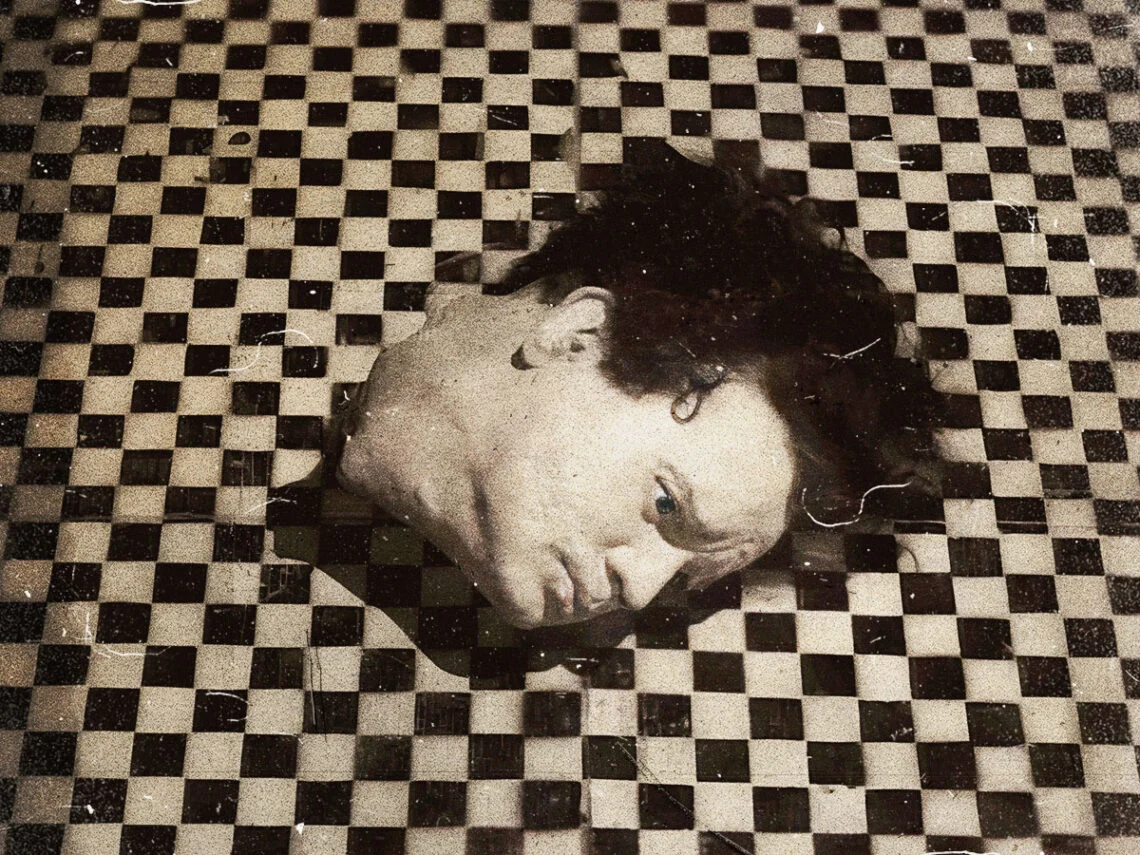
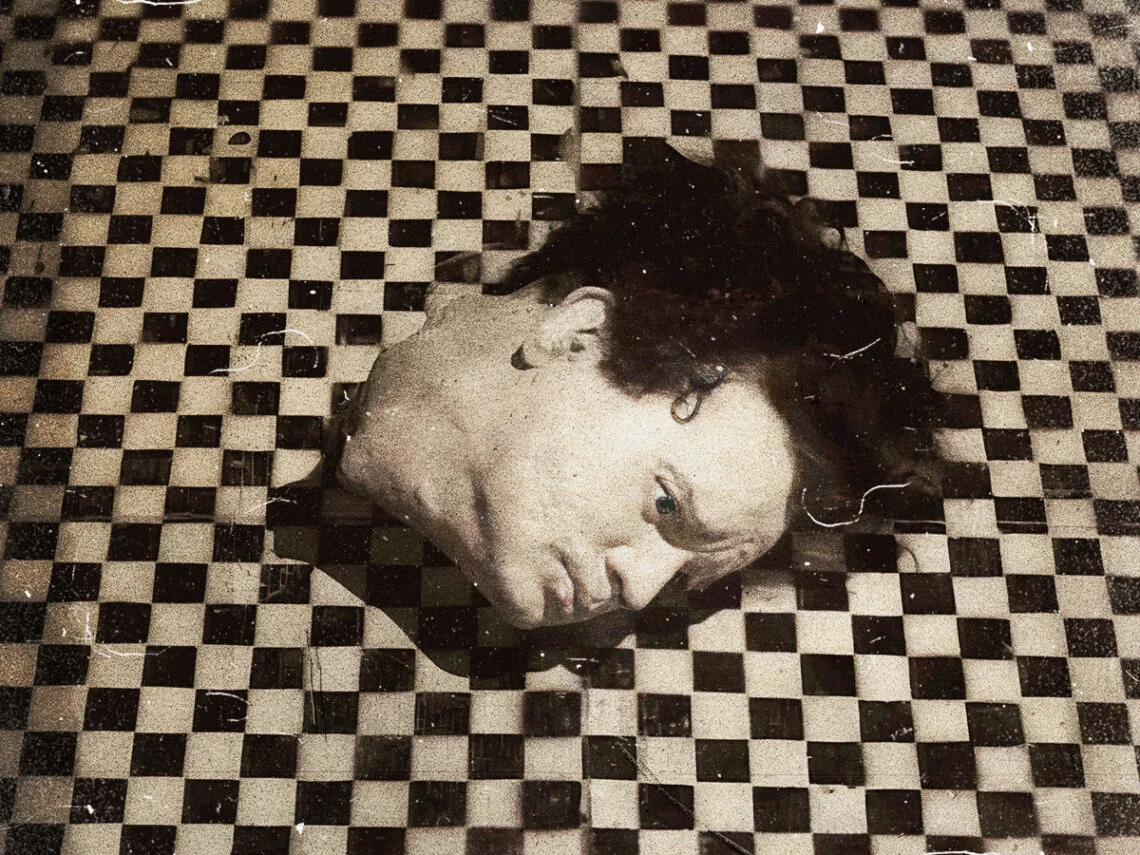
Now I want to introduce another Lynch film to continue these metaphysical investigations, Eraserhead. In this film Henry Spencer lives in an industrial wasteland that feels like it has forgotten the difference between inside and outside. He is pulled into a family arrangement, meets Mary, is trapped into parenthood, and is left alone with an infant that is not recognisably human. The child’s vulnerability and neediness dominate the flat. Mary collapses, leaves, returns, leaves again. Henry drifts into an affair or a desire relation with the woman next door, while simultaneously being pulled toward a fantasy figure who appears on a stage within a radiator, the Lady in the Radiator, who sings and crushes sperm like creatures under her feet.
Henry’s daily world becomes increasingly hallucinatory, with bodily eruptions, bleeding, and uncanny transformations. Eventually, in the film’s catastrophic resolution, Henry opens the child’s swaddling, the infant’s body ruptures and spills, the room becomes a site of biological and cosmological breakdown, and Henry appears to enter the fantasy space, culminating in an image of embrace and obliteration.
Told that way, you can already see why any attempt to say what “really” happens will turn quickly into ontological misgivings, and then the temptation will be to say that the film is “ambiguous” in reference, or that it even “lacks reference.” But our Finean approach resists the temptation. We can say that the object of discourse is a complex structured whole, and the film itself teaches you which predicates attach to which aspects. Henry can be “a father” and “a child” and “a worker” and “a body” and “a spectator” without the film equivocating. The film is not confused, it is showing that the same human matter can be integrated under different forms, family, sexual, industrial, fantasy, and those forms clash.
Visually, Eraserhead is built out of dense monochrome textures. Industrial steam, grit, wet surfaces, and harsh shadows make the world feel tactile and abrasive. The camera is often patient and frontal, allowing time for discomfort to accumulate. Close ups isolate objects and faces, making parts feel unmoored from wholes, a mouth, a cheek, a lump of food, a switch, a radiator. The sound design is continuous industrial rumble, so that the space is never silent enough to feel safe. That makes the flat feel less like a home and more like a machine you are trapped inside.
Acting is deliberately constrained. Henry’s face is a mask of anxious vacancy, with micro movements rather than expressive arcs. Mary oscillates between hysteria and exhaustion. The parents’ dinner scene plays as grotesque social theatre, with ritualised politeness and sudden eruptions of bodily horror, the small roast chicken that convulses and bleeds. The Lady in the Radiator performs an uncanny mixture of sweetness and menace, as if the fantasy of comfort is also a fantasy of extermination.
Supposedly, there is the fear of parenthood, especially unwanted parenthood, and the dread of responsibility. There is sexual guilt and anxiety, the body as shameful, reproduction as grotesque. There is industrial alienation, the dehumanising environment as a force that invades domestic life. There is a surrealist lineage, dream logic, Freudian imagery, castration anxiety, womb imagery, and so on. There is also masculinity, Henry as paralysed by the demands of being a man in a world where work and family have become monstrous institutions. Maybe there is also biographical readings tied to Lynch’s early life.
Eroticism sits oddly in this cluster because the film is not conventionally erotic, yet it is saturated with sexual charge. The charge is displaced into textures and procedures rather than pleasure. The bed is a site of obligation and panic. The woman next door is framed as temptation, but temptation that feels damp, claustrophobic, and guilt ridden. The Lady in the Radiator is a fantasy of tenderness that is inseparable from destruction, which is why her performance is both alluring and terrifying. If you keep the erotic as a property of the whole, not reducible to any one bodily act, then you can say the film’s eroticism is an atmospheric coupling of desire, disgust, and relief. It is the sense that the body wants release from itself, and that sex is both the route to and the cause of entrapment.
But I want to pivot away from all this conventional stuff and see it in a more Finean way. Start with the infant. The infant is a composite object whose matter includes latex flesh, bandages, crying sound, Henry’s handling, Mary’s breakdown, and the flat’s oppressive machinery ambience. Its form is the parental relation that integrates these materials into “our child.” But that form is unstable. The film repeatedly tests whether the infant can sustain the predicates that attach to “child,” “patient,” “family member,” “responsibility,” “burden,” “intruder.” The infant is something Henry must care for and something that behaves like an industrial device. It can be “sick” in a biological way and “malfunctioning” in a mechanical way. If you insist that those predicates cannot belong to one thing, you will be tempted into ambiguity talk. Fine says do not do that. Admit a richer ontology, allow hybrid objects, then the linguistic and cinematic data stop looking paradoxical.
Then treat Henry himself as a variable embodiment. In one manifestation he is a timid man shuffling through work and family duty. In another he is a sexual agent reaching toward the neighbour. In another he is a spectator entranced by a stage within a radiator. In another he is a killer or destroyer opening the infant’s swaddling. This can be one enduring object manifested under different conditions, time slices in the cinematic sense, counterfactual or wishful scenarios, and the film cuts between them without a conventional marker because it is not making a simple epistemic claim, it is doing ontological work. It is showing that the same underlying matter can support multiple forms, and that the horror is precisely that no single form can dominate long enough to give Henry a stable self.
A productive Fine move is to treat Eraserhead’s spaces as rainbow like. The radiator stage is not “inside” the radiator in the way a coin is inside a drawer. It is a perspective relative location. From Henry’s lived perspective, it is there, accessible, spatially present, with its own laws. From a different perspective, it is merely a fantasy. Fine’s rainbow lets you say there is no single underlying location of the radiator world that the film is projecting. The radiator world is a location constituted by a perspective and a set of physical supports, the radiator, the hum, the close up frame, the lighting, the performance. Its reality is not undermined by the absence of an underlying privileged map coordinate. The film’s ontology becomes plural.
Modal analysis is analysis in terms of possibility and necessity, what could have happened, what must happen given an identity, and what varies across counterfactual situations. Fine’s variable embodiment is already modal, because it is defined by how an object could be manifested in different counterfactual circumstances. Eraserhead is saturated with modal pressure. The infant feels like a “necessary consequence” of sex, a necessity Henry cannot escape. The Lady in the Radiator offers a different modal profile, a possible world where Henry can have comfort without obligation, but the film contaminates that world with extermination imagery, suggesting that this possibility comes at the cost of erasing the reproductive matter that caused the necessity.
The neighbour offers another counterfactual, sex without the original partner, but the film frames it as claustrophobic and morally sticky, not liberating. This is where eroticism becomes precise. In Fine’s terms, erotic relations in Lynch are often rigid embodiments, structured wholes that integrate individuals under relations of desire, ownership fantasy, shame, secrecy, and institutional scripting. The question “what is this couple” is not answered by listing psychological states. It is answered by specifying the form that integrates the matter. In Eraserhead, Henry and Mary have a form imposed by family obligation and social ritual, the dinner, the parents’ interrogation, the forced marriage vibe. Henry and the neighbour have a form of furtive relief and betrayal. Henry and the Lady in the Radiator have a form of worshipful spectator desire that is not interpersonal in the ordinary way, more like an institution of fantasy, a stage relation, audience and performer, confession and absolution.
Each erotic structure has different persistence conditions. Henry and Mary’s structure collapses under the infant’s demands. Henry and the neighbour’s structure collapses into jealousy and violence. Henry and the Lady’s structure persists as a lure because it is not anchored to the same practical obligations, it is perspective relative (like a rainbow), it can keep existing as long as Henry can keep entering that mode of attention.
Finally, the film’s famous bodily horror can be re read as Fine’s point about what happens when you try to eliminate circularity or force reductions. The baby exists, in the film’s ontology, partly because it is taken to exist as “our child” by Henry and Mary, and partly because it imposes itself as a physical burden. That is an identity based holism pressure. The object’s identity is not fully specifiable without reference to the social and attitudinal relations around it. Lynch literalises the embarrassment Fine describes. The infant is behind a mental barrier, a projection of dread and obligation, and also brutally there, crying. The film refuses to let you place it wholly on one side of the barrier. That is the horror, and also the erotic bind, because sex is the act that produces this cross boundary object, at once fantasy laden and materially oppressive.