A Hornbook of Democracy Book Reviews
The story of Socrates’ death has been famous for millenia. The denouement is that the Greek sage could have escaped the punishment planned for him for his alleged corruption of the youth of his community, but he declined to run because he thought the right thing to do was to submit to his death penalty. Van der Vossen’s book considers this matter at some length, eventually (and tentatively) concluding that maybe Socrates wasn’t really obligated to drink the hemlock prescribed by his government for his sins. Socrates may seem to have landed himself in a very unusual dilemma. Walter Horn Reviews
Read More
It may seem that twenty years ago was a calmer, more peaceful time than it is now, at least in the (possibly post-pandemic, but arguably authoritarian) USA. But recalling the names of a few heads of state around the world in 2005 may remind us that there has never really been what ought to be called a placid year for human beings–even if the climate has surely gotten worse. Walter Horn reviews
Read More
One of the big things that either Trump or Musk or both have got up to since the recent Presidential inauguration in the U.S. has been the defunding and destaffing of USAID, the Federal agency responsible for dissemination of foreign aid around the world. According to the New York Times, the results of that initiative have already been quite dramatic. Walter Horn reviews.
Read More
In a useful 2003 primer for those thinking about voting rules, Daniel Horowitz writes, “To evaluate an electoral system or to choose a new one, it is necessary to ask first what one wants the electoral system to do.” No doubt, the goal of electoral systems is to aggregate preferences and produce policy choices from such tallies. But Horowitz insists that no system functions as “a passivetranslation of individual wishes into a collective choice.” Thus, he quite reasonably proclaims (though without producing anything resembling an argument for it) that “our voting rules will always bias the results in one way or another” Voter preferences, he says, “are shaped by the electoral system [and] cannot exist independently of it.” Walter Horn reviews.
Read More
In what might be reasonably surmised to be a response to the recent Congressional and Presidential elections in the U.S., I have been hunting around for a book to review that is focussed on the interrelationships between democracy and intelligence. Walter Horn reviews.
Read More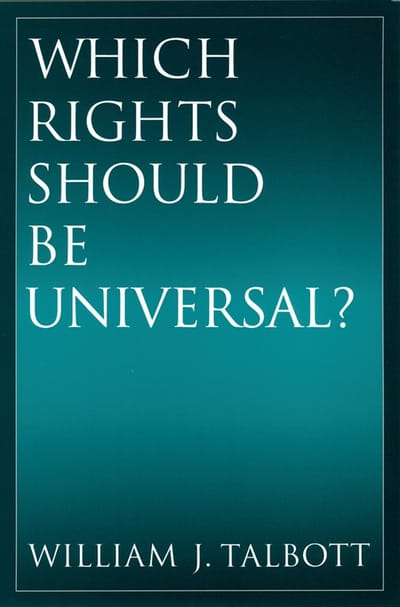
William Talbott believes that certain rights are in some sense universal–applicable to all human beings with the capacity for autonomy, and perhaps many non-human animals as well. Now, when someone says that this or that alleged entitlement is a human right, there is an important ambiguity that may arise. They may mean that the alleged prerogative (let’s say making fun of some political figure) is a protected activity, something for which no one can be punished–at least in a particular jurisdiction. Alternatively, they may be saying that, whether or not the government in question currently protects these kinds of activities, making it immune from punishment, every government should do so. Walter Horn reviews.
Read More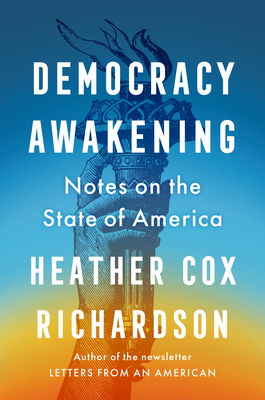
At the beginning of David Byrne’s wonderful movie True Stories, the filmaker/narrator asks his viewers, “Do you like music? I know…everybody says they do.” That also seems to me to be true of democracy. Everybody says they like it, and they also fear for its future. At least in the U.S., there is a tremendous amount of concern in the air about “losing our democracy,” as if that is something we’ve had here for a long time, but is about to either wither away or be stolen from us. Walter Horn reviews.
Read More
As I suppose everybody knows, populism is a wildly popular academic subject at present. The number of papers and books coming out that focus on the concept is mind-boggling. And, naturally, Comparative Politics and Political Philosophy Departments are promoting new programs for both faculty and students to immerse themselves in populist studies. That, one must suppose, is the main reason for the appearance of this gargantuan collection. Walter Horn reviews
Read More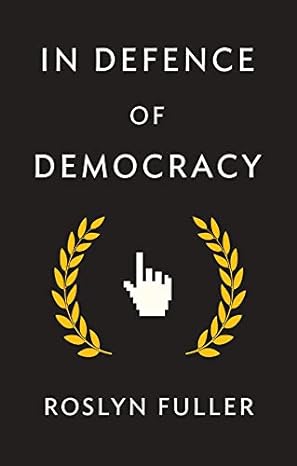
In previous writings here and elsewhere, I have written as if the forms of democracy that might be endorsed or criticized are pretty much exhausted by the following broad and basic categories: Elective (however voting is conducted) “Republican” (i.e., severely restricting the sorts of things the populace is allowed to do) “Populist” (i.e., intending to give “the people” what they want in almost every arena) Sortitionist (however their lotteries may be conducted) Direct (where people rule without need of representation)... The problem with this taxonomy is that Roslyn Fuller has recently written three compelling books on democratic theory showing that it exhibits a significant lack of imagination. Walter Horn reviews.
Read More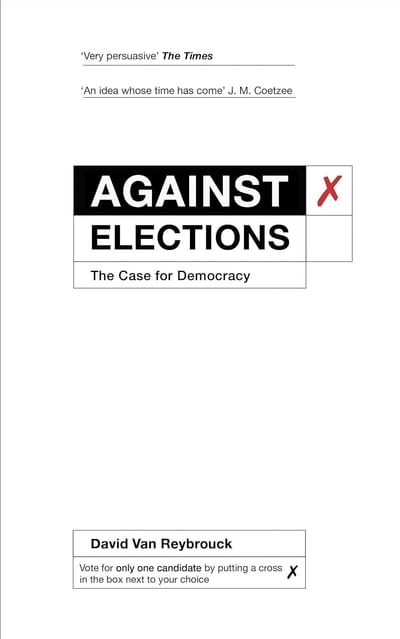
It wasn’t terribly long ago, just 1999, that recently anointed Nobel Laureate, Amartya Sen, wrote a celebrated essay (“Democracy as a Universal Value”) according to which the spread of democracy in the 20th Century was perhaps the most important device for human betterment since the domestication of cud-chewing mammals. In Sen’s view, democracy–something he took to include most elements of classical liberalism–even prevents famines. Surely, Sen sang, nothing else during that period can be justly claimed to have delivered the miracles accomplished by the proliferation of democracy. Walter Horn reviews.
Read More
I spent a good deal of space in my review of Rick Hasen’s previous book, Cheap Speech, marveling at the author’s prodigious industry. Rather than descend into that rabbit hole again, I will say here only that each new book, paper, op-ed, TV appearance, etc. may cause one to wonder if prior, ostensibly scientific claims regarding the absolute impossibility of perpetual motion machines ought to be reconsidered. Walter Horn Reviews.
Read More
Given the fact that it is now almost commonplace to shove a significant portion of blame for the pernicious hyper-partisanship now evident in the U.S. on the 1950 American Political Science Association study on political parties one can’t deny the courage it must have taken for that august society of social scientists to give the same issue another public look. It’s not only the numerous mentions of the Schattschneider-led post-WWII report that make clear that the authors often had the earlier work at the back of their minds, but the much more cautious tone exemplified by the new report. Walter Horn reviews.
Read More