A Hornbook of Democracy Book Reviews
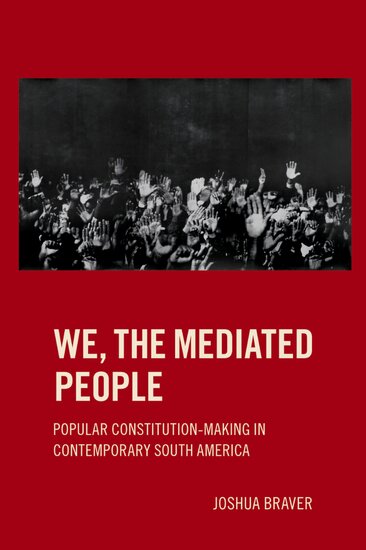
Whether or not constituent power is, like Freud’s id, some sort of uncontrollable monster, there can be little question that it has nearly taken over current democratic theory. There is not only the immense new Oxford Handbook on the subject, but also several of the items that have recently been reviewed here. Walter Horn reviews.
Read More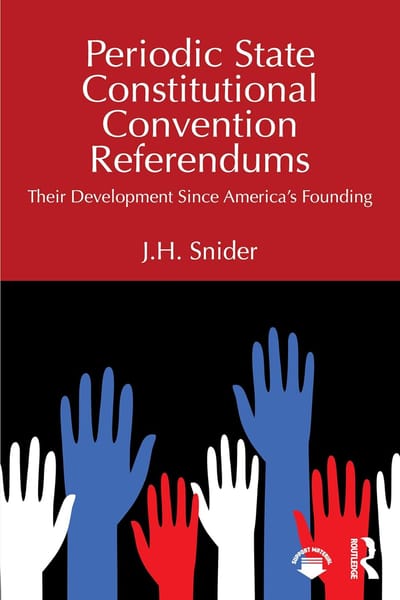
There are a bewildering variety of ways in which such terms as "sovereignty," "constituent power," and "the general will" have been deployed by theorists from Rousseau and Sieyes to Carl Schmitt and beyond. I have discussed this matter a bit [here]. It is both fascinating and, in these precarious days, arguably quite consequential to ponder the question of whether all the fine distinctions drawn in this vast literature are pulling their weight. Two books that I believe can greatly assist in this project are those that I review here: Lucia Rubinelli's Constituent Power: A History and J.H. Snider's Periodic State Constitutional Convention Referendums. The first is a model of careful historical scholarship that manages also to be genuinely engaging to those with any interest in the incendiary politics of the French Revolution or the Weimar Republic. The second is an acute and ambitious institutional proposal that illustrates that these matters remain of supreme importance in the U.S. today. Together they illuminate both what is at stake in these long-standing arguments and what it might actually mean to build democratic institutions adequate to them. Walter Horn reviews.
Read More
It has been a philosophical commonplace for centuries that might does not make right. Even – or perhaps especially – in our contemporary world of rule by cruel, vainglorious grifters, who would suggest otherwise? But is it possible that right (at least in the sense of legitimate authority) always at least involves might, that there can be no authoritative commands by sovereigns or their designees without the power to force compliance? That has long been one of the central tenets of Kenneth Einar Himma’s philosophy of law, and the densely-packed little book under review is one more important contribution to that impressive body of work. Walter Horn Reviews
Read More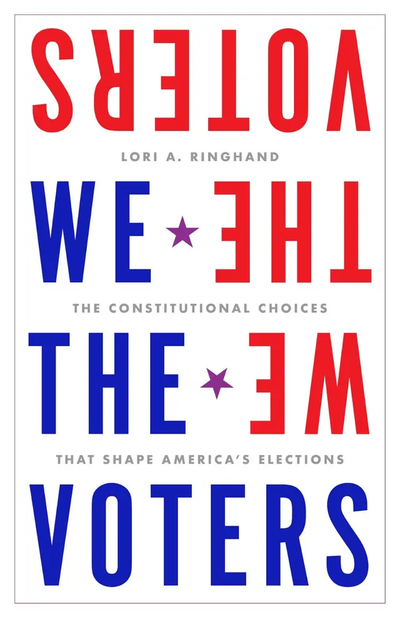
There are many discouraging aspects about the deterioration of voting rights in the U.S. since the 1970s. But what should cause the most pain is likely to come from considering the Dixie Confederacy’s regular reassertions of its continuing desire to ensure that only certain citizens should be allowed to vote. Along with the Emancipation Proclamation, the enactments of the 13th, 14th, and 15th amendments to the U.S. Constitution after the Civil War were the crowning features of that horrific conflict, the reason for all that death and destruction. But while the North got bored with Reconstruction, the South never gave up their attacks on it. Lori Ringhand’s We the Voters is a painful reminder of the fact that the resolute attempts to keep Whites in charge, however Congress might have tried to keep things fair, have been just as obsessive as the “super hardcore” reenactors depicted in Horwitz’s Confederates in the Attic. Walter Horn Reviews.
Read More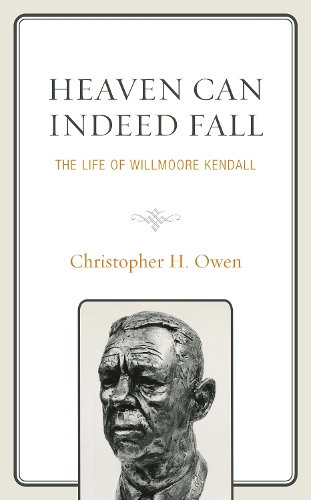
It is regularly said that “populism” is a vague, perhaps even useless, term because there are both right- and left-wing populists. Perhaps the idea is that there can only be one political continuum, and as Trotsky and Trump certainly don’t belong in the same spot on this line, it can’t be helpful to claim that they are both populists. In his biography of Willmoore Kendall, Christopher Owen nevertheless takes the position that his subject’s famous move from youthful democratic socialist to WWII isolationist, National Review co-founder, and intractable supporter of Joe McCarthy is explicable by the fact that Kendall was motivated throughout his short but explosive lifetime by his consistent advocacy for populism–at least if that term is taken to require an insistence on majority rule. Walter Horn reviews.
Read More
Thomas More’s 16th Century Utopia was hardly the first book on the “Ideal City.” I mean, even Plato wrote one. To give just a couple of U.S. examples, we have been blessed with wonderful works by Edward Bellamy, Tom Paine and Henry George. Indeed, around the time of the Constitutional Convention, Federalists and Anti-Federalists were producing aspirational pamphlets by the dozens. And after a bit of time, political theorists and other observers started turning out numerous books and essays, often lambasting the Electoral College, the Senate, single-member districts, “first-past-the-post” voting schemes, the power of lawyers and the courts, the “imperial presidency,” the two-party system, and on and on. I’ve actually written such a book myself, and though it was undeniably pie-in-the-sky, the work being reviewed here seems to me even more quixotic. Walter Horn reviews.
Read More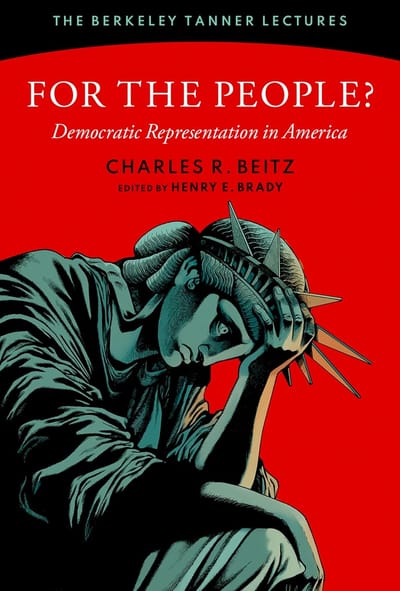
Like nearly every political scientist in the known universe, Princeton’s Professor Charles Beitz has no doubt that the (I would say “what little”) democracy there was in the United States prior to the turn of the millennium is on the verge of disappearing entirely. The difference is that Beitz is not entirely satisfied with the measures that can be used to verify this nearly universal impression among political scientists. So, in the Tanner Lectures reproduced in this slim, lucid volume, he makes an impressive attempt to understand both what would make for a clearly democratic jurisdiction, and the precise measurements that can be used to determine whether anyone’s intuitions about the level of democracy–or its current course–are appropriate. Walter Horn reviews.
Read More
An advantage of having a long-time expert like Matthew Kramer write an overview of a towering 20th-century intellectual like H.L.A. Hart is that he’s fully at ease with the many intricate debates surrounding Hart’s work. A concern, however, is that if this overview is intended to be an introductory text, the abundance of expertise at hand may also turn out to be a disadvantage, because some of the topics covered may seem marginal to the casual or student reader. That seems to me to be the case here. Walter Horn Reviews.
Read More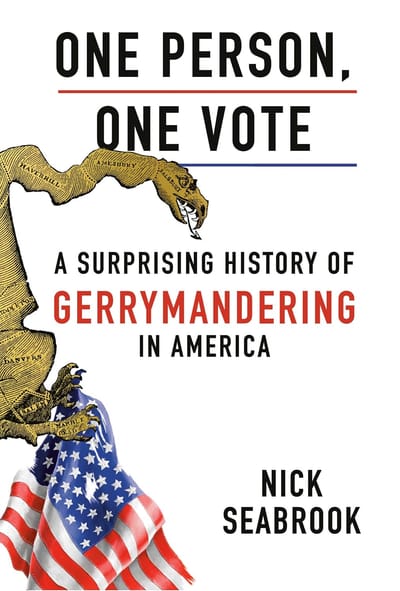
There is surely a good deal of truth in the old saw that one should not try to determine the nature or value of a book from its cover. But what about its title…or its subtitle? Can we tell much from that? Not here. Despite its title, Seabrook’s book is less an analysis of democratic equality than a sprawling, anecdote-rich chronicle of electoral manipulation in American history. In fact, the exact topic of what equality consists in for purposes of majoritarianism is almost never touched on, let alone discussed in detail. Walter Horn reviews.
Read More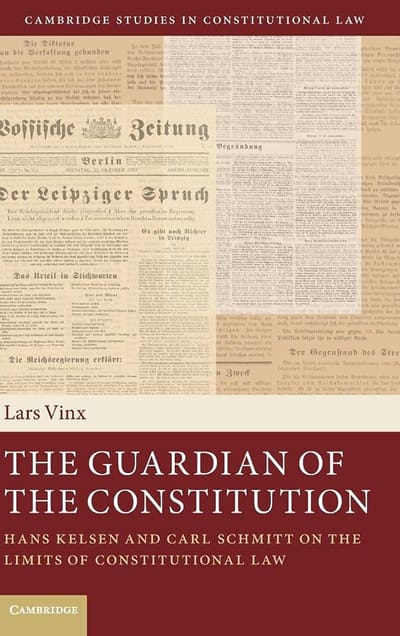
Imagine a federal country in which the head of state has decided that the government of one or more of its subsidiary provinces should be suspended or entirely removed for incompetence or malfeasance. Suppose, as well, that national troops have been sent to those areas based on the claim that there is a danger to the public there that cannot be controlled by local law enforcement personnel. Walter Horn reviews.
Read More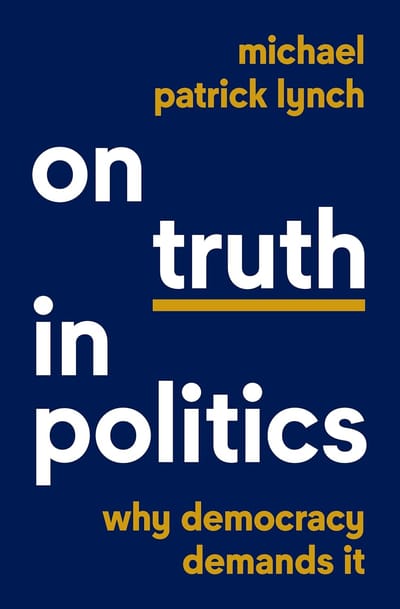
To be honest, I am somewhat discomfited writing a review of On Truth in Politics. There is a lot I agree with in the book, and I am sympathetic with the general attitude of disgust expressed by its author toward the willful expressions of mistruth by politicians and their supporters–particularly by certain ones currently in power in the U.S. I also entirely concur with the author, a Professor and Administrator at UCONN, that anything like an attitude of indifference toward whether political statements are true can be deeply, even irreparably, harmful to a populace. Walter Horn reviews.
Read More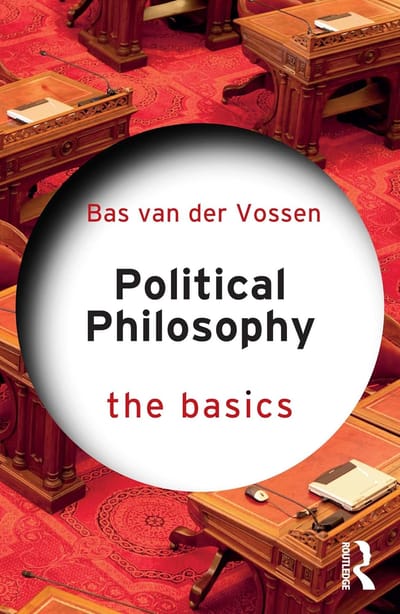
The story of Socrates’ death has been famous for millenia. The denouement is that the Greek sage could have escaped the punishment planned for him for his alleged corruption of the youth of his community, but he declined to run because he thought the right thing to do was to submit to his death penalty. Van der Vossen’s book considers this matter at some length, eventually (and tentatively) concluding that maybe Socrates wasn’t really obligated to drink the hemlock prescribed by his government for his sins. Socrates may seem to have landed himself in a very unusual dilemma. Walter Horn Reviews
Read More