Twin Peaks: The Return - Counterfactuals and Impossible Worlds
Most of us have had moments where we can feel, in our own lives, the pull of a counterfactual, the kind that starts to reorganise the air in the room. One is the aftermath of a relationship that really was love, and then stopped being love, or stopped being anything you can stand to name. After it ends, you find yourself trying to work out what would restore it. You replay a particular evening, a particular sentence, the moment you did not call back, the moment you did. You tell yourself, if I had been calmer, if I had been more honest, if I had not said that, if I had said the other thing, it would have held.
At first the idea is simple, and that simplicity is comforting. But then you add detail. You specify what calmer would have meant in that kitchen, on that night, with that tiredness, and that history, and that look on their face. You specify what more honest would have meant, what it would have cost, what it would have exposed. The more you try to make the repair precise, the less the imagined restoration feels like restoration. It begins to look like a different relationship, with different people in it, a different tone of life, a different texture of days. You realise, with a kind of shock, that the sentence “if I had done X, we would still be together” does not have one clear way of being true. There are many ways, and they do not agree with each other, and when you try to hold them all in place, the picture stops making sense. The counterfactual begins to feel like something you cannot safely complete, because completing it changes what it was supposed to preserve.
In unrequited love, when you are not in a drama of repair but in the ache of wanting to be seen you start with something else. If only I were a little more visible. If only I could find the right moment. If only I could say one true thing without turning it into a performance. But then you run the scenario, again and again, and the more carefully you imagine it, the more the distance seems to grow. You think about what they might say, what they might do, how they might look past you, how they might misunderstand. You imagine being noticed, and then imagine what being noticed would really mean, the sudden exposure, the chance of pity, the chance of being reduced to a detail in someone else’s day. Each new “way it could go” is another layer of loneliness, another demonstration that the world you want is not simply a nearby world you could step into. The counterfactual thickens into a kind of negative clarity. You can feel, almost physically, that substituting one description for another changes everything, that “if they knew” is not the same as “if they looked”, that “if I spoke” is not the same as “if I was heard”, even when you tell yourself these are, in some abstract sense, equivalent. The thought keeps its grammar, but it loses its grip.
Start with the ended relationship. At first, the counterfactual looks innocent. If I had done this one thing differently, then the relationship would have survived. That thought treats the past like a possible world that is still nearby, a world you might almost step back into with a small adjustment. But Kit Fine’s work suggests that this picture is already misleading. What matters is not whether there exists some world in which you did the thing and the relationship survived, but the ways in which that antecedent could be realised. When you begin to specify what doing it differently would actually have involved, you are generating multiple incompatible states. In one, you are calmer but less honest. In another, more honest but more frightening. In another, you speak earlier and undo something else that mattered. These are partial situations that cannot be fused without contradiction. The counterfactual “if I had done X” demands an impossible state, one in which you are simultaneously the person you were and the person you would have had to become for the repair to work. The reason the scenario stops making sense is that the imagined restoration requires the fusion of incompatible states of character, history, and timing.
In Fine’s terms, the counterfactual becomes paradoxical. It has verifiers, but they cannot be consistently combined into a single situation that is still the same relationship. The pain here is sharpened by a kind of illicit substitution. You slide from “if I had done this particular thing differently” to “if I were the sort of person who could have done this differently”. Those descriptions may feel equivalent in the heat of regret, but Fine’s arguments tell us they are not substitutable without loss. The first points to a local alteration, the second to a global reorganisation of the state. Treating them as interchangeable forces you into an impossible counterfactual, one that demands both continuity and rupture at once. The more detail you add, the more the impossibility shows itself.
The case of being unrequited reveals a different but related structure. Here the counterfactual is not about repair but about visibility. If they noticed me, then things would be different. At first this seems like a single adjustment, almost trivial. But when you follow Fine, you begin to see that “being noticed” is not a simple switch. There are many ways it might be true. Being noticed as a friend. Being noticed as a curiosity. Being noticed too late. Being noticed with kindness but without desire. Each is a distinct state, and crucially, they are not interchangeable. The counterfactual hope quietly assumes that these ways collapse into one, that “being noticed” has a single truth-condition that will do the work you want. Fine’s rejection of substitutivity tells us why this assumption fails. The antecedent fractures into multiple incompatible ways of being realised, many of which actively deepen the distance you were trying to close.
As you imagine these ways more carefully, the feeling of loneliness intensifies rather than recedes. That is because you are exploring a space of counterfactuals in which the antecedent remains possible, but the consequents diverge in painful directions. The thought “if I were more visible” no longer points toward a single outcome but towards many outcomes, most of which preserve or worsen the isolation. In Fine’s terms, the counterfactual does not trivialise, which means where everything follows, but it becomes unstable. It cannot support the practical or emotional work you want it to do. It ceases to guide action or sustain hope because its ways of being true pull apart.
Seen through this lens, both situations involve a confrontation with intimate impossibility. The problem is not that the desired world is logically impossible in some abstract sense. It is that the counterfactual requires the coexistence of states that cannot be jointly realised while keeping fixed what you care about. In the first case, the identity of the relationship. In the second, the identity of yourself as seen by another. Fine’s philosophy helps us see why these counterfactuals feel both compelling and corrosive. They are structured impossibilities, incompossibles is the term of art, generated by treating different ways of being true as if they could be freely substituted. This is what hyperintensionality looks like.
Push regret far enough and it stops feeling like regret and starts feeling like something has gone ontologically wrong. The relationship left behind a kind of residue, a pressure in the world. You wake up knowing, with absolute certainty, that there is a version of yesterday in which you said the right thing, but you cannot say what that thing was without changing it. Each attempt to specify it produces a different past, one that does not quite fit the memory you are trying to save. The kitchen is the same kitchen, the words are the same words, and yet when you imagine saying them, the scene acquires a slight distortion, as if the lighting has shifted a fraction, or the clock on the wall has begun to tick too loudly. You start to feel that the sentence “if I had done X” no longer refers to an alternative action but to an alternative world that overlaps with this one in all the wrong places. It is not somewhere else. It is here, leaking.
Dread comes from the sense that the counterfactual is still operative. It has not been closed off by time. You feel as though the world is waiting for a repair that cannot be performed without undoing the person who would perform it. The impossibility is banal and therefore worse. You go to the same places, speak to the same people, but everything feels slightly misaligned, as if the past is not settled but suspended. The more you try to think your way back, the more the thought itself becomes uncanny. You are no longer asking what you might have done, you are asking what kind of person could have done it, and that person does not quite exist. Or perhaps they do exist, just not here. The counterfactual begins to hum, like a faulty electrical current, animating the present with something that does not belong to it. What psychology would call rumination, Fine would diagnose as an impossible fusion, a state that demands you be both continuous with your past self and discontinuous enough to repair it.
The unrequited begins with absence which already has the shape of a void, and counterfactual thinking gives that void an architecture. You imagine becoming more visible, and at first it seems like a simple adjustment, a change of posture, tone, timing. But soon visibility itself becomes strange. You imagine them noticing you, and the image refuses to settle. Sometimes they look at you and smile, but the smile does not quite land. Sometimes they look through you, but with recognition, as if they know you are there and choose not to engage. Sometimes they say your name, and the sound of it feels wrong, as if it belongs to someone else. Each imagined outcome is vivid, precise, and incompatible with the others. They cannot be fused into a single story in which you are simply seen and loved. The counterfactual “if they noticed me” opens onto a corridor of doors, each leading to a different version of humiliation, exposure, or intensified solitude.
Here the uncanny emerges as a sense of being present in the world in the wrong mode. You are there, undeniably, but not in a way that allows you to be integrated. You begin to feel that your existence has become conditional, as if it depends on an antecedent that never quite obtains. If they looked, then I would exist differently. But because that look does not arrive, your existence acquires a spectral quality. You are not invisible in the ordinary sense. You are hyper-visible to yourself, painfully aware of every gesture, every silence, every missed opportunity. The more you think through the counterfactual, the more you feel that being seen would not restore you but annihilate you, because no single way of being seen corresponds to the person you are trying to preserve. Fine would say that the antecedent has too many incompatible ways of being true.
In both cases, the dread is not psychological in the sense of being a malfunction of the mind, nor sociological in the sense of being imposed from outside. It is metaphysical and intimate. The counterfactual has failed because it cannot stabilise. It continues to operate without yielding a coherent world. Therapeutic explanations tell you to let go, to move on, to accept what is. But here is not resistance to acceptance but the presence of something unresolved at the level of possibility itself. The world feels wrong because of what cannot be coherently imagined as having happened otherwise.
I use these two examples, of regret and unrequited as ways in to thinking about David Lynch's Twin Peaks: The Return as a whole becauseI think the series shows a world where ordinary logical rules seem to bend, fracture, or partially fail, while still feeling structured rather than random. Fine’s claim is that standard “possible worlds” thinking cannot cope with this kind of structure once impossibility enters the picture, and The Return is almost a laboratory for seeing why.
In everyday logic, negation works cleanly. If something is true, its negation is false. If its negation is true, the original thing is false. Now think about Agent Cooper in Twin Peaks: The Return. At different points in the series, all of the following seem to be in play at once:
Cooper is trapped in the Black Lodge.
Cooper has returned to the world.
Cooper is Dougie Jones.
Cooper is not Cooper at all, but Mr C.
If we tried to force these into the ordinary rule for negation, we would be driven into nonsense. Take the claim:“Cooper has returned.” At the same time, the series presents: “Cooper has not returned.” If we use the usual negation rule, “not returned” would mean “it is false that Cooper has returned”. But the series clearly shows something more disturbing. Cooper has returned, in one sense, because someone is walking around with his face, his body, his history. And yet Cooper has not returned, because the Cooper who understands himself, who recognises others, who acts as Cooper, is absent. The contradiction is not a mistake .
Fine’s first claim is that if you try to model this using impossible worlds added on top of ordinary possible worlds, the basic rule for negation collapses. You end up saying: Cooper has returned, Cooper has not returned, and therefore Cooper has returned and not returned in a way that makes the theory itself inconsistent.
Fine’s solution is to require us to distinguish verification from falsification. An impossible state in The Return can verify “Cooper has returned” and falsify “Cooper has returned” at the same time, without the framework breaking. This matches how we actually watch the show. We do not conclude that the series has contradicted itself and therefore means nothing. We hold both strands in view at once.
One interpretative temptation would be to say: fine, anything goes. Just allow any impossible configuration you like. But that's not how the show's pressures work. Consider Cooper and Dougie. Dougie is not just a random impossibility. He is not an arbitrary alternative version of Cooper. He is structured.
Dougie has Cooper’s body.
Dougie lacks Cooper’s agency.
Dougie triggers Cooper’s recognitions without realising them.
Dougie moves through the world by fragments: coffee, electricity, FBI instinct.
Now imagine an anarchic impossible world approach. You might allow a “world” where:
Cooper is Dougie,
but Dougie does not share Cooper’s body,
and Dougie remembers everything Cooper knows,
and Dougie has none of Cooper’s vulnerabilities,
and Dougie is also Laura Palmer.
That would obliterate the careful distinctions the show is drawing. The series distinguishes this impossible condition from that one. It wants Dougie to be this particular deformation of Cooper, not a free-for-all. Fine’s second point is exactly this. If you allow anarchic impossible worlds, you end up treating even tiny rearrangements as different contents. You lose the ability to model moderate rationality or coherent narrative deformation.
Fine makes impossible states are not free inventions. They are built out of possible parts.Dougie is built out of:
the possible state “this body is Cooper’s”,
combined with the possible state “this person lacks Cooper’s agency”,
combined with the possible state “this person is inserted into ordinary domestic life”.
The impossibility is not that anything whatever happens. The impossibility is the fusion of elements that cannot coexist in an ordinary possible state.
Now consider how the series treats conjunction and disjunction. Think about Mr C. The show is not saying: Mr C is Cooper or Mr C is evil. It is saying: Mr C is Cooper and Mr C is evil. The horror comes from conjunction, not from choice. If the show merely said “either Cooper is still good or he is evil”, we would be in ordinary suspense territory. Any audience watching the show knows that they would be watching the show in objectively the wrong way if they thought this was a suspense show because The Return insists that the same figure carries both aspects together, and the effect of that is not suspense.
Fine criticises impossible world explanations that simply restate this difference by saying: “in all worlds where A and B is true, A is true”. That kind of explanation just mirrors what we already know. Truthmaker semantics explains the difference mechanically, in a way The Return makes intuitive. To verify “Mr C is Cooper and evil”, the state must include:
a Cooper-part
and an evil-part
fused together.
To verify “Mr C is Cooper or evil”, you only need one of those parts.
That is why Mr C is terrifying. The show is not offering alternatives, it is offering a forced fusion of incompatible traits. The impossibility lies in the fusion itself, not in a mysterious world where “and” happens to behave oddly.
Laura Palmer in The Return is perhaps the clearest illustration of Fine’s idea that impossible states are “missing fusions”. The series presents multiple partial states involving Laura:
Laura is murdered.
Laura is not murdered.
Laura is a high school girl in Twin Peaks.
Laura is a cosmic scream outside time.
Laura is Carrie Page in Odessa.
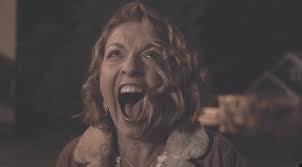
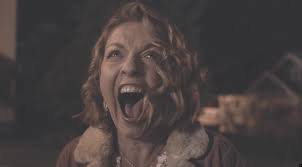
There is no possible world in which all of these can be fused into one consistent situation. And yet the series behaves as if such a fusion exists. Laura’s scream at the end is precisely the sound of that impossible fusion trying to hold.
Fine’s idea is that instead of treating this as a weird alternative world, we should treat it as a virtual fusion of incompatible states.
Think of it this way.
One state: Laura’s death structures Twin Peaks.
Another state: Laura survives and leaves Twin Peaks.
There is no possible fusion of these. But The Return insists on working with the “what if they are both held together” structure. That structure is the impossible state. And crucially, that impossible state must include all the parts of its components. If it includes “Laura survives”, it must include “Laura exists later”. If it includes “Laura is murdered”, it must include “Laura is absent from Twin Peaks”. This is why the ending is not arbitrary. When Laura hears her name and screams, the entire impossible fusion collapses. The state cannot be held together any longer.
Ordinary language “might” behaves strangely in The Return. When the Fireman gives Cooper instructions, it feels right to say: “Cooper might succeed.” But this does not mean that there is a single clean possible world where Cooper neatly succeeds. Instead, the show suggests:
Cooper might succeed by restoring Laura.
Cooper might succeed by failing.
Cooper might succeed in one sense while destroying everything in another.
Fine’s truthmaker idea helps here. “Might A” does not mean “there exists a clean possible world where A is true”. It means that the ways of making A true are not ruled out as impossible. Once impossible states are allowed, we can say: the “success” of Cooper has verifiers, but those verifiers may be impossible. They may involve contradictions like saving Laura and thereby undoing Twin Peaks itself. This avoids the degenerate result where everything impossible automatically counts as “might”.
The Return is obsessed with counterfactuals, especially counterpossibles. “If Laura had never died, Twin Peaks would be saved.” This is not an ordinary counterfactual. Laura’s death is not just contingently false, it is foundational to the world of the series. Removing it threatens the structure of reality itself. Possible worlds semantics says: there are no possible worlds where Laura never died, so everything follows trivially. But the series clearly distinguishes outcomes.
If Laura never died, Cooper thinks he can bring her home.
If Laura never died, reality fractures and collapses.
These are not the same counterfactuals. Fine’s truthmaker approach says: allow impossible verifiers for the antecedent “Laura never died”. Then look at the outcomes of those verifiers. Different impossible antecedents can have different impossible structures, and therefore different consequences. That is exactly what The Return dramatises. The problem is not that the antecedent is impossible. The problem is that different impossibilities lead to different kinds of ruin.
Possible worlds treat impossibility as a foreign country. Fine’s approach treats impossibility as something that emerges naturally when you try to fuse incompatible parts of reality. That is exactly how The Return feels.
The Lodge is not another clean world.
Mr C is not an alternative version of Cooper.
Dougie is not a separate timeline.
Laura is not replaced by another Laura.
Everything is built out of fragments of the same reality, forced together in ways that should not work, but do, until they scream. Fine’s has thoughts about further “modal monsters”. The Return seems to go beyond even structured impossibility, into forms of impossibility that are not obviously decomposable into clean parts. Episode 8, the atomic blast, the Woodsmen, the frog moth, feel like impossibilities whose structure we cannot fully analyse. Fine’s framework does not deny these. It simply says: once you start admitting impossibility in a disciplined way, you should not be surprised if deeper, stranger impossibilities appear.
Possible worlds are like complete timelines. The Return does not operate in timelines. Fine’s states are like scenes, fragments, moments, gestures, sounds. The Return is built entirely out of those. Impossible states are what you get when those fragments are fused in ways that reality cannot normally tolerate. That is not a bug in the theory. That is what Lynch is showing us.
Think about all the scenes in the series that are perfectly ordinary, even boring. Sheriff Truman talking procedure. Lucy at the front desk. The Twin Peaks police department trying to make sense of paperwork. None of this behaves strangely just because the Lodge exists somewhere else. Fine says: if you take a theory that only talks about consistent states, and then you extend it so that it also allows impossible states, everything that was true about the consistent states stays exactly the same.
The extension is conservative. It does not rewrite reality. It only adds extra cases at the edges. Imagine two ways of telling a story. First version: you only describe scenes that are internally consistent. People talk, coffee is drunk, evidence is logged, bodies are found. This is the P-model, the possible-state model. Second version: you tell exactly the same scenes, but now you also include the Black Lodge, Mr C, Dougie, time loops, Laura’s scream, the Fireman, and the moment where Cooper asks, “What year is this?” This is the E-model, the extended model. Fine’s theorem says: for every ordinary scene, nothing changes. Lucy still recognises Andy.
Coffee still tastes good. A dead body is still a dead body.
A gunshot still kills.The rules governing these things do not shift just because impossibility is now admitted elsewhere.
If a statement is verified or falsified by a consistent state, then it will be verified or falsified in exactly the same way whether or not we allow impossible states in the background. So when Dougie stands in front of people at work, the ordinary facts remain ordinary. He signs papers. People react to him. He eats cake. The meaning of “Dougie is sitting in a chair” does not change because the Lodge exists.The impossible machinery does not leak into the ordinary world and corrupt it.
This answers a natural worry. One might think that once you allow impossible states, everything becomes unstable. Once contradictions are allowed somewhere, why should anything still behave normally? Fine’s answer is: because the extension is conservative. The impossible does not overwrite the possible. It supplements it. In The Return, this is exactly how the horror works. The uncanny moments are uncanny precisely because the ordinary background remains intact. If everything were already impossible, nothing would feel wrong. Mr C is frightening because he moves through a world that otherwise behaves normally. Fine generalises this point. It is not just negation or conjunction that needs to behave conservatively. Any connective, any way of combining meanings, should satisfy the same constraint.
Suppose you have two ways of understanding a scene that agree on everything ordinary. They agree on who is present, what is said, what happens physically. They only differ in what impossible background you allow.Then when you combine these scenes using narrative operations like “and”, “or”, “not”, the result should still agree on all the ordinary facts.For example, take these two descriptions:
Description A: Cooper is sitting in the sheriff’s station, and the lights flicker.
Description B: Cooper is sitting in the sheriff’s station, and the lights flicker, and somewhere else the Lodge hums.
As far as the ordinary scene is concerned, these descriptions agree. Fine’s conservativity condition says that if you now build more complex descriptions out of them, the ordinary content must still line up. This is why The Return can cut from a domestic scene straight into the Lodge without collapsing the narrative. The addition of impossibility only adds another layer.
When Cooper at the end asks Laura, “What year is this?”, the question does not suddenly make the ordinary facts meaningless. The house is still there. The street is still there. Laura is still standing in front of him. The impossibility enters by colliding with consistency. That collision is what Fine’s framework is designed to model.
Fine explicitly says that questions about whether impossible states or worlds “really exist” are secondary. What matters is whether they are useful.Twin Peaks similarly never tells you whether the Lodge is metaphysically real, psychologically real, or symbolically real. It shows you that treating it as real does explanatory work. It lets you make sense of Cooper, Laura, evil, repetition, failure, and dread in a way that ordinary realism cannot.
Fine’s position is therefore surprisingly modest. He is not saying: replace possible worlds with impossible ones. He is saying: start with small, ordinary, consistent states. Let those states combine where they can. And then, when combinations fail but are still demanded by our theories, our language, or our narratives, allow disciplined impossibility to emerge naturally. In Twin Peaks the world breaks because incompatible truths are forced to coexist, and the system can only hold them together for so long.
Now turn to counterfactuals. Start with the most basic assumption Fine targets, the idea that counterfactuals are intensional in the strong sense that only the truth conditions of antecedent and consequent matter. If two antecedents are necessarily equivalent (e.g Clark Kent and Superman), then substituting one for the other should preserve the truth of the counterfactual. The Return exposes how fragile it is.
Think about Cooper’s central project in the final episodes. We are invited to consider a counterfactual like: if Laura Palmer had not died, then the horror of Twin Peaks would not have unfolded. This feels at least intelligible, perhaps even compelling. But now substitute a necessarily equivalent description of the antecedent. Instead of “Laura Palmer did not die”, say “the girl whose death grounds the identity of Twin Peaks did not die”. If possible worlds semantics were right, the substitution should make no difference. Yet in the series it makes all the difference. The first counterfactual opens onto a path Cooper can attempt to walk. The second dissolves the very conditions under which paths, identities, and years make sense at all. The problem is not epistemic, it is structural. The ways in which the antecedent might be realised matter, not merely whether it is true or false in some abstract sense.
This is why Fine thinks counterfactuals are wayward. A counterfactual does not ask merely whether A is true in some possible world, but how A might be true. In The Return, “Laura lives” can be realised in radically different ways. She might live and remain Laura Palmer in Twin Peaks. She might live and become Carrie Page in Odessa. She might live in a way that erases Twin Peaks itself. These are not interchangeable, even if some coarse description treats them as equivalent. The possible-worlds picture collapses them. The series insists on holding them apart.
Chaining perfectly plausible counterfactual principles forces us into contradiction unless we abandon substitution. So, if Cooper saves Laura, then she does not die. If she does not die, then the trauma that structures Twin Peaks does not occur. If that trauma does not occur, then the conditions under which Cooper’s mission makes sense do not obtain. Step by step, the counterfactual reasoning is locally compelling, yet globally incoherent. The contradiction is not a mistake in reasoning, it is a feature of the space of counterfactuals Cooper is moving in.
Possible worlds semantics tries to resolve such tension by appeal to closeness. We are told to look at the closest worlds where Laura does not die and see what holds there. But The Return shows why this is the wrong picture. There is no single axis of closeness here. Worlds in which Laura lives may be closer in one respect and infinitely distant in another. A world where Laura lives but reality fractures may be “closer” with respect to physical continuity, but further away with respect to narrative intelligibility. The series refuses to supply a total ordering of similarity, and Fine’s argument explains why no such ordering can do the work we want.
Fine’s stranded worlds are where worlds get closer and closer without ever reaching a closest one. In The Return, Cooper moves through realities like this. Each attempt to correct the past brings him into a world that seems closer to his aim, yet never settles into a stable outcome. Odessa is not a closest world. It is a stranded one. There is no point at which the counterfactual “if Laura had not died” bottoms out into a determinate scenario that preserves enough of the original world to make the evaluation straightforward. The result is not triviality, where everything follows, but paradoxicality, where no coherent total picture can be formed. When we read Kafka this notion of a stranded world becomes unbearably salient and is what Kafkaesque has come to mean, a type of Zeno's paradox where a closer world is simultaneously infinitely further away.
Fine’s insistence on preserving principles like transitivity and conjunction also helps here. Cooper’s reasoning relies on them. He assumes that if A would lead to B, and B would lead to C, then A would lead to C. He assumes that he can combine counterfactual consequences. What fails is the assumption that substitution is harmless. “Laura did not die” is not interchangeable with “the condition that grounds Twin Peaks did not occur”, even if some abstract description treats them as equivalent. Once we see this, the breakdown of Cooper’s project looks like structural inevitability, just as we saw with the Regret and the Unrequited at the start.
The discussion of disjunction and simplification sharpens the point. Fine argues that from “if A or B were the case, then C” we are often entitled to infer “if A were the case, then C”, because A is a way in which A or B could be true. In The Return, this logic is everywhere. If one of Cooper’s interventions works, the world is saved. This does not mean that every specific intervention will work. Some ways of satisfying the disjunctive antecedent are live, others are not. The series constantly shifts context so that what counts as a genuine counterfactual possibility changes. When Cooper crosses the threshold at the Great Northern, the space of admissible ways is altered. What was once a way of making the antecedent true no longer is.
This contextual shifting is what Fine later calls suppositional accommodation. We tacitly adjust the space of counterfactual possibilities to make sense of the supposition we are entertaining. When Cooper asks “What year is this?”, the context that allowed his previous counterfactual reasoning collapses. The antecedent he has been working with no longer represents a genuine possibility within the adjusted space. The scream marks the failure of accommodation. There is no further adjustment that can make the supposition coherent.
Twin Peaks can survive with Laura dead, and it can survive with Laura absent as a named figure. But it cannot survive the specific way in which Cooper tries to have her both alive and reintegrated into the old narrative. The inference from “whether Laura lives or dies, something like Twin Peaks persists” to “if Cooper intervenes, the world is repaired” fails. The connective tissue is missing.
Possible worlds assume totality, closure, and substitutivity. The Return operates with partial states, local transitions, and ways of being true that matter as much as truth itself. Counterfactuals are evaluated against structured situations, not against complete alternative universes.This is why Fine’s promissory note about a semantics based on possible states is a description of what the series is doing. Each scene in The Return is a state. Some states can fuse, others cannot. Some fusions are attempted anyway, producing impossibility. Counterfactual reasoning tracks these fusions and their failures, not a map of nearby worlds.
Seen this way, Cooper is not a bad counterfactual reasoner who misjudges similarity. He is a perfectly good counterfactual reasoner operating in a space where substitution fails. His tragedy is not that he reasons incorrectly, but that he reasons correctly in a framework where correctness no longer guarantees coherence.
Fine’s conclusion, that we must abandon possible worlds in favour of possible states to make sense of counterfactuals, reads like a philosophical gloss on The Return. The series does not ask what would happen in another world. It asks what would happen if this fragment were combined with that fragment, if this past were forced to coexist with this present. The answer is a terrified scream.