Ruth Barcan Marcus and Modality (1): The Barcan Formula
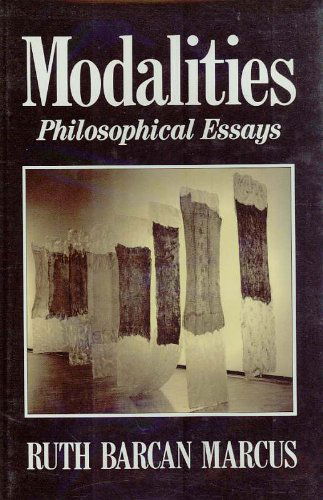
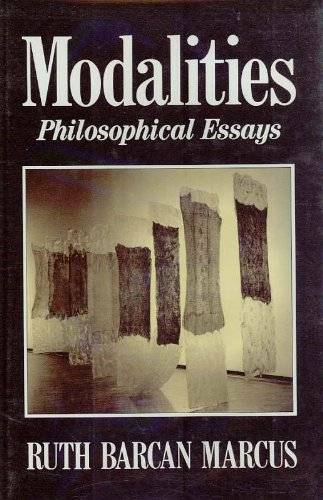
Her book is about a special part of philosophy called modality. Modality is the study of things that are possible, things that are necessary, and things that could not happen at all. When you say something like “The glass might break” or “Two plus two must make four,” you are using modal ideas. You are not only saying what is true. You are also saying something about what could have been different or what could never be different.
Marcus explains that philosophers have argued about these ideas for a long time. They wonder what possibilities really are. Are they just ideas in our heads, or do they describe something real about the world? When you imagine a world where dinosaurs never went extinct, is that just a story in your mind, or is it a real kind of world that could have existed?
She also says that these questions become even harder when we talk about identity and existence. Imagine a ship that has all its wooden planks replaced one by one. Is it still the same ship? If something could have been different from how it is, does that mean it is a different thing, or the same thing in a different situation? These are the kinds of puzzles philosophers try to solve. She also talks about how we describe all possible objects. When we say something like “Every number has a successor” or “All unicorns would have one horn,” we are talking about things that may or may not exist. She asks what it really means to talk about all possible things. In short, she invites you to think about what could be true, not only what is true. It explains that understanding possibility and necessity helps us understand the world in a deeper way, because it shows us how things might have been different and what things could never change.
Marcus built a good logical language for talking about what is possible and what is necessary. That is what “modal logic” is. Ordinary logic just says things like “All cats are mammals” or “If it is raining then the street is wet”. Modal logic adds words like “necessarily” and “possibly”. So you can say “It is necessary that 2 + 2 = 4” or “It is possible that there is life on other planets”. Marcus wants to defend this kind of logic against attacks from another famous philosopher called Quine.
Quine had said that modal logic was “conceived in sin”. That is his dramatic way of saying that the people who first tried to do it made a basic mistake. The mistake, he thinks, is that they mixed up two things called “use” and “mention”. To “use” a sentence is to say it in order to talk about the world, like when you say “Snow is white” to say something about snow. To “mention” a sentence is to talk about the sentence itself, like when you say “‘Snow is white’ has three words”. Quine thinks that when you say “Necessarily, p” you are treating “p” as a thing, a sentence, and not really using it in the ordinary way. So, he says, the whole business is muddled. Marcus disagrees. She thinks we can make good sense of these modal words, and she wants to show in detail how.
To do this, she introduces the idea of an “intensional language”. The word “intensional” here has an s, not a t. It does not mean “intense”. It is about how meanings behave in special contexts, like “necessarily”, “believes that”, and “knows that”. Roughly, an “extensional” language is one where only what things refer to matters. If two phrases refer to the same thing, you can always swap them without changing the truth of any sentence. An “intensional” language is one where that swap sometimes breaks things. For example, “the morning star” and “the evening star” both refer to the planet Venus. So in an extensional language, wherever you see “the morning star”, you can swap in “the evening star” and the sentence will stay true. But consider “The ancient Babylonians believed that the morning star is bright”. They did not know that the morning star and the evening star were the same object. If you replace “the morning star” with “the evening star” inside “believed that”, you may get a sentence that is not true. This means the belief context is intensional. Swapping co referring expressions is not always safe there. Marcus wants a logical language that can handle such contexts instead of throwing them away like Quine's model did. If she could then her model would be stronger than Quine's because it would be able to be more fruitful. It would do everything Quine's model could do plus handle modality.
She starts by asking what a language must contain at a very basic level. She says that any language must have some “things” it talks about, ways to classify and arrange them, ways to state sentences, and ways to tell true sentences from false ones. She does not try to explain in detail how we decide which bits of experience count as “things”. She just says that one sign that something is treated as a thing is that we can talk about identity for it. That is, we can say “x is the same as y” where x and y are names for things. If you have a symbol “=“ or “I” for the “is identical to” relation, then anything that can go meaningfully on each side of that symbol is counted as a thing by the language.
Now, if you allow not just ordinary objects, but also classes, properties, or even whole propositions to stand in the identity relation, your language becomes more and more “intensional”. Why is that? Because you are starting to treat not just lumps of matter but also “ways of being” and “ways of saying” as things in their own right, and you are allowing a special strict relation “is the very same one” to hold among them. You might then be tempted to “weaken” that identity relation. For example, you might say “Two classes are the same if they have the same members” or “Two propositions are the same if they are true in exactly the same cases”. These are equivalence relations, not identity in the strongest sense. Marcus says that if you turn real identity into one of these weaker relations, you are “extensionalising” the language. You are treating things as the same whenever they behave the same in certain patterns, instead of keeping a separate, stricter notion of being literally one and the same thing.
She then brings in an important distinction: identity versus indiscernibility. Identity is just “they are that very same thing”. Indiscernibility means “there is no property that one has and the other lacks”. In many set ups, logicians define identity in terms of indiscernibility. They say: x is identical with y if, for every property, x has it if and only if y has it. That sounds reasonable. But she notes that this already builds in a kind of extensionality, because you are defining identity in terms of sharing all properties. She suggests that perhaps we should not always collapse identity into indiscernibility. Maybe there is a logical or ordinary language sense in which “being literally the same thing” is stronger than “having all the same properties that our language can describe”. She does not fully insist on this in her own formal work, but she wants to show that the distinction is at least possible.
Next she talks about “substitution theorems”. These are rules that tell you when you can swap one expression for another in a sentence and keep the truth. In simple, non modal logic, there is a very strong substitution rule. If two sentences are materially equivalent, which means “either both true or both false in all cases we care about”, then in many contexts you can swap one for the other. Formally, you can say something like: if x and y are equivalent, then any sentence z that you get by putting x in some place is equivalent to the sentence w you get by putting y in that place instead. Marcus calls a language “implicitly extensional” if it allows this kind of strong substitution for all contexts. The problem, as she points out, is that this strong substitution rule fails exactly in the contexts we care about in modal logic and in the logic of belief and knowledge. Think of “John is a featherless biped” and “John is a rational animal”. Suppose these are equivalent descriptions of John. Then the simple substitution rule would say that if John believes one, he must believe the other, because they refer to the same fact. But that is not how belief works. John might believe “I am a rational animal” but have never heard the phrase “featherless biped”. So “John believes that he is a rational animal” could be true while “John believes that he is a featherless biped” is false. The sentences are equivalent in the extensional sense, but they are not freely swappable inside “believes that”.
Quine’s reaction is to say: fine, then any context like “believes that”, “knows that”, “it is necessary that”, and so on, is too messy. Let us banish them. Let us only do logic in nice, clean extensional language where substitution always works. Marcus thinks this is a mistake. It is like deciding to study only perfectly smooth shapes in geometry and ignoring anything else. She says that these “messy” contexts are very important for real thinking about the world, for example when we reason about obligations, causation, belief, and many other things. Modal logic gives us some of the tools we need, so we should keep it and refine it rather than throw it away.
After talking about intensional languages and substitution in general, she zooms in on a particular modal system she has worked on. It is called QS4. Roughly, you take a standard modal logic known as S4, which already has a necessity operator, and you add quantifiers, like “for all x” and “there exists an x”. You also add a special axiom that ties these two together. In ordinary words, that axiom says something like: “If it is absolutely necessary that something or other has a certain property, then there is some actual thing that necessarily has that property”. You might picture it as saying that necessary possibilities are always anchored in real objects. This is a version of what is now called the Barcan formula.
Once you have this system, QS4, you can prove some striking results. One of the most famous is “the necessity of identity”. That is, if two things are actually identical, then they are identical in every possible situation. So if a = b is true, then it is necessarily true that a = b. There is no possible world in which they are not identical. True identity statements are not lucky accidents; they are logical truths, like a = a, that hold in all worlds where the things exist at all. Marcus shows this result, and she accepts it.
Quine finds this appalling. He thinks it turns all the rich, concrete objects of the world into pale shadows. He complains that if you say “The evening star is the morning star” is necessarily true, you are not really talking about a real astronomical discovery, but only about some abstract identity between descriptions. He claims that Marcus’s logic “purifies the universe”, as if you have removed the messy, changeable details and left only dull, eternal truths.
Marcus replies in two main ways. First, she explains that if “a = b” is a genuine identity, then it is not saying that there are two things that happen to coincide. It is saying there is only one thing, which has two names. If that is so, then “a = b” really does say the same thing as “a = a”. The latter is obviously a tautology, which means a truth just by logic. So if “a = b” is genuine identity, it should also count as a tautology. That makes it necessary by the rules of the modal system. So the necessity of identity is not weird. It just means we are taking identity seriously as “being exactly the same thing and not two”.
Second, she thinks that Quine is mixing up identity with other kinds of “equivalence”. Take the sentence “The morning star is the evening star”. Many people treat this as a simple identity. But the phrases “the morning star” and “the evening star” started life as descriptions: “the first bright star in the morning sky” and “the first bright star in the evening sky”. As descriptions, they might have turned out to pick out different objects. So “the morning star is the evening star” might have been false. Once we learn that in fact both descriptions pick out Venus, we can choose either to keep treating them as descriptions, which are only contingently equivalent, or to start using them as proper names, that is, as tags for the same thing.
This leads to another key idea in the chapter, which later became famous. Marcus says that a proper name is like a tag or a label without descriptive meaning. It simply picks out a thing. She even gives a little thought experiment. Imagine you make a list of all the things that a culture counts as objects. You then randomly assign a number to each one and stick that number on it. That number now works as a proper name for the object. You can talk about “Object 173” and “Object 294”. The numbers carry no meaning about the objects. They are just tags. That is what she thinks proper names are like. They are not disguised descriptions. They are bare tags that latch on to things.
If that is right, then when a phrase is genuinely used as a proper name, identity statements involving it are not matters of empirical discovery in the same way. The interesting empirical work lies in establishing that this name and that name really tag the same thing. Once that is settled, “a = b” expresses a logical relation, and it should be necessary. The confusing part comes if we mix up names and descriptions. If “the author of Waverley” is used as a description, then “Scott is the author of Waverley” is not necessary. Someone else could have written the book. But if “The Author of Waverley” has come to be used as a proper name for Scott, then “Scott is The Author of Waverley” just says that Scott is Scott, and it is necessary and trivial. So we need to be clear about how expressions are being used.
Marcus thinks that once we are careful about these distinctions, QS4 does not “banish concrete things”. It only shows that certain ways of talking are better seen as using proper names as tags, while others are still using descriptions. The logic itself is not guilty of any sin. It just makes our assumptions clear.
Near the end of the chapter, she returns to substitution theorems. In pure modal logic, you can prove some restricted substitution rules. For example, if two sentences are strictly equivalent, meaning that they are true in exactly the same situations in all possible worlds, then you can sometimes substitute one for the other. But you must be careful where. You cannot do it freely inside contexts for knowledge and belief, because those contexts are more intensional than even the modal ones. The general lesson is that we should not expect one single substitution rule to work everywhere. Instead, we should understand how strong our equivalence relation is and which contexts it is safe in.
She ends with a modest but important claim. She says there is no need to treat identity as a relation for everything under the sun, including propositions and properties, if that feels too strange. We can keep identity as a strict relation only among the things we treat as objects in our language, such as individuals. For other items like classes and propositions, we can talk about a variety of equivalence relations instead. Then we can prove strong substitution theorems for those, without pretending that those things are “identical” in the same sense as two names for one person. That way, we get almost all the benefits of extensional logic without having to deny the usefulness of intensional contexts like necessity and belief.
If you step back, you see she is doing three things at once. It is explaining what an intensional language is and why we might want one. It is answering Quine’s attack on modal logic by showing that his worries come from mixing up identity with weaker equivalences and from trying to use one simple substitution rule everywhere. And it is sketching a clear picture of how proper names work as tags, which helps explain why genuine identity statements are necessary. The whole point is to keep the interesting parts of our thought, about what must be true and what people believe, inside logic, instead of banishing them.