RUTH BARCAN MARCUS AND MODALITY (5): Possible Worlds
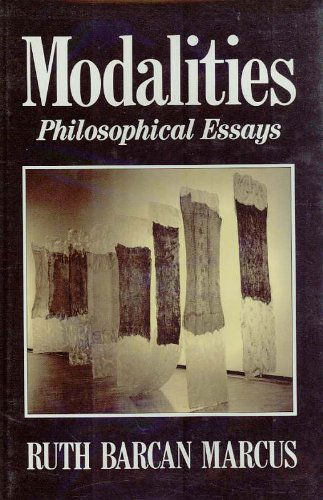
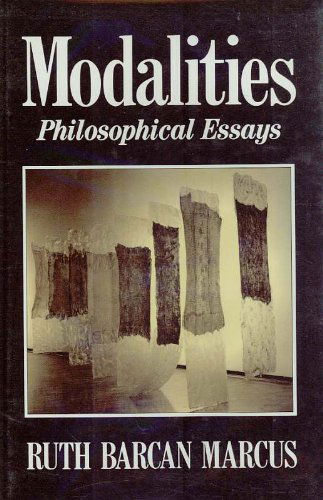
Marcus deals with a question that had become very popular in philosophy by the time Marcus was writing. The question is whether we should talk about “possible worlds,” and whether these worlds contain “possibilia,” which means possible but not actual objects. Some philosophers, especially those influenced by philosopher Saul Kripke, found possible worlds very useful. They imagined a whole collection of different ways the world might have been. In each possible world, objects might live different lives, make different choices, or even fail to exist. Some, like David Lewis, went even further and said that these possible worlds are just as real as our world, only separate from it. Marcus is not happy with any of this. She thinks it confuses logic with unnecessary metaphysics. She aimed to show that modal logic does not need fully fledged possible worlds full of strange possible objects in order to work.
She begins with the simple thought that the phrase “possible world” is only a way of speaking. It is a device. It helps us imagine how things could have gone differently. But she says we must be careful not to treat these imagined worlds as actual places full of actual objects. If we do that, we risk filling our logical systems with ghostly things that do not exist in our world and that we cannot point to or refer to in any straightforward way. Marcus prefers to keep logic close to actual things. If an object exists in the domain of our logic, then it must be something that actually exists, or at least something we have a way of referring to. Otherwise, we build a fantasy world that makes reasoning much harder, not easier.
She then asks us to imagine the difference between talking about possibilities by using descriptions and talking about possibilities by imagining full extra worlds. She prefers the first method. When we say “Socrates might have lived longer,” we are talking about Socrates, the actual person, and thinking of a different way his life could have gone. We are not imagining a fully real second world where another version of Socrates exists. Instead, we are describing a different possible situation for the one and only Socrates. Marcus thinks that this approach respects the identity of objects and avoids multiplying unnecessary “possibilia.” She invented the Barcan formulas, which relate quantifiers to modal operators. These formulas have an effect on how many objects we think exist across possible situations. If we accept the Barcan formulas, then the objects that exist in our actual world are also the objects we consider when we talk about possibilities. This means that the domain of objects does not expand in other possible situations. Marcus likes this result. She thinks it keeps modal logic tied to actual objects. If you reject the Barcan formulas, you end up with new possible objects that appear only in some imagined worlds. She says that is a bad idea because then we must explain how we talk about these non actual objects, how they differ from actual ones, and what makes them possible. She thinks this is all unnecessary and messy.
Imagine you say “There could have been a twin of me who never existed in this world.” If you think this twin is a real possible object, then your logic now must handle a huge number of imaginary things. You have to say what they are, how many of them there are, and what properties they all have. Marcus thinks this is the wrong direction. She says we should talk about what is possible for actual things, not invent whole new possible things. In short, the logic should stay grounded.
She also takes aim at the idea that possible worlds can solve every problem in modal logic. Some philosophers think that once you introduce possible worlds, everything becomes easier. You can say that a sentence is necessary if it is true in all possible worlds, and possible if it is true in at least one. Marcus says this is fine as a picture, but it is not an explanation. It hides the real questions. It does not tell you what a possible world is, how we know it exists, or how we identify objects across them. In fact, she thinks possible worlds talk can distract people from deeper issues, such as the nature of identity, the role of quantifiers, and the difference between descriptive and essential properties. She then explains a very important point. Even if we talk about possible worlds, we still need rules that decide when we are talking about the same object in two situations. For example, if we imagine Socrates in one possible world and some figure called “Socrates” in another, how do we know they are the same Socrates? What keeps track of their identity? Jerry Fodor asked the same question when the philosopher Putnam imagined a twin earth. Marcus argues that only our actual naming practices and our connection to actual objects can secure this identity. Without that anchoring, the possible world version of “Socrates” is just a description, like “the man who asks questions in Athens,” and that could pick out a different person in each imagined world. She thinks this shows that possible worlds cannot solve the problem of cross world identity. The only secure identity is actual identity. Hence she prefers an actualist form of modal logic.
She spends some time criticising a mistake that often appears in the literature. Philosophers do this a lot. Some philosophers in the literature say that to talk about possibilities seriously, you must quantify over possible objects, not just actual ones. Marcus replies that this confuses description with reference. You can describe something that does not exist without making it a genuine object. For example, you can describe a centaur, but that does not mean your logical system should treat centaurs as objects in the domain. A logic should not start counting them and asking how many there are. Descriptions are linguistic, not metaphysical. Marcus wants to keep this difference clear.
Then she addresses a deeper worry. Some people fear that if you refuse possible worlds and possible objects, then modal logic becomes too weak or too narrow. Marcus answers that her version of modal logic is strong enough to express everything we need. It can handle essential attributions, necessary identities, and many ordinary modal claims. What it does not allow are huge collections of ghostly objects that do not exist. She says that is not a weakness but a strength. Logic should not pretend that imaginary things are real.
She finishes with a simple thought. Modal logic should help us reason about how actual things could have been different. It should not lead us to create a whole new population of imaginary objects or shadow worlds. Possibility is about actual objects in hypothetical states, not about mountains of “possibilia” that exist in some weird realm. A disciplined logic, with careful rules about quantifiers and identity, can express all of this without drifting into fantasy.