Modal Breakdown: Lynch, Fine, and Trump's Politics of the Actual
Modal Breakdown: Lynch, Fine, and Trump's Politics of the Actual
19 Dec
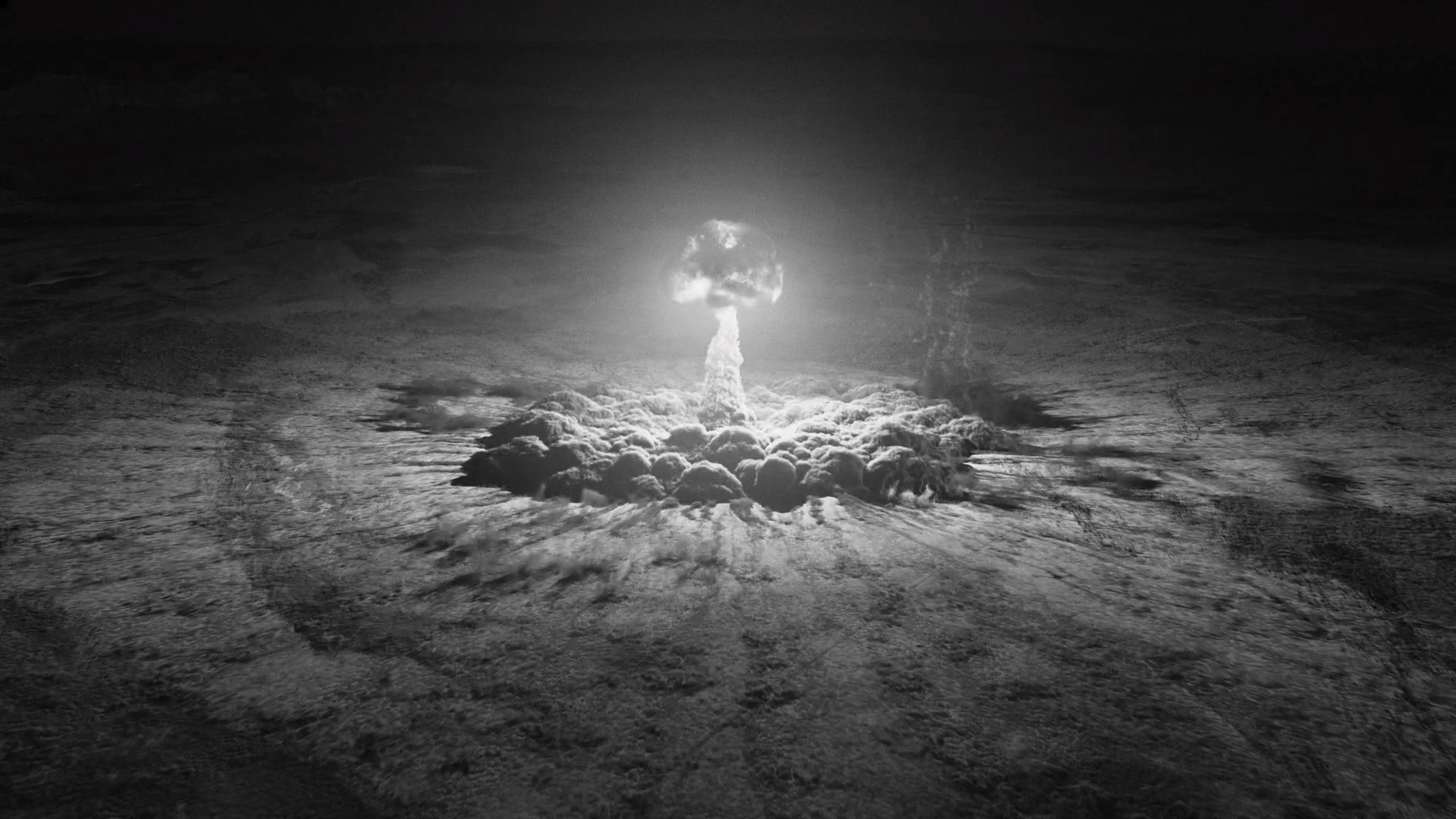
To read Twin Peaks: The Return through the work of Kit Fine is to treat Lynch’s series not primarily as a puzzle to be solved, nor as a dream to be decoded, but as an exploration of the structure of reality itself, specifically of the relations between actuality, possibility, identity, and time. Fine’s work is especially helpful here because it resists two temptations that dominate both analytic metaphysics and popular interpretation of Lynch alike: the temptation to reduce modal complexity to a single explanatory framework, and the temptation to dissolve temporal phenomena into atemporal structure. The Return can be understood as a televisual thought experiment that enacts, rather than merely illustrates, Fine’s insistence on modal and temporal pluralism. One of Fine’s central claims in Modality and Tense is that there is no single, privileged modal operator from which all others can be derived. Possibility, necessity, essence, and actuality are not interchangeable projections of one underlying structure but distinct, irreducible notions. Attempts to flatten modality into possible-world semantics, however technically elegant, risk obscuring the real metaphysical differences between kinds of modal dependence. This insistence on irreducibility maps strikingly onto Lynch’s refusal to allow the viewer to stabilise the ontological status of what they see. The Return does not simply present multiple possible worlds, nor does it straightforwardly depict alternate timelines. Instead, it stages a persistent tension between different kinds of modal status: what is actual but unstable, what is possible but insistently present, what is necessary yet inaccessible, and what is essential but fragmented. This becomes clearest in the figure of Dale Cooper. Cooper is not merely split into good and evil versions, nor does he simply exist across parallel worlds. Rather, Cooper exemplifies what Fine would call de re modality: modality that attaches to things themselves, not merely to propositions about them. The question the series continually presses is not “In which possible world does Cooper do X?” but “What is Cooper capable of being?” The long arc of Dougie Jones is crucial here. Dougie is not simply a decoy or narrative delay, but a modal attenuation of Cooper’s agency. He is Cooper under a drastically restricted set of modal capacities. The humour and pathos of the Dougie episodes arise precisely from this: Dougie is actual, not imaginary, yet his actuality is impoverished. This directly echoes Fine’s claim that actuality does not guarantee fullness or completeness. Something can be fully actual while remaining modally thin. This is why attempts to interpret Dougie as merely symbolic or as a dream projection feel inadequate. In Fine’s terms, Dougie is an actual individual whose essence does not include rational agency in the way Cooper’s does. The discomfort the viewer experiences is metaphysical rather than narrative. We are confronted with the unsettling idea that actuality itself admits of degrees of modal richness. Lynch’s realism, such as it is, is not psychological but metaphysical. He insists that the world contains forms of being that are diminished, deferred, or suspended without being unreal. The Black Lodge functions as the clearest site where Fine’s critique of modal reductionism becomes relevant. The Lodge is often described as a space outside time, but this is misleading. It is not timeless in the sense of being outside tense altogether, nor is it simply another timeline. Rather, it is a site where tense relations are rearranged. Fine argues that tense cannot be eliminated in favour of a tenseless description without loss. Pastness, presentness, and futurity are not mere perspectives on a static block but features of reality itself. The Lodge embodies this claim audiovisually. Speech occurs backwards, movement is asynchronous, and causal order is scrambled, yet none of this produces a sense of abstraction. Instead, it produces a heightened sense of presence. The Lodge does not abolish tense but multiplies it. This is why characters in the Lodge often seem to know what will happen without being able to act on that knowledge. Knowledge and agency are pulled apart. Fine’s work helps clarify why this matters. If tense were merely a way of indexing events in a block universe, then foreknowledge would not undermine agency in any deep sense. But if tense marks something real about the way events come to be, then knowing the future without being able to alter it is a genuine metaphysical predicament. Cooper’s repeated failure to intervene effectively, despite apparent access to temporal knowledge, dramatises precisely this tension. The series does not present time travel as a technical problem but as a metaphysical one. The past is not simply another location to be visited; it has a different modal status from the present, even when it appears accessible. This becomes explicit in the attempted “rescue” of Laura Palmer. On a superficial reading, this sequence invites a familiar science-fiction interpretation: Cooper goes back in time and changes the past. But the affective force of the scene resists this framing. Laura’s disappearance does not produce resolution but disorientation. The scream that punctures the Palmer home is not the sound of a paradox but of a modal rupture. What has been altered is not simply a sequence of events but the relation between actuality and necessity. Laura’s death is not merely something that happened; it is something that structured the world of Twin Peaks. In Fine’s terms, it functioned as a kind of modal anchor. Removing it does not produce a better possible world but an ontologically unstable one. This instability reaches its peak in Part 18, where Cooper and Laura, now “Richard” and “Linda,” inhabit what appears to be a drained, affectless version of reality. This world is not clearly worse or better than the original, but it is thinner, less articulated. It lacks the dense network of modal relations that gave the original Twin Peaks its peculiar intensity. Fine’s insistence on the primacy of the actual over the merely possible helps explain why this world feels wrong. It is not that it is impossible, but that it lacks modal necessity. It does not feel as though it had to be this way. Lynch thereby inverts the usual moral logic of alternate timelines. The problem is not that the new world is unreal, but that it is insufficiently grounded. This also sheds light on the role of repetition in the series. Motifs, phrases, gestures, and even entire scenes recur with slight variations. From a Finean perspective, these repetitions are not instances of the same thing happening again but of related modal structures being re-instantiated. Each repetition explores a different way the same essential structure might be realised. The Log Lady’s messages, the repeated appearance of electrical sockets, the insistence on names and naming, all function as markers of essential relations rather than mere symbols. Fine places significant emphasis on essence as a primitive notion. Essence determines what an object is, not merely how it behaves across possible worlds. Lynch’s obsession with names reflects this. To name something correctly is not to describe it but to place it within the correct modal network. This brings us to language itself. Fine is acutely sensitive to the way philosophical confusion often arises from linguistic misrepresentation of modal facts. The Return repeatedly stages the failure of ordinary language to track modal complexity. Characters speak in riddles, clichés become incantations, and banal phrases acquire metaphysical weight. “It is in our house now” is not a metaphor but a literal statement about modal invasion. Evil in Twin Peaks is not a moral property but a way of occupying reality. It spreads not by persuasion but by re-structuring possibility. BOB does not merely cause harm; he alters what can happen next. The Fireman, by contrast, does not intervene directly but arranges possibilities. This distinction is crucial. Fine distinguishes between different kinds of necessity, including normative, metaphysical, and essential necessity. The Fireman operates at the level of essential structure. He does not prevent events but ensures that certain possibilities remain open. His interventions are minimal because necessity, in Fine’s sense, does not require constant enforcement. It requires only the preservation of the right modal relations. Lynch’s cosmic entities thus map neatly onto Fine’s metaphysical categories without becoming allegories. They are not symbols of philosophical positions; they are dramatisations of them. Deleuzian interpretations emphasise becoming and multiplicity but often collapse modality into flow. Psychoanalytic readings reduce modal disturbance to subjective trauma. Fine offers a different path. He allows us to take the reality of modal disturbance seriously without psychologising it or dissolving it into pure difference. Twin Peaks: The Return is disturbing because it reveals that reality itself is structured in ways that resist our desire for coherence.
This is why the ending matters so much. Cooper’s final question, “What year is this?” is not an epistemic query but a metaphysical one. It is not that Cooper does not know the date; it is that the question of dating has lost its footing. Tense has come unstuck. Fine argues that tense is not reducible to dates or coordinates. It is a way of being located in reality. Cooper’s question registers the loss of that location. The scream that follows is not Laura’s recognition of trauma but reality’s recognition of its own instability.
A sustained comparison between Kit Fine’s modal framework and possible worlds semantics brings into focus what is at stake philosophically in Twin Peaks: The Return, and clarifies why the series resists so many otherwise natural interpretive moves. The temptation to read Lynch’s work through a possible worlds lens is strong. The Return appears to present alternate timelines, branching realities, counterfactual outcomes, and characters who seem to move between them. On a Lewisian or broadly Kripkean picture, this invites an account in which the series depicts multiple worlds related by similarity, with Cooper’s actions corresponding to transitions or interventions across those worlds. Yet this approach repeatedly fails to capture the phenomenology and metaphysical pressure of the series. Fine’s critique of possible worlds semantics helps explain why. Possible worlds semantics treats modality as fundamentally quantificational. To say that something is possible is to say that there exists some world in which it is true. To say that something is necessary is to say that it is true in all relevant worlds. On this picture, worlds are metaphysically uniform. They differ in content but not in kind. Identity across worlds is handled by counterpart relations or transworld identity, depending on the framework, but the underlying ontology remains flat. What matters are distributions of facts across worlds, not the internal structure of modality itself. Fine’s objection is not merely technical but metaphysical. He argues that such frameworks mistake a useful representational tool for an account of reality’s structure. He argues that modal facts are not exhausted by facts about what happens in other worlds. This difference is decisive for understanding Twin Peaks: The Return. When Cooper alters the past, if that is what happens, the effect is not well described as a shift from one world to another equally real world. The new situation does not feel like an alternative that simply coexists alongside the old. It feels thinner, drained, and ontologically compromised. From a possible worlds perspective, this reaction is puzzling. If the Odessa world is just another world in which Laura did not die, then there is no obvious reason for it to feel metaphysically worse. Yet Lynch insists on that affective judgement, and the series demands that we take it seriously. Fine’s insistence on the primacy of the actual helps here. For Fine, the actual world is not just one world among many. It has a distinctive status that cannot be captured by quantification over worlds. The actual is the site where modal relations are grounded. In Twin Peaks: The Return, the original Twin Peaks reality has that grounding status. Laura’s death is not merely an event that happens to occur there but a structurally necessary fact relative to that world’s modal organisation. This does not mean that it is logically or metaphysically necessary in the strongest sense. It means that it is necessary for that world to be the world it is. Fine’s notion of essence is crucial here. The essence of a thing determines what it is, not merely how it behaves across worlds. Laura’s death belongs to the essence of the Twin Peaks world, not in the sense that it could not have been otherwise in some abstract sense, but in the sense that removing it destroys the integrity of that reality. Possible worlds semantics struggles to articulate this distinction. If Laura’s death is contingent, then there are worlds in which it does not occur. If it is necessary, then it occurs in all worlds. The Finean position allows for a third option. Laura’s death is essential to this world without being necessary simpliciter. This middle ground is exactly what Lynch occupies. The Return does not claim that Laura had to die in every possible reality. It claims that saving her here unravels the reality we care about. That is a claim about essence and actuality, not about global necessity. The same contrast appears in the treatment of identity. Possible worlds frameworks typically explain identity across worlds in terms of counterparts. A Cooper in one world is related by similarity to a Cooper in another. But Twin Peaks: The Return does not present Cooper variants as counterparts in this sense. Mr C, Dougie, and Cooper are not similar individuals occupying different worlds. They are distinct modal realisations of the same individual within a single, strained actuality. Their relation is not one of similarity but of modal derivation. Each instantiation expresses a different subset of Cooper’s essential capacities. This is why moral and narrative responsibility attach unevenly to them. Mr C is responsible in a way Dougie is not, not because he exists in a different world but because he realises Cooper’s agency differently. Fine’s work on de re modality allows us to articulate this precisely. Modal properties attach to things themselves, not merely to propositions about them. Cooper has the capacity to be fragmented in this way. The series explores what happens when that capacity is actualised. A possible worlds approach would treat each version as simply existing in a different world, but this misdescribes the phenomenology. The horror of Mr C is not that he exists somewhere else. It is that he exists here, as a distorted actualisation of something we recognise.Temporal structure poses an even greater challenge to possible worlds readings. On standard semantics, time is typically treated as an additional dimension within worlds or as an ordering relation across world histories. This makes it tempting to describe the Lodge as a space outside time or to interpret the series as moving between timelines. Fine resists the reduction of tense to tenseless structure. Pastness, presentness, and futurity are not merely indexical features but real aspects of how events are. The Return insists on this reality of tense. Scenes in the Lodge feel uncanny precisely because tense relations are scrambled, not abolished. Events are not simply located at different times. Their being past, present, or future becomes unstable. This instability cannot be captured by positing multiple timelines. Timelines still presuppose a clear notion of temporal ordering within each line. What Lynch presents instead is a disturbance of temporal mode. The past intrudes into the present not as memory but as presence. The future appears not as anticipation but as threat. Fine’s insistence that tense is irreducible helps explain why these effects are so powerful. They are not narrative tricks but metaphysical violations. The question What year is this? does not ask for a coordinate. It asks which temporal mode the present occupies. Part 8 makes this especially clear. The atomic explosion is often read as a science fictional origin point, a branching moment that creates alternate realities. But this reading flattens the metaphysical claim being made. The explosion is not just an event that causes other events. It is a modal rupture. It alters what can exist at all. The emergence of BOB is not a contingent outcome in some branch but the introduction of a new modal possibility into the actual world. Possible worlds semantics would represent this as a change in which worlds are accessible. Fine’s framework allows us to say something stronger. The explosion changes the essential structure of actuality itself. This helps explain the series’ moral texture. Evil in Twin Peaks is not just wrongdoing within a world. It is the corruption of modal structure. BOB does not merely commit crimes. He makes certain kinds of harm possible and normal. The Fireman’s response is correspondingly structural rather than interventionist. He does not prevent specific events. He preserves essential possibilities. This distinction disappears on a possible worlds account, where all worlds are equally real and moral difference becomes a matter of distribution rather than structure. One might object that Fine’s framework is too austere or abstract to illuminate a work as affectively dense as Twin Peaks: The Return. Yet it is precisely this abstraction that makes the comparison fruitful. Possible worlds readings often slide into schematic interpretations that miss the series’ emotional force. (Precisely the reason why the Marvel superhero franchise is in trouble - by continually exploiting the multiverse option the affective force of each drama is seriously thinned.) By contrast, Fine’s metaphysics respects the weight of actuality. It allows us to say that some things matter not because they occur in many worlds but because they are constitutive of this one. Lynch’s realism lies here. Despite its surrealism, the series insists on the seriousness of the actual. Dreams, visions, and alternate states do not relativise reality. They threaten it. This also explains why closure feels impossible. On a possible worlds view, narrative closure would consist in selecting one world as the actual one and discarding the others. The Return refuses this move because it would falsify its metaphysics. The problem is not that we do not know which world is actual. The problem is that actuality itself has been destabilised. Fine’s work makes sense of this without collapsing into scepticism. The actual still exists. It still has primacy. But its internal modal relations have been damaged. Seen this way, Twin Peaks: The Return is not a puzzle about timelines but a meditation on the fragility of reality. Fine provides the conceptual resources to articulate that fragility without reducing it to confusion or fantasy. The series does not tell us that anything is possible. It tells us that possibility itself is dangerous, that actuality requires care, and that not all changes are improvements. This is a profoundly unromantic view of modality, and it is precisely why Lynch’s work remains unsettling long after it ends.
Let's go look at some of the details in the Lynch third Twin Peaks season to lock in these claims. Remember, what I'm saying is that what becomes visible, once you force yourself to illustrate the Finean approach with the actual mechanics of Lynch’s plotting in Twin Peaks: The Return, is that the series is not best understood as a drama about alternative worlds, nor as an encrypted message about a hidden master timeline but rather a drama about what Fine would call the structure of modality and tense themselves, about how actuality, necessity, possibility, and temporal location hang together, and about what happens when those relations are violently disturbed. Fine’s work is famously associated with three commitments that matter here. First, modal pluralism, the thought that there are multiple irreducible kinds of necessity and possibility, not a single modal operator doing all the work. Second, an insistence on the primacy of the actual over the merely possible, where actuality is not just one element in a set of worlds but a privileged anchor of explanation. Third, the intelligibility and metaphysical seriousness of de re modality and essence, where what a thing is, and what belongs to it essentially, is not reducible to facts about which propositions are true at which worlds.
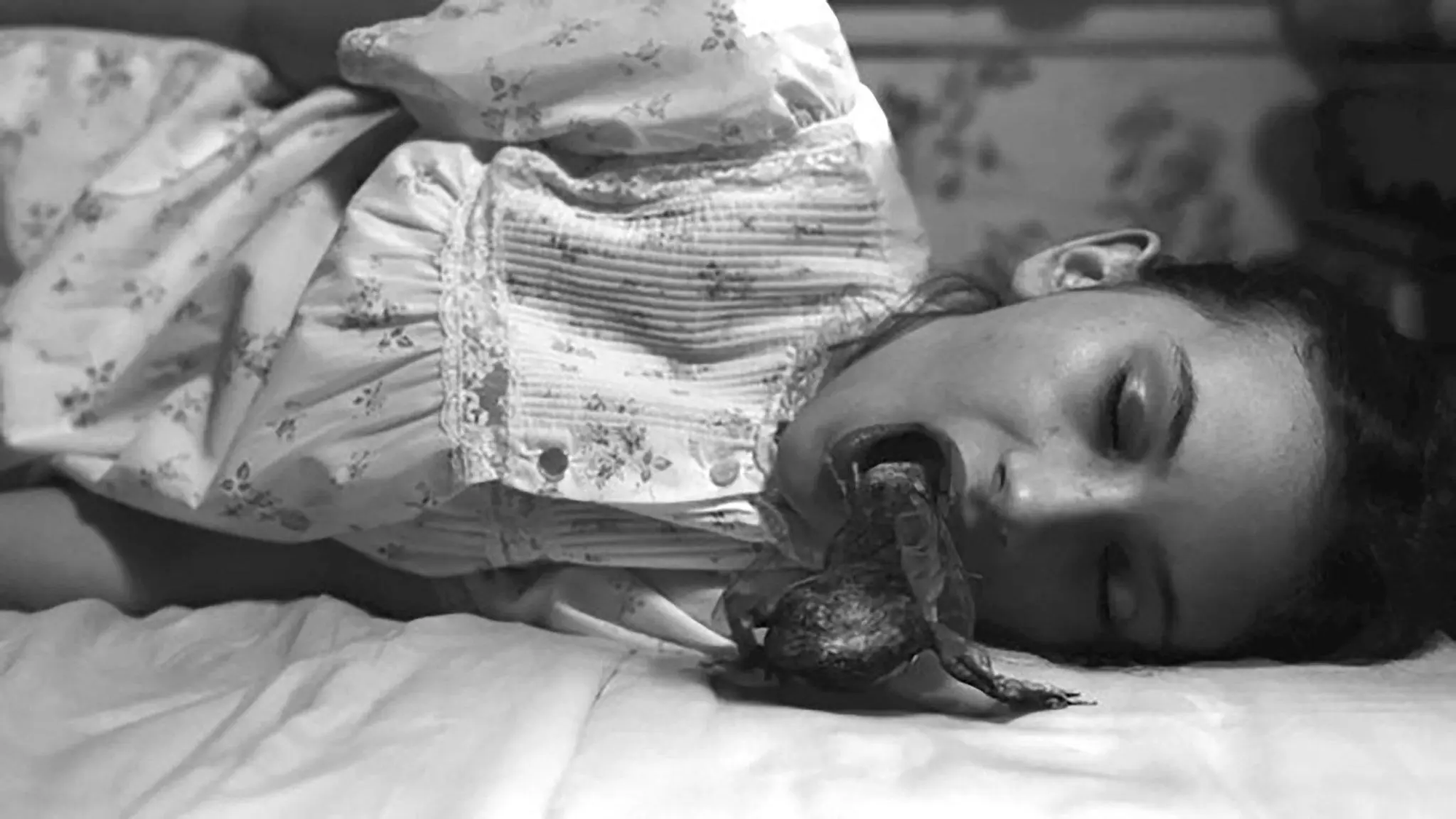
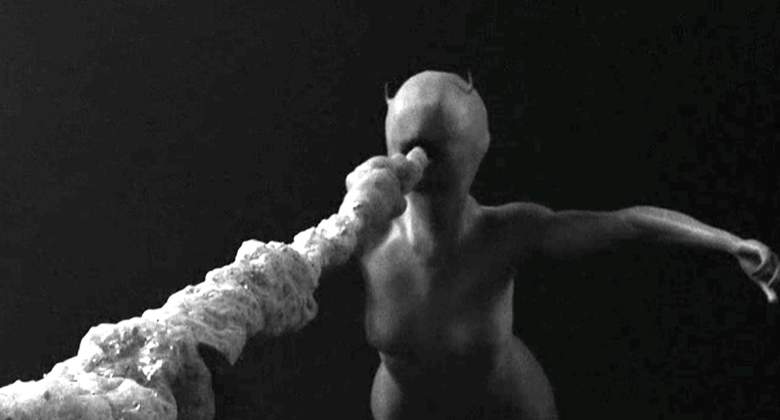
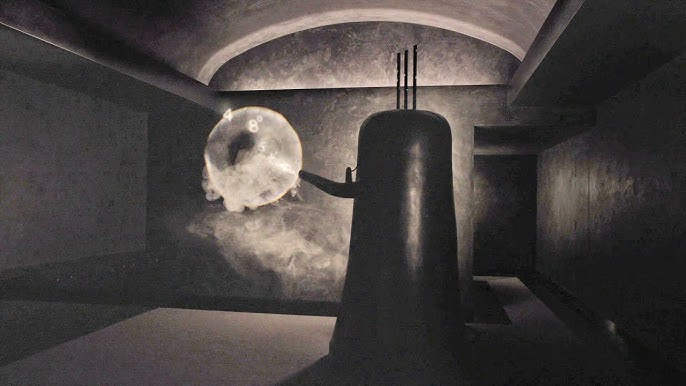
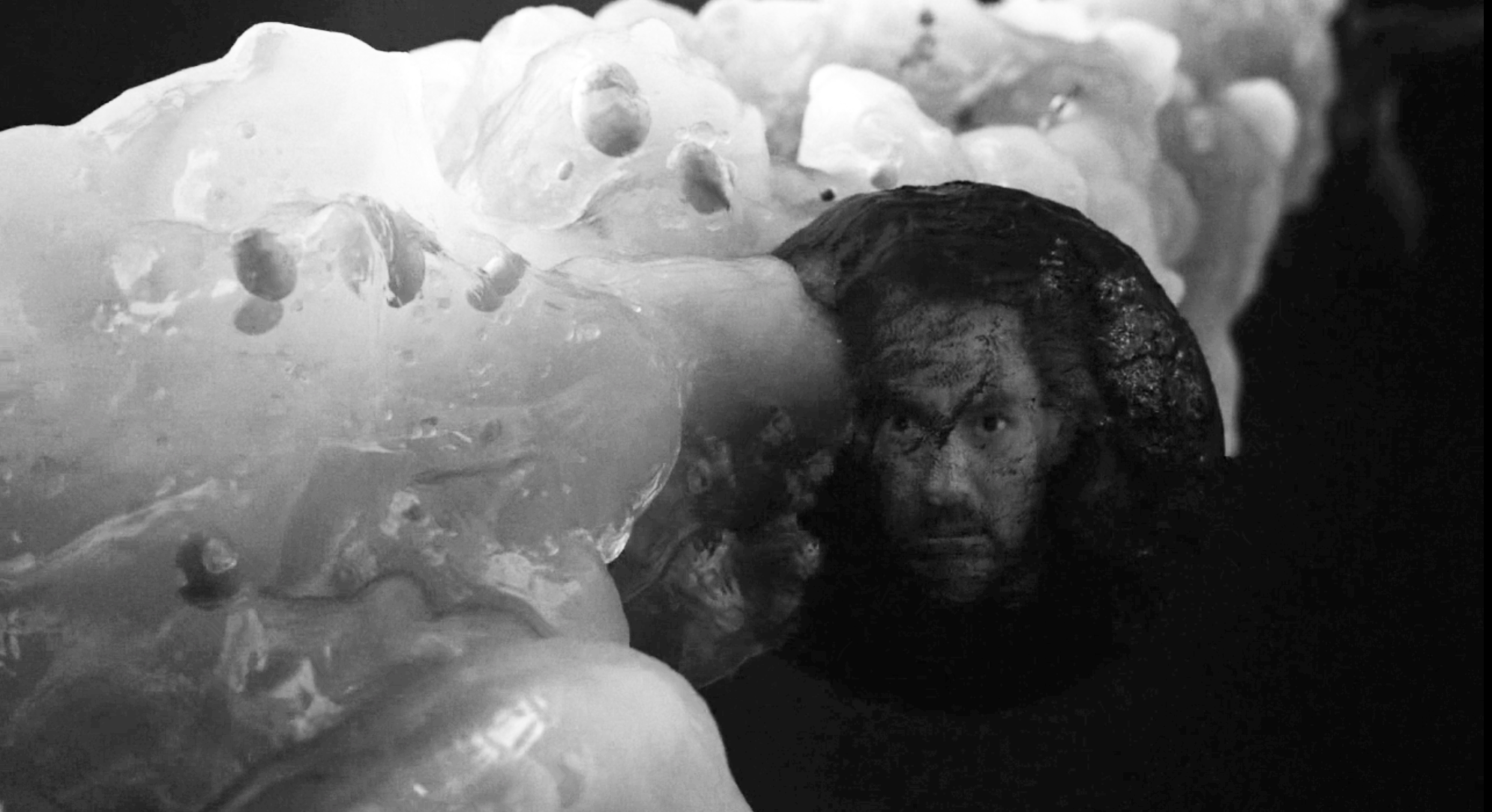
The temptation, in contemporary narrative culture, is to take anything ontologically strange and file it under one of three habits. Either it is a puzzle box with a determinate solution that fans can reconstruct, or it is a multiverse story where everything is equally real somewhere, or it is a subjective dream, hallucination, simulation, or coma. All three habits are ways of reducing modal and temporal complexity to something flatter and more administrable. Lynch repeatedly sets these habits up and then breaks them, and Fine’s distinctions help explain why the break matters, because what Lynch is staging is not a choice between rival “worlds”, it is an injury to the primacy of the actual and an exposure of modal pluralism. Take the season’s opening. The third season continues from the second season’s cliffhanger, where Dale Cooper is trapped in the Black Lodge and an evil doppelgänger, host to BOB, assumes his identity in the natural world. Twenty five years later, Cooper struggles to recover his past while his doppelgänger works to prevent his return. This is already a refusal of a standard possible worlds framing. In a multiverse story, the good Cooper and evil Cooper would naturally be treated as counterparts in different branches. Lynch does not do that. The evil Cooper is not “another Cooper in another world”. He is a modal deformation inside the actual. The show’s grammar insists on it, by treating the doppelgänger not as an alternative but as an invasive replacement, a usurpation of actuality from within the same actuality. That is the Finean point: actuality is not merely a label you can assign after surveying possible scenarios, it has a structure that can be occupied, stolen, mimicked, or hollowed out. If you respond by saying “it is just a different world”, you are precisely performing the reduction Fine warns against, substituting a convenient representational device for the metaphysical phenomenon. This becomes even sharper in the specific chain of events in Parts 2 and 3. Cooper encounters MIKE and Laura Palmer in the Lodge, Laura “opens her face, revealing light”, the Arm appears in evolved form, and Cooper falls into the glass box in New York City, then into space. The glass box sequence is not a portal to a parallel world in the usual genre sense, it is a literalised epistemic posture, watching for the arrival of something whose modal status is unclear. When the security guard is absent and Sam and Tracey have sex, “the Experiment” materialises and murders them. This is one of Lynch’s most precise stagings of Fine’s primitivism about the modal. The Experiment is not introduced as a creature with a biological explanation, nor as a hallucination, nor as a metaphor for violence. It arrives as an ontological fact that does not wear its explanation on its surface. If you demand an explanation in the key of scientific possibility, you are demanding the wrong modality. Fine’s modal pluralism helps here. The show is not making claims about natural necessity. It is acting in a space closer to metaphysical and perhaps normative necessity, a space in which “what must be” and “what can intrude” are governed by structures of identity, essence, and corrupted order, not by physics. Now look at the Dougie Jones arc, because it is one of the season’s most concrete and sustained demonstrations of de re modality and the primacy of actuality. In Part 3 a second, manufactured doppelgänger, Dougie Jones, becomes sick and is drawn into the Lodge where he dissolves into a golden seed, while Cooper, free from the Lodge but without memory, takes Dougie’s place in Las Vegas. He is found disoriented by Jade, he wanders to a casino, and he wins megajackpots guided by signals from the Lodge. The mainstream interpretive habit is to say Dougie is a “version” of Cooper, and that Cooper is “in a different timeline” where he is Dougie. But the details resist this. The narrative says Dougie is manufactured, that he dissolves into a seed, and later that MIKE “creates another Dougie”, who returns to Janey E and Sonny Jim. These are not counterparts across worlds. They are products, tulpas, artefacts that occupy roles in the actual. This is de re modality in a visceral form. The same role in actuality can be filled by different kinds of thing, human, doppelgänger, manufactured substitute, and the world continues, but its modal integrity shifts. You see this in the show’s own moral distribution. Dougie Cooper is actual and present, yet agency is thinned almost to nothing. That thinning is not a matter of what happens in some other world, it is a fact about what this individual, here, can do. Fine’s insistence that the de re is intelligible, that modality attaches to things themselves and not only to propositions, provides the right conceptual space to treat Dougie not as a gimmick but as an exploration of diminished capacities as an ontological condition. The season then pushes the point further by introducing the tulpa Diane. Diane is drawn to the Lodge and dissolves into a seed, and Tammy realises the Diane they have been associating with is actually a tulpa. Again, the multiverse habit would be to say this is Diane from a different reality. Lynch explicitly refuses that and instead makes it a fact about what has been walking around in this reality. This matters for critique of contemporary narrative habits. Current prestige television and media (Marvel being the parade case, as I mentioned earlier) has trained audiences to treat ontology as a solvable topology, a map of branches. Lynch turns ontology into an ethical and existential disturbance: you can discover that the person you trusted is not that person, not because they came from elsewhere, but because actuality was already compromised. Fine’s primacy of the actual makes this more than a twist. It is a claim that the actual is the arena of metaphysical risk, not a neutral stage onto which other worlds can be projected. The culminating staging of Fine’s framework arrives in the last two episodes. In Part 17, BOB’s orb is released when Woodsmen tear at the doppelgänger’s body, Freddie smashes the orb with his gardening glove, Cooper puts the Owl Cave ring on the doppelgänger, and MIKE takes Cooper to Jeffries who transports him back in time to the night Laura died. Cooper prevents Laura’s murder, and in the morning Laura’s corpse vanishes from where it was found by the lake. Whew. If you are operating with the dominant contemporary metaphysical habit, you will say, Cooper created a new timeline. But Lynch’s own detail that the corpse vanishes, rather than simply never being there, is a pointed refusal of the clean branch model. In a branch model, the old branch remains intact and you merely occupy another. Lynch shows the old actuality being retroactively wounded. That is a Finean point about the primacy of the actual. The past here is not just another region in a block or another branch. It is a part of actuality whose alteration is not a benign relocation but an ontological violence that reverberates forward. Part 18 then gives the most explicit sequence of modal markers Lynch ever provides. Cooper continues to lead Laura through the woods, she disappears, a scream is heard. Cooper appears in the Lodge again, meets MIKE and the Arm, emerges, meets Diane, and they drive 430 miles, cross an electrical field, go to a motel, have sex. Cooper wakes, Diane is gone, and there is a note to “Richard” from “Linda”. He arrives at Judy’s Diner in Odessa, saves a waitress, finds Carrie Page who resembles Laura Palmer, and drives her to Twin Peaks, but the Palmer house is occupied by different owners. Cooper asks what year it is, Carrie hears Sarah calling Laura’s name and screams, and the house lights go out. Wowza! It is hard to imagine a more deliberate dramatisation of Fine’s modal pluralism than those numbers and names. “430” and “Richard and Linda” are given as instructions earlier by the Fireman. They are not clues in a crossword sense. They are parameters for a transition between modal regimes, like coordinates for shifting the way actuality is anchored. Fine’s “varieties of necessity” argument insists that there are distinct sources of necessity, tied to identities of things, natural order, normative order. Lynch’s 430 is a way of saying, you cannot understand what is happening if you treat it as merely spatial travel or merely chronological change. You are being told that the change is modal, a re anchoring of the actual.
The sex scene in the motel is often treated as mere Lynchian perversity or as an encoded ritual but in a Finean reading it has a specific philosophical function. It stages the replacement of one set of de re relations with another. Diane becomes Linda, Cooper becomes Richard, and the transformation is not described as a subjective fantasy but as a shift in the identity conditions that govern who these people are in this regime. The note to Richard from Linda is the narrative’s way of saying that the actual itself now recognises them under these names. This is essence and de re modality in a televisual register. The question is not which propositions are true in which world. The question is, what are the conditions under which this person counts as this person here. Carrie Page is the most devastating instance of the critique of multiverse habits. She resembles Laura but has no memory, and Cooper believes she is Laura. A multiverse habit would say she is Laura’s counterpart. Lynch makes her feel like a deprivation, an ontological impoverishment. That feeling is not reducible to ignorance. It is the sensation that the world no longer contains the right essences, that the distribution of the sensible has been altered so that Laura’s being is no longer properly available as Laura, only as a resemblance plus a void. Fine’s primacy of actuality illuminates this. The Odessa regime is not merely one more possible world among others. It is what you get when you try to edit the actual’s deep structure by force. The result is not liberation but a damaged actuality, one that cannot sustain the same identity relations. This is why the final question, “What year is this?”, has such force. Cooper asks the question to himself, Carrie hears Sarah calling “Laura”, screams, and the lights go out, followed by a flash of Laura whispering into Cooper’s ear in the Lodge. The contemporary narrative habit is to treat this as an invitation to a final solution, to decide which timeline is “real”. Fine’s approach points the other way. The question is not which coordinate we are at. It is whether tense and dating still latch onto actuality in the way they are supposed to. Fine’s broader project treats tense as metaphysically significant rather than eliminable, and Lynch’s ending is precisely a collapse of the confidence that time is just a parameter you can read off once you have the right model. The scream and blackout are the phenomenology of a tense failure, a loss of temporal mode, not a cliffhanger about chronology. Once you see these as staged philosophical claims, you can broaden the critique of contemporary metaphysical and narrative habits more sharply. The current mainstream metaphysical imagination is saturated with world talk. Multiverses, branching timelines, simulations, and “it was all a dream” are cultural default settings. They offer a shallow metaphysical comfort. If anything can happen somewhere, then nothing finally matters here. If everything is a dream, then no ontological risk is real. If it is a puzzle box, then truth is just the correct arrangement of clues ( Post structuralists like Derrida and Rorty think thinking there is a correct arrangement the defining contemporary pathology and delusion that marks the modern and is the symptom of all our ills - a Finean/Lynchean position applies equally to their diagnosis.) Lynch attacks these comforts. It says, in effect, that actuality is the site where stakes are, and that manipulating possibility is not automatically emancipatory. It also says that explanation is not always a matter of flattening phenomena into a single model. Fine’s modal pluralism provides the philosophical analogue: there is not one master modality, and you cannot do justice to the world by translating all modal facts into quantification over worlds. Alas, streaming culture encourages a particular kind of metaphysical impatience. Viewers are trained to demand that ambiguity be redeemed by later disclosure. Lynch refuses, but not in the manner of mere obscurantism. He refuses because the show is about the limits of disclosure itself. The Black Lodge scenes, the glass box, the sudden murders, the appearance of the Experiment, the Woodsmen ripping at bodies to release an orb, are all ways of showing that some modal facts are primitive in Fine’s sense. They are not reducible to the kind of explanation that would satisfy the puzzle instinct. The world sometimes confronts you with brute modal structure, with constraints and intrusions that you can register, fear, resist, or accommodate, but not neatly translate into a single narrative grammar. This is also why the Fireman’s instructions are so important. “Remember 430” and “Richard and Linda” are almost comically resistant to fan decoding, because they are not primarily epistemic. They are performative constraints, conditions for a modal transition. In a Finean framing, they are essential parameters rather than empirical clues. Contemporary narrative habits, formed by detective fiction and online theory culture, keep trying to treat them as clues to hidden propositions. Lynch treats them as switches that alter what can be actual. Let me give some examples from Twin Peaks The Return to show why the Finean approach is a better fit than the dominant alternatives of branches, worlds, simulations, dreams misrender what the show is doing. Look at the glass box and the arrival of “the Experiment” in Parts 2 and 3. Cooper enters a glass box in New York City, stares at an electric socket, wanders into another room, the security guard leaves, two employees have sex, and then a mushroom cloud-like figure appears and kills them. A quick, puzzle-box reading will treat this as a sci-fi interruption, a portal event with a straightforward diegetic explanation: something extraneous intrudes. But the metaphysical weight of this scene depends on what kind of intrusion it is. It is not presented like a monster crossing a boundary in a videogame, nor like a dream sequence that we are encouraged to bracket off. It arrives without setup, explanation, or spatial-temporal coherence. The figure emerges as an ontological fact in the very midst of the world we recognise. The work of Twin Peaks here is to insist that this sudden appearance is neither a hallucination nor a simple case of world-hopping. It is a modal intrusion into the actual world itself. This is precisely where Fine’s rejection of world-quantifying modal semantics matters. Under a simple possible-worlds view, we might say this scene depicts an event from another world bleeding into this one. That description undermines the phenomenological strangeness of the moment; it relocates the mystery to a different syntactic category - “oh this is another world’s event” and so dissolves the existential stakes. Fine’s modal pluralism, by contrast, allows for modality within the actual, not just across worlds. That is, it allows for actual events whose modal status is unstable or unexpected. The “Experiment” is not an inter-world parasite; it is an ontologically abnormal fact of this reality, even if that fact does not fit the familiar modalities of cause and effect we expect in a realist narrative. Under Fine’s approach, this moment puts pressure directly on the modal grammar of reality, not on the viewer’s theory of narrative. This is why the motif of the electric socket in the glass box matters. The socket is not a decorative detail; it embeds the scene in the local modal ecology of circuits, potentials, and actualised paths. The figure arrives not by simple teleportation but at a point where potential energy, a real, physical potential, was being watched. The sequence stages a diagnostic stance toward modality: what is possible becomes actual in a way that is not reducible to “another world’s script.” In Fine’s terms, this is a dramatization of the idea that modal facts are not confined to relations between worlds but can be primitive and embodied within a single world’s unfolding. The show refuses to let us say “it came from a world over there,” because its appearance directly threatens the integrity of this world. The intrusion is a metaphysical violation, not a narrative convenience. Well, so says I, using Fine. The second case concerns the Dougie Jones arc and the manufactured identities that populate much of the middle of the season. Dougie is a second, manufactured doppelgänger who dissolves into a golden seed, and returns later as another Dougie created by MIKE who returns to Janey-E and Sonny Jim. Mainstream narrative habits push us to read these figures as “versions” of Cooper in different timelines or worlds. A multiverse account would say there is Cooper-in-Vegas, Cooper-in-Twin-Peaks, and Cooper-in-the-Lodge, each a counterpart in its own branch. But Lynch doesn’t depict these as isolated timelines with stable boundaries; he depicts them interacting within the same actuality, even if their modal capacities differ drastically. Fine’s notion of de re modality is essential here. In traditional possible-worlds language, Cooper’s counterparts in other worlds share enough properties to be called “the same person” only by virtue of a counterpart relation. But in The Return the different instantiations of Cooper, the evil double, Dougie, the Lodge-estranged Cooper are not separated into parallel, coequal realms. They occupy positions in the same actual network of relations, and what differs between them is precisely which modal capacities they instantiate. Dougie’s reduced agency is not a story about a weaker Cooper in a weaker world; it is a story about how this Cooper here can act (or fail to act). Under Fine’s view, the capacities that an actual individual has, the ways in which that individual can be, are part of that individual’s essence, not merely a matter of which world they inhabit. Hence the narrative affect of these sequences: Dougie’s beneficent but ineffectual agency makes palpable the idea that actuality can have degrees of modal potency.
This insight also extends to Diane and her tulpa. The season reveals that the Diane we meet for much of the arc is not the original but a constructed double (that's what a tulpa is), and the real Diane dissolves into a seed and disappears. If one tried to shoehorn this into a world-branching model, one would be forced into an interpretation in which Diane’s “real” self belongs to one branch and her tulpa to another. But that move collapses the metaphysical depth of the scene. Lynch shows the realisation of Diane’s capacities as a matter of contentious embodiment, not branch membership. Fine’s emphasis on de re modality helps us say this more precisely: Diane’s identity is constituted by the set of modal capacities she actualises. When those capacities are altered by forces within the narrative (the Lodge, the Woodsmen, the tulpa process), what changes is not merely the “world she belongs to” but her ontological standing in actuality, how she is as an existing individual in this world. The implication is that the metaphysical categories we bring to bear, world, timeline, dream, simulation, are insufficient because they treat identity as a label attached after the fact. Lynch’s show treats identity as a modally grounded relation. What a person can do, how they respond, how they are recognised by others in the narrative, these things are ontologically prior to any decision about which world they belong to. This is a deeply Finean point: modal properties attach to things themselves, and they shape the way actuality is configured, not merely the way possible worlds differ. Finally we turn to the Part 17 time intervention and Part 18’s “Richard and Linda,” which together form the most profound staging of the primacy of the actual and the reality of tense. Cooper, guided by Freddie’s destruction of BOB’s orb and MIKE’s counsel, travels back to the night Laura died and prevents her murder. Her corpse vanishes from the lake shore. Later, Cooper leads Laura through the woods, she disappears, and the series dissolves into the motel sequence, Odessa, the diner, and the final blackout. In a possible-worlds framing, the natural response would be to treat this as a classic “altered timeline” scenario: Cooper’s success spins off a new branch. But the way the narrative describes both the vanishing of Laura’s corpse and the disintegration of the world around Carrie Page resists that move. Remember, Fine distinguishes between the possible and the actual not by denying possibilities, but by insisting that the actual has a privileged ontological role. It is the site where modal facts are anchored. If time is merely another dimension in a block universe or if alternate histories are equally real, then preventing Laura’s death should simply place Cooper and Laura in a different historically indexed region of the multiverse, leaving the original intact. (Happens all the time these days in the Marvel superhero universe sadly). That is not what The Return depicts. The corpse is not still there in some branch; it vanishes in this actuality. Moreover, the world into which Cooper and Laura seem to arrive - the Odessa diner, the motel, the motel bed where Diane becomes Linda - feels wrong. It is not that it is a different world; it is that the modal relations that once grounded Twin Peaks have been severed or remapped. Here the reality of tense becomes philosophically decisive. Fine argues that tense and temporal becoming are not reducible to tenseless facts about world histories. Pastness, presentness, and futurity are real features of how events are located in reality. When Cooper attempts to change the past, what the narrative shows us is not a safe traversal between static slices of a block universe. It shows a disturbance in the modal anchoring of time itself. The question “What year is this?” that Cooper asks at the end of Part 18 is not a matter of mapping a coordinate on a timeline. It is a question about which temporal mode the present occupies, whether the temporality that once anchored the lives and histories of these characters still holds. The scream that follows and the blackout are phenomenological symptoms of a breakdown in that temporal mode, not cliffhangers awaiting a decoding. Viewed through Fine’s lens, the instability of these final sequences reveals something deeper about actuality. The vanishing corpse, the dislocated motel room, the conversion of Diane into Linda, the Odessa world that resembles Twin Peaks but lacks its essential modal structure, all of these show what happens when the actual’s modal integrity is tampered with. In possible-worlds thinking, altering history touches only the distribution of truths across worlds. In Fine’s framework, altering the actual alters the modal relations that make this world the world it is. Lynch’s narrative forces this metaphysical claim into view: there is something it is to be this world, and it is not exhausted by sets of propositions across branches. In drawing these threads together, we can now articulate a clearer critique of contemporary metaphysical and narrative habits. Our dominant frameworks of multiverse speculation, branching timelines, puzzles that reduce to a unique solution all presuppose a metaphysics that treats modality as secondary to a brute catalogue of possibilities. They encourage us to think of identity, time, and causation as functions of where within a pre-existing landscape we happen to be placed. Twin Peaks: The Return, in contrast, dramatizes the fragility and ontological primacy of the actual. It shows that tampering with the modal structure of reality, not merely shifting between worlds, has deep consequences for identity, agency, and temporal coherence. Lynch’s series therefore stages a philosophical demand: to take seriously the idea that not all possible scenarios are equally real in the sense that matters to our lived actuality. This is not a retreat to traditional realism; it is a different kind of realism one that recognises modal complexity without collapsing it into neutral branches. Fine’s work offers the conceptual resources to articulate this kind of realism: one in which modality is plural, tense is real, and actuality is ontologically primary.
So finally I want to extend this to say something about the horror show that is the Trump administration. What finally emerges, once the Fine-informed reading of Twin Peaks: The Return is allowed to generalise beyond Lynch’s fiction, is a way of thinking about contemporary political reality that is at once unsettling and clarifying. If I'm being cheeky the cheekiness of the move is precisely its seriousness. If Lynch shows us what happens when the modal structure of actuality is damaged, then our current political moment begins to look less like a sequence of shocking but containable events, and more like a transformation in what can be said, done, expected, and endured. In other words, it looks like a change in political modality itself. Woah!!!! Contemporary political analysis overwhelmingly relies on two habits that Fine’s work implicitly undermines. The first is a kind of political possible-worlds thinking. When something unprecedented occurs, the response is often to say that we have moved into a “new normal,” as if politics were a set of adjacent worlds and we had simply stepped from one to another. The second is a reductive temporalism, where politics is treated as a linear sequence of causes and effects, elections and counter-elections, scandals and recoveries, all unfolding along a stable temporal axis. Both habits presuppose that the underlying modal grammar of political reality remains intact. What changes, on this view, are only the contents of the world or the occupants of offices. A Fine-informed approach suggests something more radical and more disturbing. It suggests that certain political figures and movements have not merely altered outcomes within an existing political world, but have damaged or reconfigured the modal relations that make that world what it is. In this sense, the rise of Donald Trump is not best understood as a shift from one ideological programme to another, or even as a deviation from liberal norms that can be corrected by institutional means alone. It is better understood as an intervention at the level of political modality, an alteration in what is politically possible, necessary, permissible, and thinkable. Before this shift, many political actors operated within a relatively stable modal framework, even when they disagreed vehemently about policy. Certain things were possible but not sayable, others sayable but not actionable, others actionable but not legitimate. These distinctions were not merely moral conventions or media habits; they were part of the essence of the political order itself. Fine’s insistence that essence is not reducible to patterns across worlds is helpful here. Liberal democratic politics was not just one configuration among many; it had an internal modal structure that governed how power, truth, and authority could be exercised. What figures like Trump demonstrate is not simply a willingness to violate norms, but an ability to make those violations actual in ways that persist. Lies that would once have been politically impossible to sustain become routine. Conflicts of interest that would once have triggered automatic institutional correction become normalised. The point is not that “anything is now possible,” a familiar journalistic refrain, but something more precise: the boundaries between political possibility and impossibility have been redrawn. Certain acts have moved from the modal category of “unthinkable” to “thinkable,” then to “sayable,” and finally to “done.” This progression is not just causal, it is modal. It marks a shift in the structure of political actuality. Here Lynch’s Twin Peaks analogy becomes more than playful. Just as BOB does not merely commit crimes but changes what kinds of harm can occur without tearing the world apart, so too does Trumpian politics operate by altering the background conditions under which political action takes place. The effect is cumulative and corrosive. Once the modal structure is damaged, restoring it is not as simple as reversing particular decisions. Fine’s primacy of the actual over the possible helps explain why. You cannot simply point to a possible world in which liberal norms still hold and step back into it. The actual has been changed, and with it the network of modal relations that anchored political life. This is why the frequent reassurance that “institutions held” rings hollow. Institutions are not free-floating mechanisms; they are expressions of underlying modal commitments about authority, legitimacy, and responsibility. When those commitments are eroded, institutions may continue to function in a formal sense while losing their essential role. This is analogous to the Odessa world in Twin Peaks: The Return. The diner is there, the roads are there, the names are there, but something essential is missing. The political world after Trump can look institutionally familiar while being modally thinner, less able to sustain truth, accountability, or trust. A Fine-informed analysis also clarifies why so many post-Trump responses misfire. One common response treats Trumpism as an aberrant possible world, a nightmare branch that we can wake up from. Another treats it as a temporary suspension of norms, after which politics will return to its previous trajectory. Both responses underestimate the metaphysical depth of what has occurred. If Trump altered political modality, then the task is not simply to replace one occupant of office with another, but to rebuild the modal conditions under which certain actions become impossible again, not merely undesirable. This also sheds light on the peculiar affective tone of contemporary politics, a mixture of exhaustion, disbelief, and unreality. People often say that politics now feels “surreal.” The Fine-Lynch reading suggests a more exact diagnosis. What feels unreal is not that politics has become fantastical, but that the relationship between actuality and possibility has been destabilised. Things that feel as though they should not be able to happen nonetheless occur and persist. This produces a chronic sense of ontological insecurity, akin to Cooper’s question at the end of The Return: “What year is this?” Transposed into political terms, the question becomes “What kind of political reality is this?” The discomfort lies not in ignorance of facts, but in uncertainty about the modal framework that gives facts their weight. This perspective also complicates the moral language often used to describe contemporary politics. Condemnation and satire, while emotionally satisfying, often assume that the underlying modal order remains intact and that transgression will eventually be punished by the system itself. Fine’s emphasis on the primitiveness of modal facts suggests otherwise. If the system’s modal structure has been altered, then moral condemnation alone cannot restore it. What is required is a re-anchoring of political actuality, a reconstruction of the essential relations that make certain forms of power illegitimate and certain kinds of speech impossible. Here the analogy with Twin Peaks becomes almost uncomfortably tight. Cooper’s attempt to fix the past by force produces a world that looks recognisable but cannot sustain meaning. Similarly, attempts to “return to normal” without addressing the deeper modal damage risk producing a hollowed-out politics, one that goes through the motions of democracy without recovering its substance. It's why the Democrats suddenly look like Democrat tulpas. Fine’s work helps articulate why nostalgia for a previous political world is insufficient. Essence is not recovered by imitation. It requires the re-establishment of the modal conditions that made that essence operative in the first place. Finally, this Fine-informed political reading exposes a deeper critique of contemporary political storytelling. Media narratives often frame politics as a sequence of shocks followed by resolutions, scandals followed by corrections. Think about the way the Epstein files are being discussed. The narrative grammar of these discussions presupposes a stable modal background. Lynch’s refusal of closure, read through Fine, suggests that such grammar is itself part of the problem. When political modality is altered, there may be no clean resolution, no final episode in which the lights go back on. What remains is the work of living and acting within a damaged actuality, while trying to rebuild the conditions under which political reality can once again support agency, truth, and responsibility. The apparent cheekiness of applying Fine and Lynch to Trump thus conceals a serious philosophical claim. Our political moment is not best understood as a deviation within a familiar world, nor as a branch we can simply exit. It is better understood as a transformation in political modality itself. Recognising this does not guarantee a solution, but it does prevent a category mistake. It stops us from mistaking modal damage for mere policy disagreement, and it forces us to confront the harder question: not just what should happen next, but what kind of political reality we are now capable of inhabiting.
If this Finean diagnosis is taken seriously, then the contrast with more familiar approaches to politics and narrative becomes sharper and, frankly, more damning. What Fine helps us see, and what Lynch stages with unusual clarity, is that many dominant explanatory frameworks fail not because they are false in detail but because they operate at the wrong modal level. They mistake alterations in actuality for movements within a fixed space of possibilities, and in doing so they systematically underestimate what has changed. One dominant approach is liberal proceduralism, both as a political theory and as an implicit narrative habit. On this view, politics is a rule governed game played on a stable field. Actors may cheat, violate norms, or push boundaries, but the underlying structure remains intact so long as procedures continue to operate. Elections happen, courts rule, offices change hands. From a Finean perspective, this is a category error. Procedures are not modal foundations, they are expressions of deeper modal commitments. They presuppose shared understandings about what counts as authority, what kinds of speech are permissible, what defeats look like, and what outcomes bind participants. When those background commitments are eroded, procedures can persist in a purely formal sense while losing their anchoring force. This is exactly the Odessa effect again. The building is there, the sign is there, the waitress is there, but the world no longer knows how to be itself. Another common approach is sociological normalisation. Here the shock of Trumpism or similar movements is absorbed by redescribing them as the expression of long standing structural forces, economic grievances, cultural resentments, or demographic shifts. While this approach captures real causal pressures, it often does so at the cost of flattening modality. It tells us why something happened, but not what kind of thing has happened. Fine’s work helps articulate the missing dimension. Structural explanations typically operate in the register of causal necessity. They explain why outcomes were likely given certain conditions. What they often fail to track is the transformation of what is now possible or impossible within the political world itself. Lynch’s universe is again instructive. Knowing the backstory of the Woodsmen or the atomic explosion does not restore the modal order that has been damaged. Explanation does not equal repair. In the words of Dylan; 'something is happening here but you don't know what it is, do you, Mr Jones.' Argh! A third approach, increasingly popular in both political theory and media culture, is simulation and hyperreality. On this view, politics has become a spectacle, a media driven hallucination detached from reality. Truth no longer matters because nothing is real in the old sense. This reading has an obvious appeal. It captures the sense of unreality many people report. But from a Finean angle it misdiagnoses the problem. The issue is not that politics has become unreal, but that actuality has been reconfigured. Trump does not float above reality as a simulacrum. He occupies the actual with disturbing effectiveness and actuality. Executive orders are signed, judges are appointed, norms are broken in ways that persist. Treating this as simulation is a way of evacuating actuality of its primacy, of telling ourselves that the damage is not really happening here. Lynch refuses that consolation. The violence in Twin Peaks is not imaginary, even when it is surreal. It scars the world it occurs in. Possible worlds thinking, which underwrites much contemporary political commentary whether explicitly or not, is perhaps the most insidious of these approaches. It encourages a counterfactual comfort. There is always another world where the election went differently, where norms held, where the bad outcome did not occur. This can be useful for moral reflection, but it becomes dangerous when it replaces attention to the actual. Fine’s insistence that the actual is metaphysically privileged is precisely what cuts against this temptation. Politics is not lived across a set of equally real worlds. It is lived here, in a world whose modal structure can be weakened, distorted, or repaired. Lynch’s refusal to let the audience escape into alternate timelines mirrors the political necessity of confronting the world as it now is, not as it might have been. What Fine offers, and what Lynch makes experientially vivid, is a framework that takes damage seriously. Not damage as metaphor, but damage as a change in the conditions under which meaning, agency, and responsibility operate. This is why the Finean approach is better suited to understanding both Twin Peaks: The Return and contemporary politics than approaches that promise resolution, restoration, or exit. It does not assume that the world snaps back into place once the offending element is removed. It allows for the possibility that actuality itself has been altered, and that recovery, if it is possible at all, is a constructive task rather than a return. This also reframes the role of critique. Much political critique today oscillates between exposure and ridicule. Lies are fact checked, hypocrisies are mocked, inconsistencies are catalogued. These practices assume that showing a violation of norms will restore the authority of those norms. Fine’s work suggests a harsher truth. If the modal conditions that give norms their force have been undermined, then exposure alone cannot do the work we want it to do. Lynch again provides the image. Revealing that someone is a doppelgänger does not automatically restore the person they replaced. Sometimes the world simply has to reckon with the fact that the replacement has been walking around as actual for a long time and may keep on doing so for a long long time. Seen this way, both Twin Peaks: The Return and our political moment confront us with the same uncomfortable demand. We must stop thinking in terms of puzzles to be solved, branches to be exited, or norms that will automatically reassert themselves. We must instead ask what modal work is required to make certain forms of action impossible again, to restore the conditions under which truth binds, authority is limited, and agency is intelligible. That is not a technical question. It is a metaphysical and political one. Fine’s philosophy does not tell us how to do that work, but it tells us what kind of work it is. It is not a matter of selecting the right possible world, nor of waiting for time to heal itself, nor of unmasking an illusion. It is the work of rebuilding actuality. Lynch shows us, with extraordinary bleakness, what happens when that work is avoided or mishandled. Politics today, read through the same lens, appears not as a temporary nightmare but as a damaged world whose future depends on whether we can once again make sense of what must not happen, not merely of what we dislike.