is the bbc beastly enough to fascists (2): 1935-1936
By 1935 and 1936 the BBC was dealing with a Germany that was no longer only a dictatorship consolidating power inside its own borders, but a regime that was testing and then breaking the limits of the post war settlement. At the same time, British governments were settling into the policy that has come to be called appeasement, and that policy framed what the BBC could say about Hitler and Nazi Germany. To see how far its coverage was neutral, and how far it actually underwrote appeasement, it helps to look at two different levels. One is the general relationship between broadcasting and foreign policy, where we have reasonably clear evidence. The other is the handful of concrete broadcasts and named journalists whose work we can trace from 1935 and 1936, even though much of the detailed output still sits in archives rather than online.
The basic foreign policy context is well known. In January 1935 the Saar plebiscite returned overwhelmingly to Germany an emotional boost for Hitler. In March the regime announced rearmament and conscription in open defiance of the Versailles settlement. In June 1935 the Anglo German Naval Agreement effectively accepted German rearmament at sea. In September 1935 the Nuremberg Laws made Jews second class subjects. In March 1936 German troops marched into the demilitarised Rhineland, again in open breach of international treaties. In August 1936 the Berlin Olympics offered the regime an enormous propaganda stage. Viewed now, this looks like a clear pattern of aggressive revisionism. For many British elites at the time, including those who shaped BBC policy, it looked like a combination of overdue corrections to Versailles and manageable risks that could be contained by negotiation.
General studies of appeasement make it very clear where the BBC sat in this environment. The United States Holocaust Memorial Museum’s overview of British appeasement policy notes that the BBC, together with The Times, publicly endorsed the government’s attempt to accommodate Hitler through concessions and negotiations. The Wikipedia summary of appeasement, drawing on specialist historical work, adds that government pressure to restrict criticism of appeasement on BBC radio was highly effective. Foreign policy coverage on the air was kept within narrow limits by a combination of discreet pressure, self censorship and guidance from Downing Street and the Foreign Office. This is not a detail about 1938 alone. It describes a pattern that was already present by the mid nineteen thirties, and that clearly shaped the Corporation’s handling of German topics in 1935 and 1936.
Inside the BBC, international broadcasting was also changing. The Empire Service, launched in 1932 as a short wave operation for overseas listeners, was beginning to take on political weight. A scholarly history of the World Service notes that by the mid nineteen thirties its foreign news agenda was heavily influenced by Foreign Office concerns. It mentions the Saarland referendum of 1935 and Germany’s developing radio war with Austria as early examples of how German issues featured in overseas broadcasting. The same source shows that British policy makers were already wary of the way Nazi Germany and Fascist Italy were using radio to project their power abroad, and were thinking of BBC foreign language units as a means of countering that influence.
For the domestic National Programme and Regional Programmes, the message was slightly different. Here the priority was not to engage in obvious propaganda, but to keep public discussion of foreign policy calm, responsible and, above all, in tune with the government’s strategy.Within that institutional and political frame, you can identify a small number of specific BBC voices and programmes that related directly to Germany in 1935 and 1936.
Richard Crossman, whose 1934 talks on Germany we discussed earlier, continued to appear as a BBC speaker. The Programme Index snippet for one of his contributions notes that in 1935 he gave a talk about Germany that touched on labour camps, unemployment clubs and similar institutions, which he knew at first hand. The context suggests that this was a youth focused programme. A reasonable reconstruction is that Crossman, who had already become known for explaining Nazi Germany to British listeners in a tone of curious detachment, now offered a picture of German youth and work schemes that described labour camps as part of a broad national reconstruction project. His concern was to understand the appeal of the regime, not to denounce it.
I do not have the full text of that 1935 talk without going into archives, but we can infer the likely approach from his 1934 broadcast “Germany: The Inner Conflict” and later comments on his own earlier work. In that 1934 talk, printed in The Listener, he had tried to explain how National Socialism could seem to embody order and purpose for many Germans, hinting at some of its darker sides but presenting the overall picture as a complex psychological and political transformation rather than a simple descent into criminality. His 1935 material on labour camps and unemployment clubs probably continued that line. Labour camps could be presented as both harsh and uplifting, at once authoritarian and a means of tackling unemployment. For a BBC audience in 1935, this kind of description would have felt like neutral expertise. In practice it risked normalising institutions that were already part of a system of coercion.
The Empire Service’s treatment of German topics in 1935 also tells us something about the Corporation’s orientation. The history of the World Service that mentions the Saarland referendum and the radio war with Austria highlights the way BBC overseas broadcasting was being used to shore up British interests against foreign propaganda. German short wave output, especially towards Austria and other neighbouring states, was already highly aggressive. British policymakers did not want the BBC to copy that style. Instead, they wanted its overseas output to sound calm, urbane and factual, projecting British stability in contrast to Nazi shrillness. That aspiration for calm extended back into the domestic bulletins. Reports on German rearmament, the Nuremberg Laws or other developments in 1935 would have been framed as objective news, stripped of adjectives and commentary, and read in the neutral voice that listeners had come to associate with the Corporation. As with earlier coverage of the Reichstag Fire and the Enabling Act, the effect was to dull the sense of moral emergency.
If we turn to 1936, the surviving traces of BBC coverage are more concrete, particularly for two events. The first is the German reoccupation of the Rhineland in March. The second is the Berlin Olympics in August. On 7 March 1936 Hitler sent troops into the demilitarised Rhineland, a spectacular violation of the Versailles and Locarno treaties. The French army could easily have expelled the relatively small German force, which advanced with limited ammunition in expectation of a bluff. But the French government hesitated, the British government signalled that it would not support military action, and the move was allowed to stand, a huge psychological victory for the regime.We know that the BBC broadcast a news bulletin on the Rhineland reoccupation which has been preserved in later retrospectives. A compilation marking fifty years of BBC broadcasting lists “Freddy Grisewood, Hitler - German Re Occupation Of The Rhineland - News Bulletin 7th March 1936” as one of the key clips.
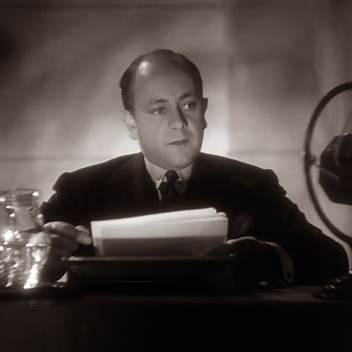
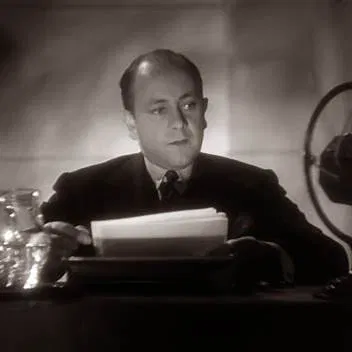
Freddy Grisewood was a well known announcer whose voice embodied the BBC news style. That listing does not give us the full text of his bulletin, but its presence in the anniversary set tells us that the Corporation saw the Rhineland news as one of the significant foreign stories of the pre war years, and that it treated the item as a model of how to break such news to the British public. Given the BBC’s practice at the time, the bulletin would have been based largely on agency reports and Foreign Office guidance. The wording would have been carefully checked for anything that could be construed as an editorial line. The announcer’s task was to report that German troops had entered the Rhineland, to note that this contravened certain articles of the Versailles and Locarno treaties, and to summarise initial diplomatic reactions. What he was not expected to do was to speculate about Hitler’s ultimate intentions, to call the move aggressive in moral terms, or to suggest that the government’s cautious response might be dangerous.
The later historiography of appeasement confirms that this cautious framing was not accidental. It reflects the general success of government efforts to restrict criticism of appeasement on BBC radio and to keep foreign policy coverage within sanctioned bounds. A more alarmist, condemnatory bulletin might have been more accurate in hindsight, but it would have been regarded at the time as irresponsible and beyond the Corporation’s remit. Neutrality, in this sense, meant reporting Hitler’s breach of the treaties in the same uninflected tone as a flood or a by election result, and leaving it to ministers and the press to argue about what it meant.
The second concrete instance is even more revealing, because it shows the BBC not only reporting a Nazi action but broadcasting the sound of Nazi spectacle itself. The same retrospective listing that mentions the Rhineland bulletin includes an item described as “Hitler, Massed Voices Of Crowd - Opening Of Olympic Games In Berlin - Speech Followed By Singing Of Olympic Hymn”. That implies that the BBC relayed at least part of Hitler’s opening speech at the 1936 Olympics, complete with crowd noise and the official hymn, to British listeners. The Berlin Games were a major world event and, technically, a showcase for television as well as radio. German sources note that the Olympics were the first major television event used by the Nazis to present their regime positively, with television rooms showing live coverage to tens of thousands of viewers and extensive radio broadcasting to more than forty countries. The BBC was only just beginning its own high definition television service in late 1936 and did not televise the Games, but its radio service clearly treated the opening ceremony and key events as newsworthy. For the sports loving public at home this must have been exciting. For historians thinking about neutrality, it raises an obvious question. What happens to neutrality when you pipe the voice of an authoritarian leader, speaking amid huge crowds and banners, directly into homes, without framing the event as propaganda?
Again, the style of BBC presentation would have mattered. Announcers and commentators would have described the scene in that same measured voice, perhaps remarking on the size of the stadium, the precision of the ceremonies and the enthusiasm of the crowd. They might have mentioned political tensions in passing, or the threat of boycotts that had been debated in several countries before the Games went ahead, facts that standard histories of the 1936 Olympics now emphasise. What they were unlikely to do was to spell out how the entire event was designed as an advertisement for Nazi racial ideology and German military revival. It would have felt improper, in BBC terms, to label Hitler’s speech as crude propaganda on air. The result, once again, was a kind of formal neutrality that in practice allowed the regime’s own orchestrated image to travel across borders with relatively little challenge.
Set against these specific items is the broader judgement, established by several historical studies, that the BBC as an institution supported appeasement in these years, in the sense that it aligned itself with the government’s wish to treat Hitler as a statesman who could be reasoned with. The Corporation did not see itself as a crusading opponent of Nazism. It saw itself as a sober national broadcaster that should help listeners to understand German grievances and the case for negotiation, while avoiding anything that might push British opinion towards calls for a hard line or military confrontation.
The pattern looks very similar to, though more acute than, the one we saw for 1933 and 1934. In formal terms, BBC coverage remained neutral in the narrow, Charter based sense. Domestic political controversy about foreign policy was kept off air. Announcers and commentators avoided overtly partisan language. Programmes were scripted and edited to remove rhetoric that might sound inflammatory. When the BBC relayed Hitler’s Rhineland move or his Olympic speech, it did so with a veneer of professional detachment. In that limited sense, the BBC could plausibly describe itself as neutral. In practice, however, the combination of structural constraints and cultural assumptions produced an output that tilted towards understanding and accommodating Nazi Germany rather than warning against it.
First, the content of many programmes accepted core elements of the Nazi regime’s narrative. Crossman’s descriptions of labour camps and unemployment clubs, for example, treated them as instruments of social discipline and national revival more than as instruments of terror. Empire Service commentaries on the Saarland, or on German radio battles with Austria, framed Germany as a vigorous modern state engaged in a struggle for influence, not as an inherently criminal project. News bulletins about rearmament and treaty breaches stressed facts and diplomatic reactions, but generally did not frame these acts as steps on a path towards war.
Second, the Corporation’s deference to the Foreign Office meant that voices which might have offered a more critical perspective were either not invited or heavily constrained. Government pressure succeeded in restricting criticism of appeasement on the air. Earlier, Bartlett’s contract had not been renewed once his sympathetic treatment of German grievances became diplomatically awkward, but that did not lead to a more robustly anti Nazi line. Instead it reinforced the tendency to stay close to official positions and to avoid all but the safest comment. The effect was to narrow the spectrum of views that listeners could hear.
Third, the BBC’s own self conception as the voice of a rational, civilised Britain encouraged a belief that calm description was always preferable to passionate denunciation. This was not simply fear of offending the Germans. It was also the internalised culture of an organisation that saw radio as a civilising force. In this framework, broadcasting the opening of the Berlin Olympics with a certain cool wonder at the scale of the spectacle could be presented as properly neutral, while a talk that insisted on the event’s propaganda function might have seemed crude or hectoring.
So if neutrality means avoiding explicit praise and condemnation, the BBC was neutral. If neutrality means giving listeners a balanced and proportionate understanding of the nature of Nazi Germany and the risks it posed, then in 1935 and 1936 the BBC was not neutral at all. It systematically underrepresented the dangers of the regime, underplayed the implications of rearmament and treaty breaking, and normalised Nazi Germany as a modern European power whose claims might be accommodated.
The two surviving sound exemplars from 1936 illustrate the point. Grisewood’s Rhineland bulletin shows the BBC at its most professional and reserved, reporting an event that in hindsight was a grave escalation, in tones designed to avoid panic. The relay of Hitler and the massed crowd at the Olympic opening shows the Corporation giving airtime to a key propaganda moment, trusting that its own calm framing would preserve neutrality.
Both broadcasts made sense within the BBC’s own rules and within the politics of appeasement. Neither gave listeners the kind of morally and politically sharpened analysis that, from a later perspective, we might wish they had heard. In other words, between 1935 and 1936 the BBC’s coverage of Germany continued to conform externally to the ideal of impartial public service broadcasting, while internally it was deeply aligned with a particular political strategy and a particular elite sensibility. It did not function as a fully independent critic of Nazi power. It functioned as part of a broader establishment that hoped, and in some cases believed, that Hitler could be handled, and shaped its narratives accordingly.