The Freewheelin' Bob Dylan 3: Masters Of War
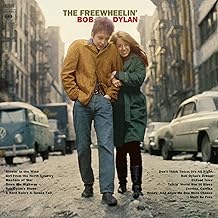
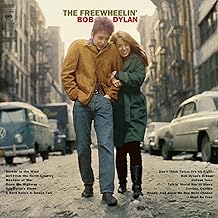
“Masters of War” is not simply an anti-war song. It is a built object, almost deliberately crude in its visible materials, and its power comes from the way those materials are assembled into something that is not identical with any of them. It is made from old forms, the curse, the sermon, the folk broadside, the prophetic denunciation, the murder ballad, the biblical accusation, the courtroom indictment, the child’s moral outrage, the apocalyptic prayer, but it is not reducible to any one of them. The song is a hybrid artefact whose identity lies in the organisation of these inherited forms. Its matter is traditional, even ancient. Its form is modern, sharpened by Cold War machinery, bureaucratic violence, industrial capitalism and mediated distance. The result is not merely a song about war profiteers. It is a new kind of accusatory object, one in which archaic moral speech is embodied inside the structure of modern protest.
The first stanza does the work of summoning. “Come you masters of war” is invocation, arraignment, subpoena, curse. The addressees are brought into the song as if dragged before a tribunal. Yet the tribunal is not institutional. There is no court, no judge, no policy paper, no diplomatic language. The singer’s voice creates the court by speaking. These figures hide behind walls, desks and masks. They build weapons but do not appear where the weapons act. They produce death while removing themselves from the visible field of death. So the song’s first act is ontological exposure.
It says, in effect, you are not merely dispersed through systems, offices, contracts and chains of command. You are an object. You can be addressed. You can be seen. This is why the repeated “you” is so important. It is not elegant. It is a hammering. The rhyme is blunt, almost childlike at points, “guns”, “bombs”, “desks”, “masks”, but this bluntness is part of the song’s metaphysics. It refuses the subtle evasions by which modern violence dissolves agency into procedure. The masters of war are not allowed to become abstractions, markets, strategies, national interests, deterrence systems or unfortunate necessities. They are made grammatically present. The song composes them as a single accusable body out of scattered functions: builders of guns, builders of planes, builders of bombs, hidden men behind walls and desks.
The object called “masters of war” is therefore not a natural object. It is a constructed compound. It is made from acts, institutions, technologies, evasions and masks. The song gathers these into one target. The oldness of the form is crucial. Dylan is drawing on the folk tradition, particularly the hard, repetitive, modal structure of older ballads. The melody itself, adapted from older material, gives the song the feel of something inherited rather than newly invented. That inheritance gives the modern accusation its authority. A topical protest song could easily become journalism.
“Masters of War” occupies the deeper shape of the curse song. It comes from before liberal politeness, before technocratic compromise, before the bureaucratic smoothing of guilt. Its anger is not argued into existence. It is given a ritual body. Yet the content is unmistakably modern. These are not feudal lords with swords. They are men behind desks, builders of death planes, manipulators of global war. The song fuses archaic moral categories with modern military-industrial machinery. That fusion is the secret of the song. It treats the arms system as if it were an old biblical wickedness, and it treats old biblical wickedness as if it had returned in the form of contracts, offices, factories and policy rhetoric. The result is a hybrid object: not ancient prophecy and not modern protest alone, but prophecy re-embodied in the age of aerial bombardment and bureaucratic death.
The Judas image is especially revealing. “Like Judas of old” does not merely insult the masters. It places them inside a recognisable archetype of betrayal. Judas is not simply a bad man. He is the figure who converts intimacy, trust and sacred value into transaction. In the song, the masters of war betray the young, the unborn, the world itself, and perhaps even the moral language by which war is justified. They tell the singer that a world war can be won. That is their doctrine, their false gospel. They do not merely kill bodies. They corrupt the conceptual field in which killing becomes reasonable. They sell the possibility of victory where the singer sees only the manufacture of death.
The singer repeatedly claims to see through, not merely see, them. He sees through masks, eyes, brains. The accusation is not just that they do evil, but that their surfaces do not match their inner structure. Masks, desks and mansions are all forms of distance. They are architectural, social and symbolic barriers. The song’s voice pierces them. It strips away the protective form in which power presents itself and exposes another object underneath: cowardice, profit, deception, blood guilt.
The water running down the drain is a strange and brilliant image because it lowers the metaphysical register just after the Judas comparison raises it. One might expect sublime vision, prophetic fire, heavenly unveiling. Instead Dylan gives us drain water. This is not an accidental bathos. It turns the masters’ minds into refuse. Their inner life is not deep, tragic or complex. It is as transparent and contemptible as dirty water disappearing into a drain. The image refuses grandeur. It says that evil is not magnificent or glorious. It is mean, stupid, mechanical, morally filthy.
The song’s rhyme and rhythm participate in this reduction. The rhymes are simple, rough. “Destroy” and “toy”, “eyes” and “fly”, “brain” and “drain”, “fire” and “higher”, “blood” and “mud”. These are are fastening devices. Hooks. Each rhyme locks an accusation into place. “Blood” falls into “mud”, and the rhyme itself performs the burial. “Brain” falls into “drain”, and the rhyme performs the contempt. “Destroy” falls into “toy”, and the rhyme exposes the childish irresponsibility of men who play with the world while others die. The rhyme scheme hardens anger into a chant.
The song’s moral structure also depends on a contrast between visible suffering and hidden agency. The young bleed into mud. The masters hide in mansions. Triggers are fastened by one group and fired by another. The song is about divided embodiment. The violence has one material body, the bodies of soldiers, the unborn, the young, the dead. But its controlling form lies elsewhere, in offices, money, command and ideology. Dylan’s accusation is that the war makers have split action from exposure. They cause without appearing. They command without bleeding. They profit without touching the mud.
The song tries to reunite cause and guilt. The stanza about children deepens the accusation. The worst fear is not only fear of death, but fear of bringing children into the world. War has invaded futurity. It has reached beyond present bodies into unborn life. The baby is “unborn and unnamed”, which means not yet socially formed, not yet placed in language, not yet given a public identity. And yet already threatened. This is one of the song’s most powerful expansions of its object. The masters of war are not merely killers of existing persons. They deform the conditions under which future persons could be welcomed. They damage the world as a place of possible birth.
The singer is young. Youth becomes important. The masters might say he is young or unlearned. He anticipates the dismissal. He knows that power often treats moral clarity as naivety. But the song turns that accusation around. Youth becomes the condition of seeing. The young speaker does not possess technical expertise, but he possesses a more basic knowledge: some acts are beyond forgiveness. This is where the song’s crude anger refuses the idea that moral authority must come from institutional sophistication. The speaker lacks expertise, but the song gives him judgement. The unlearned voice becomes the one that can name what the learned have obscured.
The reference to Jesus is shocking because it strains Christian doctrine. The line that even Jesus would not forgive them is not theology. It is prophetic excess. It pushes religious language past its ordinary limit in order to register the extremity of the crime. The song is not interested in balanced moral philosophy. It is interested in the point at which inherited moral forms crack under the weight of modern evil. Forgiveness itself is invoked only to be declared impossible. That impossibility is part of the song’s rage. War profiteering is imagined as a sin so grave that it breaks the available economy of mercy.
Money then becomes the rival metaphysical power. Can money buy forgiveness? Can it buy back the soul? Here the song fuses Christian judgement with anti-capitalist accusation. The masters have converted death into profit, but the song insists that there is one transaction they cannot complete. They can buy weapons, influence, protection, mansions, distance. They cannot buy back the soul. The soul functions here as the irreducible remainder, the thing that cannot be absorbed into the market. The song’s metaphysics is stark: there are objects money can build, guns, planes, bombs, desks, walls, mansions, but there is also an object money cannot restore once destroyed.
The final stanza abandons liberal restraint. The singer hopes they die soon. He will follow the casket, watch the burial, stand over the grave until he is sure they are dead. This is not merely anger. It is anti-elegy. Normally the grave is the place of mourning, reconciliation, solemnity. Dylan turns it into a place of verification. He does not mourn. He checks. The final object of the song is not peace but certainty of death. That is why the ending feels so brutal. The singer does not transcend hatred. He inhabits it completely. But this hatred is formally controlled. The old ballad structure contains it. The repeated address, the plain diction, the rhymed couplets, the biblical archetypes, the folk melody, all give the anger a body. Without that inherited form, the song might collapse into rant. Without the anger, the inherited form might become mere pastiche. The song exists as the embodiment of one in the other. Its traditional materials are not quoted from outside. They are made to bear a new object: modern bureaucratic war guilt.
So the song’s metaphysical object is not simply “war” and not simply “war profiteers”. It is a composite object made from hidden agency, technological production, moral betrayal, financial abstraction, displaced death, unborn futurity and prophetic judgement. Dylan builds that object by fastening old forms to new machinery. The result is deliberately rough, because refinement would weaken the accusation. Its crudeness is not a defect but a mode of exactness. The song must sound primitive because it is trying to reach a layer of judgement beneath diplomacy, beneath expertise, beneath policy language, beneath all the masks. In that sense, “Masters of War” is not merely a song that denounces. It is a song that makes denunciation newly possible. It takes the old curse and gives it a modern target. It takes the folk ballad and turns it into a tribunal. It takes biblical betrayal and locates it behind desks and contracts. It takes the image of blood in mud and ties it to money in mansions. Its achievement is not subtlety, but embodiment. It gives crude anger a durable form, and by doing so it turns accusation itself into an object that can survive.
That opening command, “Come you masters of war”, becomes stranger the longer one listens to it. At first it sounds straightforward, merely a protest singer calling out political enemies. But the grammar and tone do something older and more ritualistic than ordinary political speech. The voice is not debating, persuading or negotiating. It is summoning. That immediately places the song inside a much older structure of speech, one associated with curses, invocations, witchcraft, prophecy and tragic theatre. One hears echoes not only of folk ballads and biblical denunciations, but of dramatic conjuring scenes, voices that call hidden powers into visibility. The addressees are not approached as fellow citizens in public discourse. They are called forth as if from concealment. Think of Lady Macbeth. In Shakespeare, Lady Macbeth’s invocations are terrifying because they mix intimate domestic speech with archaic supernatural command. She summons darkness into herself. She asks hidden powers to unsex her, fill her with cruelty, stop the passages of remorse.
“Masters of War” operates similarly, except that Dylan inverts the direction of invocation. Lady Macbeth summons destructive force inward. Dylan summons hidden destructive force outward into exposure. But the uncanniness comes from the mismatch between the scale of the invocation and the apparent simplicity of the voice doing the invoking. The speaker sounds young, blunt, repetitive, almost naïve. The syntax is elementary. The accusations are direct. The imagery is often domestic and bodily rather than abstractly political. “You play with my world like it’s your little toy.” “I see through the water that runs down my drain.” “Fear to bring children into the world.” These are not the formulations of a detached intellectual. They belong to a voice closer to childhood, injury and immediate perception.
That simplicity changes the ontology of the speaker. The voice no longer sounds like a stable adult political subject situated comfortably in public discourse. It begins to sound layered, hybridised. At moments it feels like the voice of youth speaking to age, of flesh speaking to machinery, of mortality speaking to systems. At moments it even feels posthumous, as though the voice comes not simply from the living present but from those already sacrificed by the world the masters built. The song begins to sound as though the dead themselves are speaking through a young body.
This is why the repeated “you” matters so much. The speaker seems almost to be learning the object while accusing it. “You that build the big guns. You that build the death planes. You that build all the bombs.” The repetition resembles the accusatory logic of a child identifying responsibility in increasingly concrete terms. But this childlike structure becomes uncanny because the object being assembled is too vast for any child to comprehend fully. The voice is simultaneously small and immense.
That tension creates the eerie layering of the song. One begins to hear not merely Bob Dylan in 1963, but several temporal voices folded together. There is the contemporary voice of Cold War anxiety, terrified of nuclear annihilation. There is the older biblical voice of prophetic denunciation. There is the folk memory of ballads about lords, murderers and betrayers. There is the modern democratic voice of ordinary people addressing elite power. But there is also something more spectral, a voice that seems to emerge from those who never fully became historical subjects because they died too early, the unborn child, the conscripted boy, the civilian turned into mud, the future generation threatened before it acquires names.
This is why the song’s temporality feels stretched and unstable. It is located very precisely in its historical moment, the military industrial world of the early Cold War, but it simultaneously escapes that moment. The figures behind desks and walls are recognisably twentieth century bureaucratic elites, yet the archetype exceeds them. The song does not merely describe particular arms manufacturers or politicians. It creates a recurring form that can migrate across epochs. The masters of war become a transhistorical structure that repeatedly embodies itself in new materials: kings, generals, financiers, technocrats, strategists, corporations, systems, algorithms, drone operators. The song therefore extends into our own present almost automatically. Each generation hears its own embodiment of the same structure. But the temporal stretching goes even deeper than recurrence. The song folds together ancient and future time within the very act of address. “Like Judas of old” is crucial because it explicitly drags biblical betrayal into the modern military order.
Yet the unborn child introduces another temporal direction altogether. The song is not only haunted by the past. It is haunted by futures that may never arrive. The unborn and unnamed baby is not simply a future person. It is a possible world interrupted by fear. Suddenly the masters of war are no longer merely killers of present bodies. They become distorters of temporal continuity itself. They make the future uninhabitable. That gives the song a strangely apocalyptic temporality. Not apocalypse in the cinematic sense, but apocalypse in the older sense of unveiling. The speaker reveals a continuity linking ancient betrayal, modern technological violence and threatened futurity. The song thus becomes temporally thick. Every line vibrates between archaic curse and immediate political actuality.
This thickness is intensified by the melody and performance. Dylan’s singing voice on the recording is extraordinarily tense, nasal and cutting, almost anti-musical at moments. He sounds too young for the authority he claims and too furious for the restraint folk form imposes. That imbalance matters. The old ballad structure contains a voice that threatens to exceed it. One feels a young consciousness forcing itself into prophetic scale before it fully fits the role. The effect is uncanny because the performance oscillates between vulnerability and curse. At moments the speaker almost sounds as though he should not possess the knowledge he possesses. “I see through your eyes and I see through your brain.” This is impossible speech in ordinary political discourse. The speaker claims direct moral penetration. The accusation becomes metaphysical rather than evidential. But because the language remains so simple, the claim does not sound philosophical. It sounds visionary, or perhaps hallucinatory.
The voice moves between the child, the prophet and the ghost. That ghostliness becomes strongest at the end. The final graveyard scene is often read simply as hatred, but it also has the structure of haunting reversed. Usually the dead haunt the living. Here the living speaker haunts the dead like something out of Edgar Allen Poe. He follows the casket, stands over the grave, waits until he is sure they are dead. The image is bizarrely excessive. Death itself is not enough. Verification is required. It is as though the masters possess such spectral power that even burial may not neutralise them. The singer becomes a watcher at the boundary between the living and the dead.
But the deeper uncanniness is that the voice itself may already belong partly to the dead. The song increasingly sounds as though history’s casualties are speaking through a contemporary body. The apparent simplicity of the language allows this because it strips away individual psychological complexity. The speaker becomes less a rounded character than a vessel through which accusation passes. The folk form assists this transformation. Folk voices are often strangely impersonal. They sound inherited, communal, anonymous, as though the song existed before the singer arrived.
Dylan uses that impersonality to produce a hybrid speaker: simultaneously one young man in the early 1960s and a much older accusatory consciousness travelling through time. This is why the song still feels disturbingly present now. It does not merely survive as a historical protest document. Its structure allows continual re embodiment. The masters change form. The technologies change. The wars change. The bureaucratic surfaces become more sophisticated. Yet the underlying dramatic arrangement persists: hidden power, distributed violence, displaced responsibility, sacrificed youth, threatened futurity, accusatory witness. The song remains temporally alive because it was built not around an event but around a recurring structure capable of new embodiments. And so the opening summons keeps happening. “Come you masters of war” is never entirely complete. The addressee is never finally fixed. Each era supplies another embodiment of the object being called forth.
The song therefore behaves less like a static composition than like a ritual mechanism that repeatedly generates recognition. Ancient curse form and modern political outrage become fused into a single hybrid object that continues extending itself temporally long after the historical moment of composition has passed. Once “Masters of War” is heard in this way, as a layered summons spoken by a voice that is simultaneously contemporary, archaic, youthful, spectral and prophetic, the earlier songs begin to change retrospectively. They no longer sit beside it merely as separate compositions on an album. They begin to inhabit one another. Their images, tonal registers and voices start to leak across boundaries. The songs become less like isolated works and more like partially overlapping manifestations of a larger moving object that is only gradually assembling itself through performance, rhyme, archetype and address. The strange thing is that this process both thickens and thins the songs simultaneously.
“Blowin’ in the Wind”, for example, already carried a peculiar instability of voice. Its questions sound innocent, almost childlike, but they are asked against landscapes of war, freedom, death and historical exhaustion. The song seems simple until one realises that no stable speaker fully occupies it. Who is asking? A protest singer? A biblical wanderer? A child? America itself? Some future voice looking backward? The refrain, “the answer is blowin’ in the wind”, continually dissolves any attempt to stabilise the object of the song. The answer is there and not there, materially present and impossible to grasp. But after “Masters of War”, that instability acquires darker pressure. The wind begins to feel inhabited. The unanswered questions no longer float abstractly through folk universalism. They begin to carry the phantoms of bodies, wars, machinery, graves, unborn children, hidden bureaucracies. The airy openness of “Blowin’ in the Wind” becomes haunted by the accusatory concreteness of “Masters of War”.
Suddenly one hears that the “too many people” who have died are not merely anonymous moral examples. They are beginning to crowd inside the album’s imaginative space. Whitman’s multitudes start to move through the lines. Whitman is crucial here because Dylan’s early songs repeatedly behave like democratic gatherings of incompatible voices. Whitman’s poetry often produces the uncanny sensation that America itself is speaking through a shifting chorus of workers, lovers, soldiers, corpses, wanderers and prophets. But Whitman’s expansiveness is usually celebratory, even when darkened by the Civil War. Dylan inherits the multiplicity but twists its emotional temperature. His multitudes do not merely sing through him. They haunt him. America becomes crowded with unfinished moral residues.
That is why the songs seem to fill out and thin one another at the same time. “Masters of War” fills out the earlier songs because it provides hidden structures beneath their abstractions. The vague suffering and wandering of the earlier material acquire agents, systems and machinery. But it also thins them because once the accusatory structure appears, the earlier innocence becomes fragile and spectral. Their tonal openness now feels precarious, as though it existed before a revelation that can no longer be forgotten. The same process works in reverse. The openness of the earlier songs prevents “Masters of War” from collapsing into pure doctrinal rage. The album’s earlier tonalities continue crawling beneath it, introducing ambiguity, distance and lyric space into what otherwise might become a rigid curse.
The songs therefore move back and forth through one another, each partially reorganising the ontology of the others. This creates a peculiar temporal effect. The songs do not simply proceed sequentially. Later songs reach backward and earlier songs reach forward. One begins to hear future Dylan already latent in these opening compositions, the surreal prophet of the mid sixties, the apocalyptic wanderer, the fractured biblical modernist, the country ghost singer, the chronicler of ruined American memory. The songs we have not yet heard already cast shadows backward across the songs currently unfolding. That is why the album feels less like a collection of songs than like the gradual emergence of a mobile metaphysical structure. Themes are not simply repeated. They re embody themselves in different tonal materials. One song gives us questioning wind, another gives us prophetic accusation, another wandering roads, another apocalyptic landscapes, another intimate heartbreak, another comic absurdity. Yet they increasingly appear as different manifestations of a larger unstable object called America, or perhaps more precisely, the spiritual and historical atmosphere surrounding America.
But this America is itself hybrid and unstable. It is folk America and industrial America, biblical America and media America, frontier America and nuclear America. It is populated simultaneously by cowboys, bureaucrats, drifters, prophets, dead soldiers, unborn children, blues singers and newspaper headlines. The songs continually move between intimacy and enormity. A kitchen sink or drain suddenly opens into world history. A road becomes metaphysical exile. A grave becomes historical theatre. The burial scene at the end of “Masters of War” now starts to appear differently as well. Earlier it seemed like the endpoint of hatred, but within the album’s growing ontology it becomes something stranger: a scene of historical witnessing. The singer standing over the grave until he is sure the master is dead resembles not merely a vengeful enemy but a watcher over history itself. The scene almost feels ceremonial. The living stand over the dead while simultaneously being haunted by future dead who have not yet arrived. This transforms the burial image into a glimpse of the larger structure the songs are building.
The songs themselves become graveyard objects in the deepest sense, not morbidly, but as gatherings of temporal layers. The dead speak through the living. The unborn press silently into the present. Ancient archetypes occupy modern political forms. Folk melodies carry future anxieties they could not historically know. The songs watch history while being watched by future listeners who themselves become folded into the object.
That is why the performance dimension becomes so important. Dylan is not simply composing static literary artefacts. He is performing unstable acts of address. The songs continually shift between conversation, accusation, prophecy, lament, folk recital, sermon, joke and curse. One voice slides into another before the listener fully notices. The “I” of the songs becomes difficult to stabilise. Sometimes it is intensely personal, sometimes collective, sometimes historical, sometimes spectral. The improvisatory feeling of the performances matters because it prevents the songs from hardening into allegory. Even when archetypes appear, Judas, the master of war, the wandering traveller, the doomed lover, they remain oddly alive and unstable. The songs feel discovered while being sung rather than merely executed from a blueprint.
Yet at the same time there is unmistakable compositional precision. Rhymes, repetitions, inherited forms, tonal contrasts and archetypal structures are carefully assembled into enduring objects. This is where the strange doubleness of the achievement emerges most clearly. The songs feel ancient because they draw on ballads, blues structures, biblical cadences and folk archetypes older than America itself. Yet they also feel radically modern because they absorb mass warfare, bureaucracy, media consciousness, existential alienation, fragmented public identity and technological dread. They are not nostalgic recoveries of old forms. They are old forms forcibly re embodied inside modernity.
The result is an object unlike either traditional folk song or modern literary poetry alone. The songs behave more like living ontological fields in which voices, times and identities continually recombine. Space and time become unstable within them. The songs move geographically across roads, towns, battlefields, graves and skies, but they also move temporally across biblical antiquity, nineteenth century America, Cold War modernity and future catastrophe. And because the songs are built from address, from calling to and being called by others, they create an uncanny participatory structure. The listener is never outside the summons.
The “you” continually threatens to expand. Sometimes it targets masters of war. Sometimes it implicates America. Sometimes it reaches toward history itself. Sometimes the listener suddenly feels included among the watchers standing over the grave, participating in the endless unfinished act of witnessing. That is why these opening songs possess such enormous reach. They operate simultaneously in moral, political, intimate, mythic, historical and metaphysical registers without reducing any one register to another. They are songs of protest, but also rituals of address. They are folk compositions, but also strange ontological constructions in which different realities overlap and partially manifest themselves through inherited forms.
The voices inside them do not remain fixed. They proliferate, echo, mutate and reappear across the album like Whitmanian multitudes wandering through rhyme and melody. The uncanny achievement is that all this emerges through forms that initially appear almost primitive in their simplicity. Simple chords, repetitive melodies, direct rhymes, blunt accusations. Yet inside that apparent simplicity, enormous temporal and ontological complexity keeps unfolding. The songs become gatherings of the living and the dead, the present and the unborn, accusation and lament, prophecy and improvisation, ancient ritual and modern media consciousness. They are composed objects, but also performances through which history itself seems briefly to become audible speaking to and through itself.
Yet “Masters Of War” does something structural for the album as a whole that neither of the preceding pieces could accomplish. It establishes a hard edge, a point at which the looser, more mobile forms of presence explored earlier are no longer allowed to drift without constraint. It forces a reorientation in how objects are fixed, how address works, and what it means for something to count as the target of speech. The earlier songs operate in a field where the object is dispersed, carried across perspectives, dependent on how it is taken up. They allow for indeterminacy, for partial grasp, for a kind of openness in how the subject matter appears. By placing this song third, the album interrupts that openness and insists that not everything can be treated in that way. Some things demand a stricter form of identification, one that does not tolerate the same degree of variation or deferral. This is not simply a matter of tone becoming harsher. It is a shift in the conditions under which aboutness is stabilised.
In the first two songs, the listener is trained to accept that what matters may not present itself as a fixed, fully gathered object. One learns to track something across changing conditions, across absence, memory, and perspective. By the time the third song arrives, that training is turned against a different kind of target. The listener is now capable of holding together multiple modes of presentation, and the song exploits this by constructing an object that appears across different domains, production, concealment, delegation, consequence, without allowing it to fragment.
If this song came first, its accusatory force would risk appearing crude or overdetermined, as if it were simply imposing a rigid classification on the world. Coming third, it inherits a listener who has already been exposed to more fluid structures. The rigidity here therefore reads not as simplification but as necessity. It feels like a correction, a refusal to let certain objects dissolve into ambiguity. The placement says, in effect, that the earlier openness has limits, and that some structures must be fixed with greater precision. At the same time, placing it third prevents it from dominating the album’s overall ontology. It does not define the only way in which objects can be constituted. Instead, it stands as one mode among others, albeit an uncompromising one. The album is not rearranged around it. Rather, it is inserted at a point where the listener has just enough orientation to feel the difference it introduces, without losing the memory of the other modes already established.
There is also a temporal logic at work. The first songs establish relations that persist across distance and uncertainty. They deal with objects that are not immediately present, that must be held through mediation. The third song, by contrast, deals with an object that is present through its effects, through its structuring of the world, even if it remains physically hidden. Placing it third marks a transition from indirect presence to a form of presence that demands confrontation, even when that confrontation cannot take the form of direct encounter. In this sense, the ordering produces a kind of conceptual escalation. The listener moves from tracking something that cannot be fixed, to sustaining something that cannot be possessed, to confronting something that must be fixed. Each step recalibrates what it is to be about something. By the time this song is reached, the album has created the conditions under which a more exacting form of address can be sustained without collapsing into mere assertion.
Finally, the placement preserves a certain instability in the album’s trajectory. Because this song is so forcefully determinate, it risks closing down the field of interpretation, making everything that follows seem secondary. By situating it here rather than later, the album prevents that closure. The force of this construction is registered, but it does not become the final word. It is held within a larger sequence in which different ways of constituting objects continue to interact.
So its position is not arbitrary. It is the point at which the album demonstrates that the freedom to let objects remain open, dispersed, or mediated must be balanced by the capacity to fix them when required. The song functions as a hinge, not by summarising what came before, but by transforming how the listener can move forward, having encountered an object that refuses to be treated as anything less than fully determinate within the field it occupies.